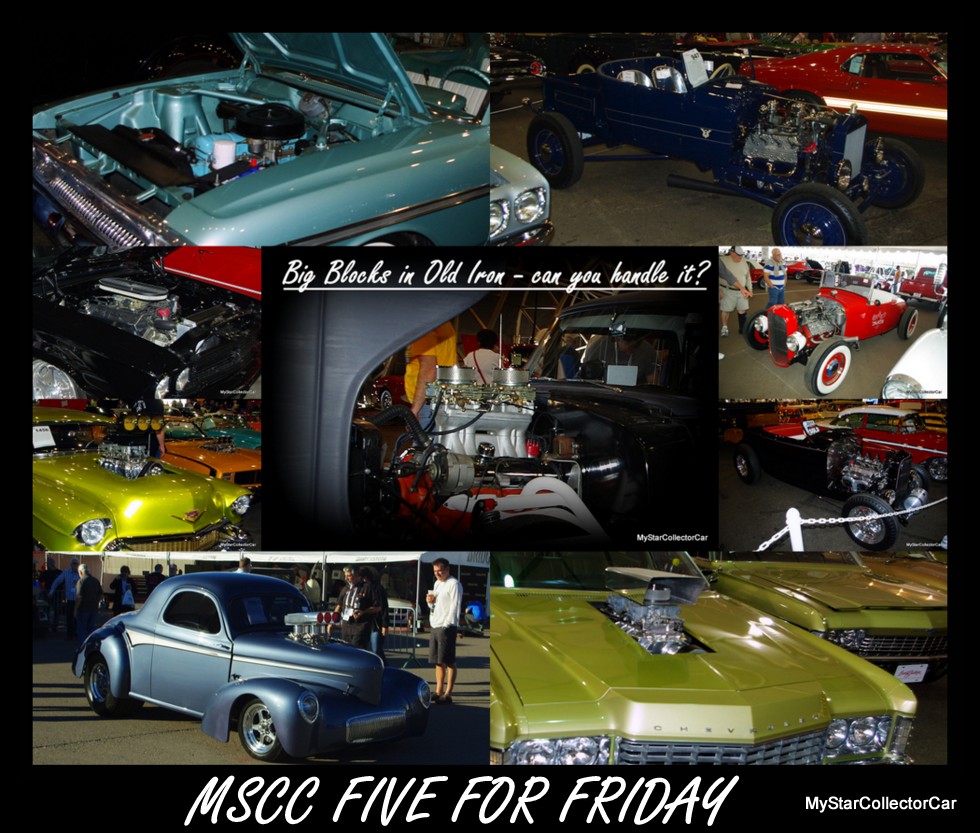

























Gassers are legends in the world of drag racing because they were wild-looking and crowds loved them.
Basically, the name gasser came from the gasoline they ran—it was that simple.
After that, the drivers figured out power-to-weight ratios and front-end geometry that shifted the centre of gravity–here are five examples of classic gassers.
Jerry Sutherland
The best place to start is with the 1940 Willys. If you had to draw up a classic example of a gasser it would be a Willys.

There are many reasons why the 1940 Willys was a legendary gasser, but one of the best is its weight. Another reason was its skinny profile, so the Willys became the default gasser—a car so famous it was the first one produced as a plastic model. Call it the grandfather in the gasser world
The second example is the ’40 Ford. The 1940 Ford had its own reputation established as a custom street machine because every version of a 1940 Ford was cool. The coupe was the highest on the totem pole because the roofline had its own magic—similar to the roofline of the Willys.
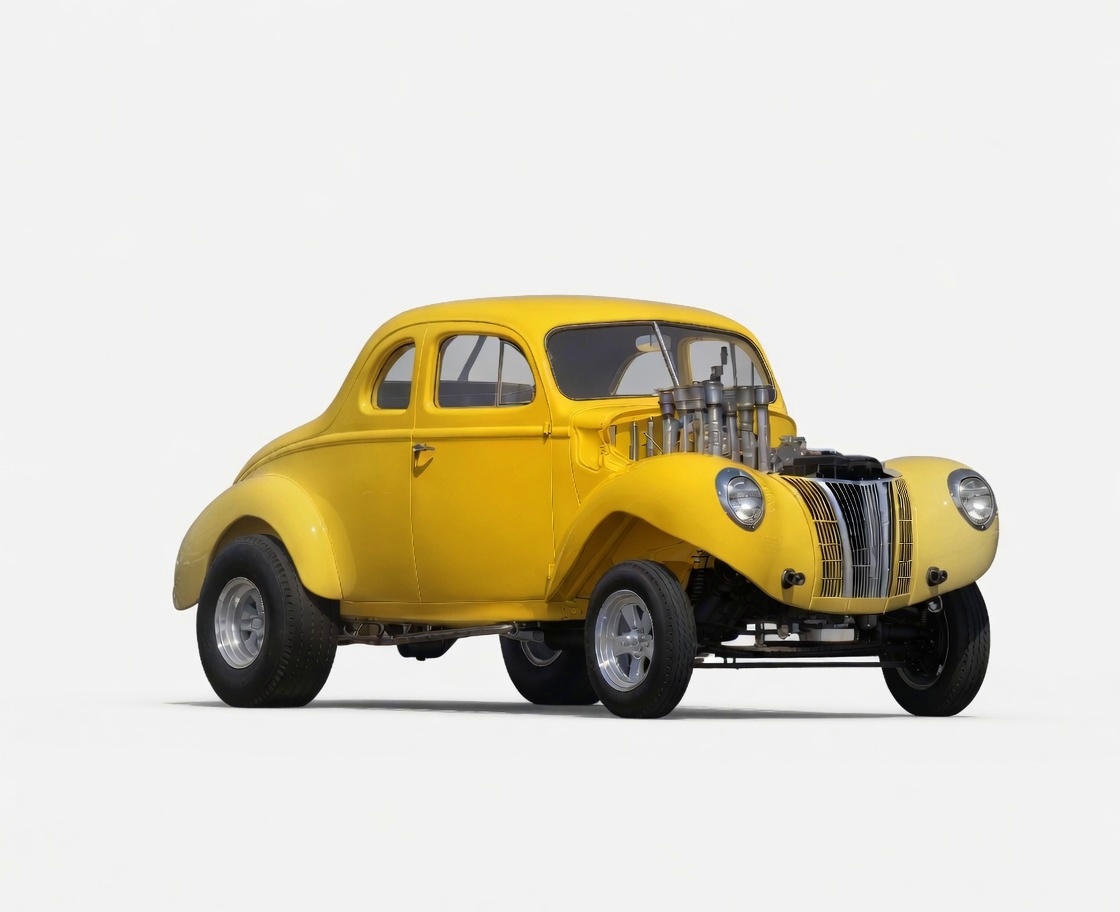
The ’40 Ford was a classic gasser too, thanks to the jacked-up front end and pre-war profile. It’s an easy entry in the cool gasser world and if you ever gave up a racing career with a ’40 Ford, you still had a viable street rod with unlimited cool factor.

The 1948-53 Anglias are the third example–they were also famous gassers at the track. They were stubby little cars with extremely light bodies and high beltlines, but dragstrip guys loved them for their incredible power-to-weight ratio.
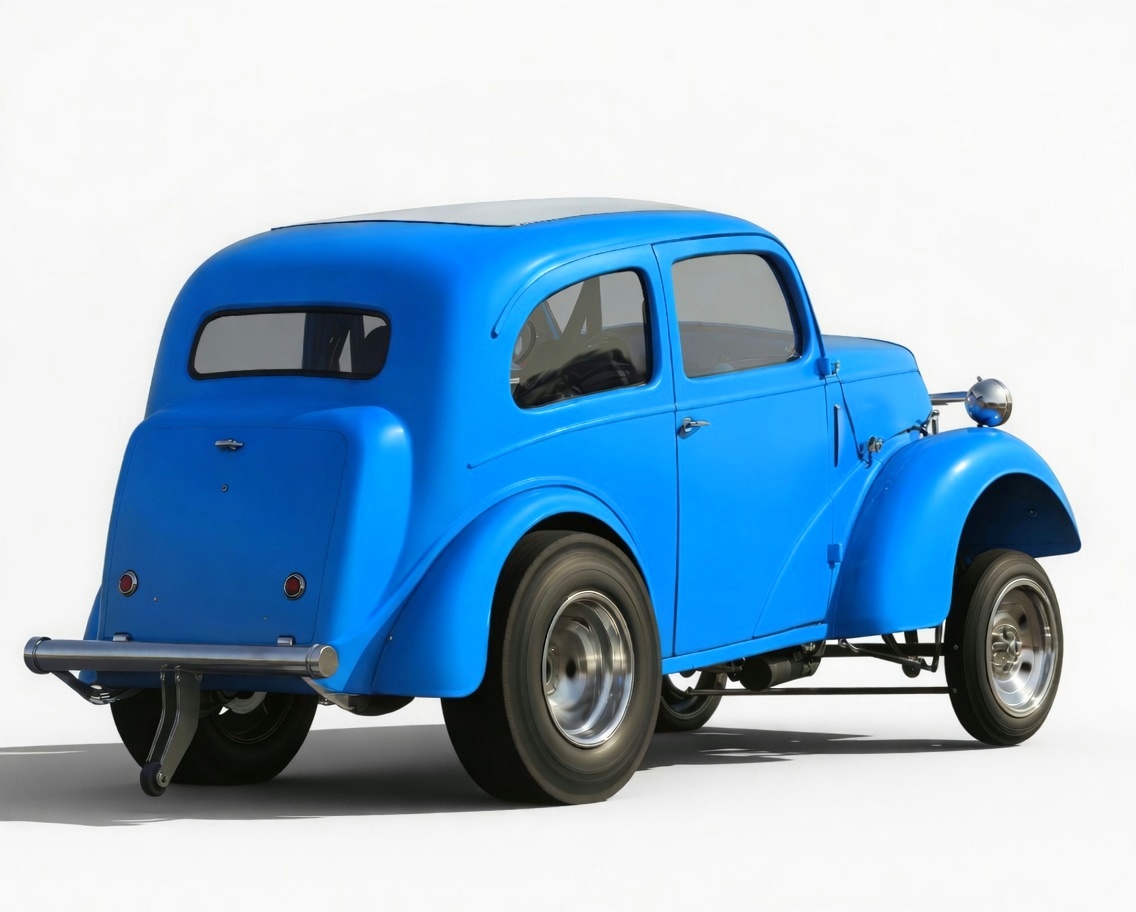
The downside was their handling because a car built for economy driving became a handful with a 426 hemi under the hood. The racing fans loved them and the drivers survived them—that’s how it went with Anglia gassers.
The fourth example is the 1955 Chevy Nomad. In reality, you could say the ’55 Chevy 2-door post gasser was an equal to the Nomad, but the first gasser model kit I ever saw was the 55 Nomad.
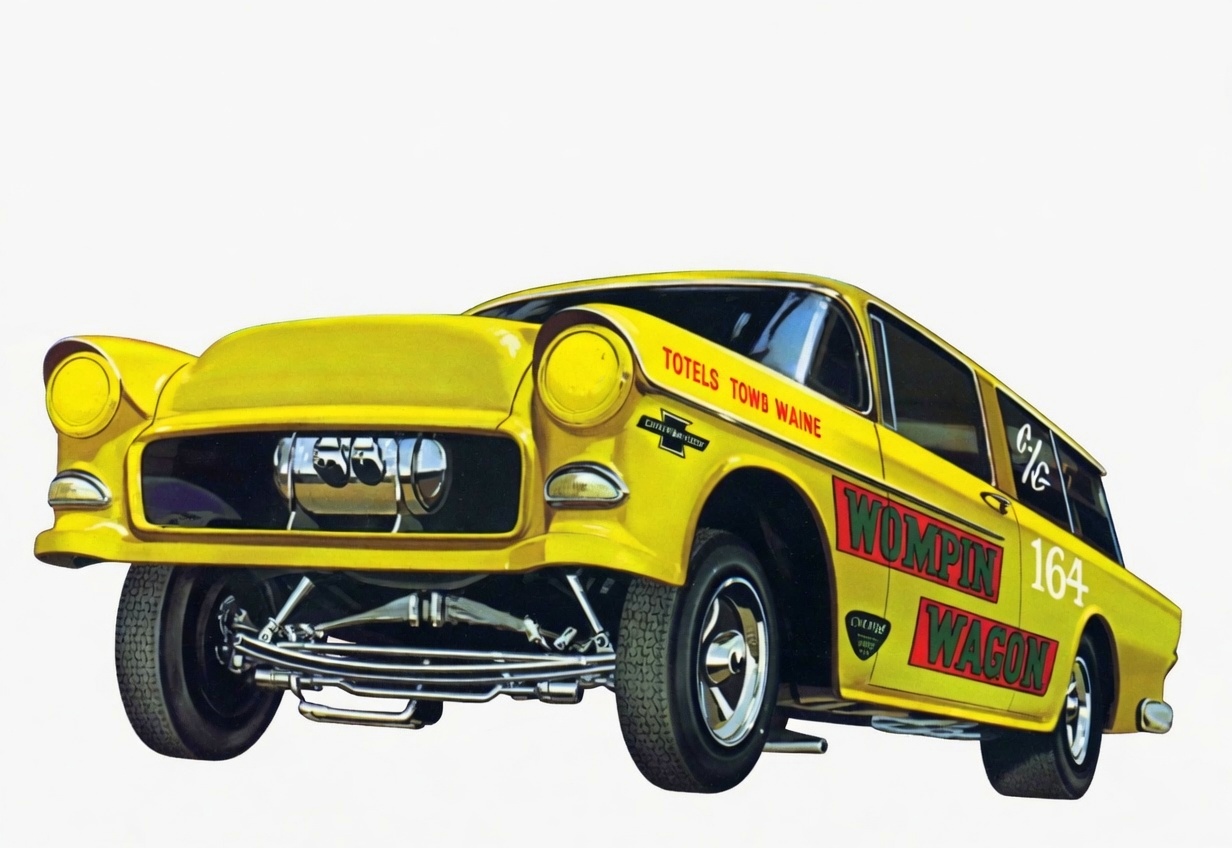
That left 12-year-old me with only one thought. The Nomad was the only version of a gasser that mattered after that to this kid, but the real world told me a ’55 Nomad is a rare car. That’s why you never saw many examples of Nomads as gassers at the track because they were too valuable—even in the 1960s.
The final example is the 1965 Ford Falcon two-door hardtop. These cars were a sporty version of a practical car, and most people know the Mustang was based on the humble Falcon platform.

I’m not sure how many Ford Falcon gassers were built—or if track guys like them, but I picked the ’65 Falcon as a cool gasser simply because I saw one at a car show.
That brings me to the real message behind gassers. You can build them out of anything, and it will look cool because all gassers have built-in cool factor.
Yes, it’s that simple.
Jerry Sutherland
By: Jerry Sutherland
Jerry Sutherland is a veteran automotive writer with a primary focus on the collector car hobby. His work has been published in many outlets and publications, including the National Post, Calgary Herald, Edmonton Journal, Ottawa Citizen, Montreal Gazette, Saskatoon StarPhoenix, Regina Leader-Post, Vancouver Sun and The Truth About Cars. He is also a regular contributor to Auto Roundup Publications.
- CLICK HERE TO SIGN UP FOR THE NEWSLETTER
- CLICK HERE to Like us on Facebook
- CLICK HERE to Follow us on Twitter
- CLICK HERE to Follow us on Pinterest