






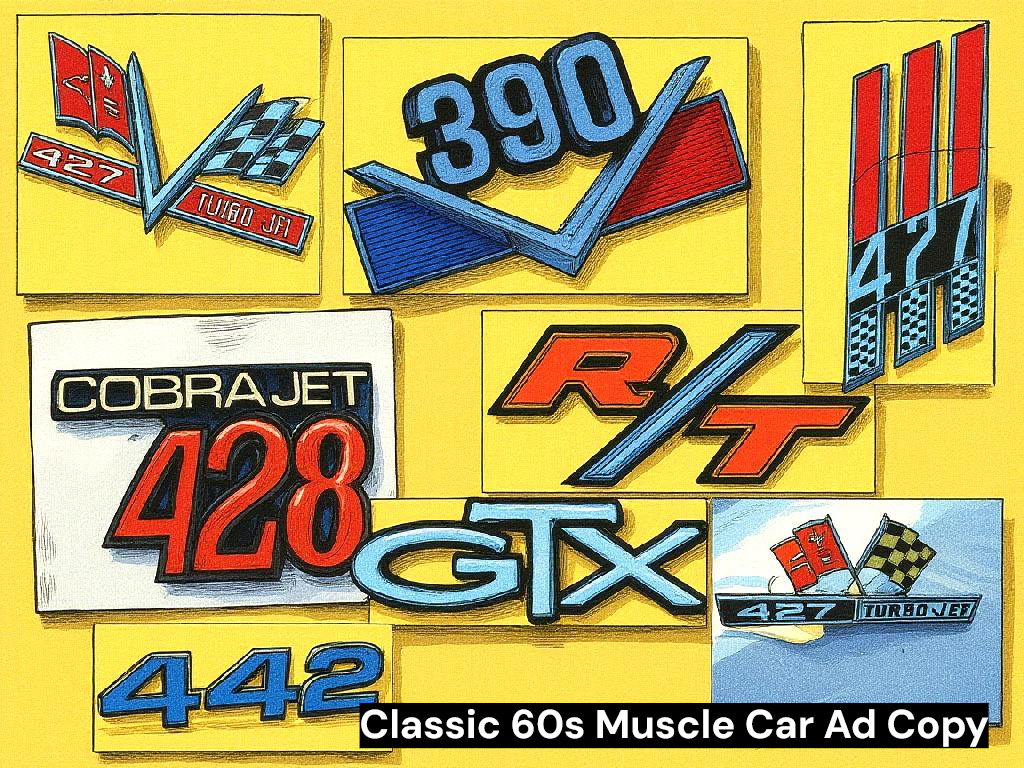
The mid to late 1960s gave the car buyer a massive number of options in the muscle car market.
Every one of these cars were big-block beasts, so marketing was aimed at the kind of buyer who thrived on horsepower and tire smoke.
These ads were designed to sell brute force, not fuel economy, so here are some classic examples.
Jerry Sutherland
Ford entered the brawl with the 1967 427 R-code Ford Fairlane. The copy read, “The 427 Fairlane…is also available without numbers”.
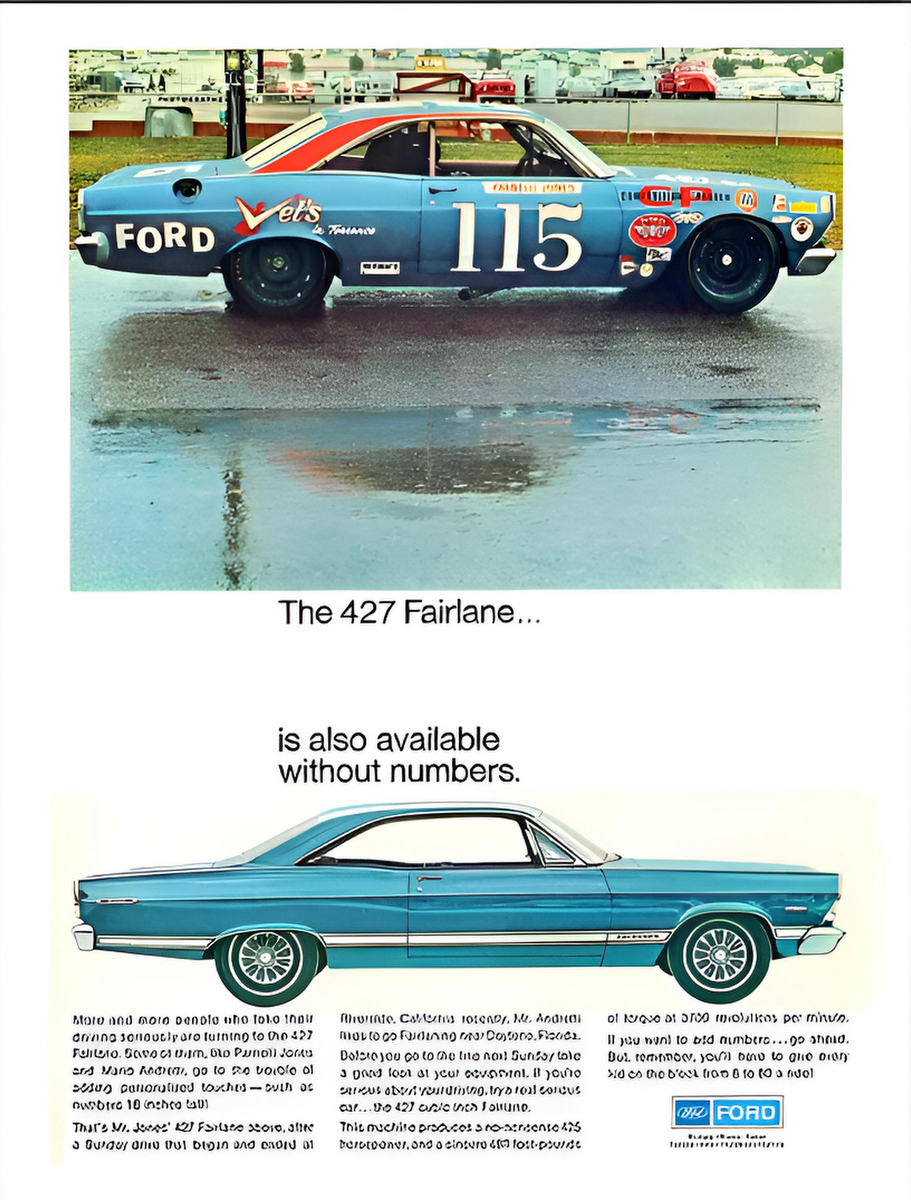
They only sold 92 of these R-code monsters, and all of them were 4-speed, dual four-barrel, 425-horse rockets. They were built for the track, but a few ended up in non-race hands. The 425-horsepower rating was a mere suggestion–the real number was much higher.
Ford also had another beast in the form of the ’68 Mustang GT500KR. The KR stood for ‘King of the Road!’—it was written in the ad copy.
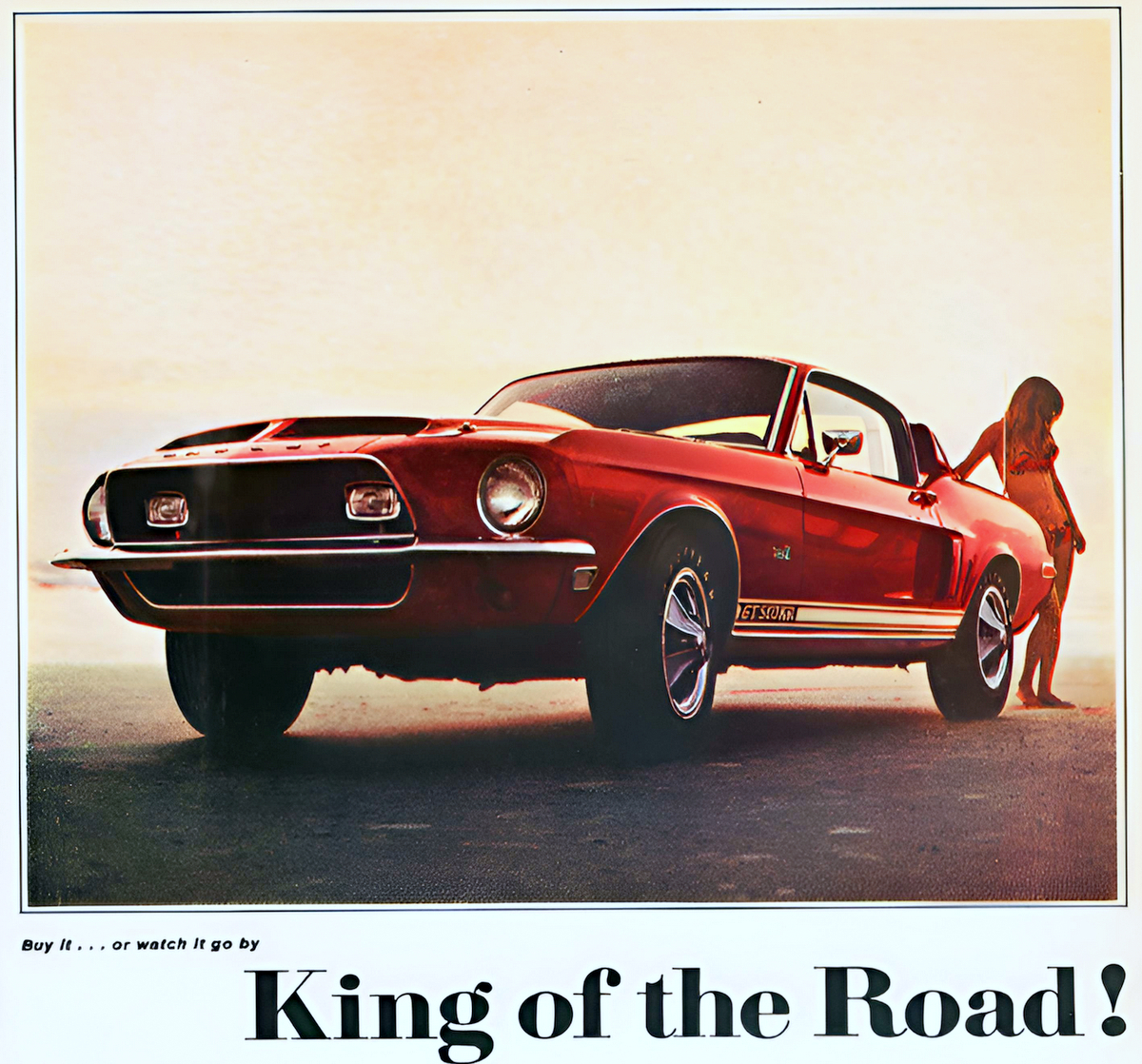
That wasn’t false advertising because this pony car had a big, bad, big-block 428 cubic inch Cobra Jet under the hood pumping out an alleged 360 horsepower. The actual number was well over 400 horsepower—this was the KR after all.
Chrysler had two cool muscle car ads in 1967. The first one was the ’67 Plymouth GTX and its ad copy read, “They don’t call it King Kong for nothing”. The King Kong reference was obvious because these cars came standard with a 440 big block that pumped out 375 rated horsepower.
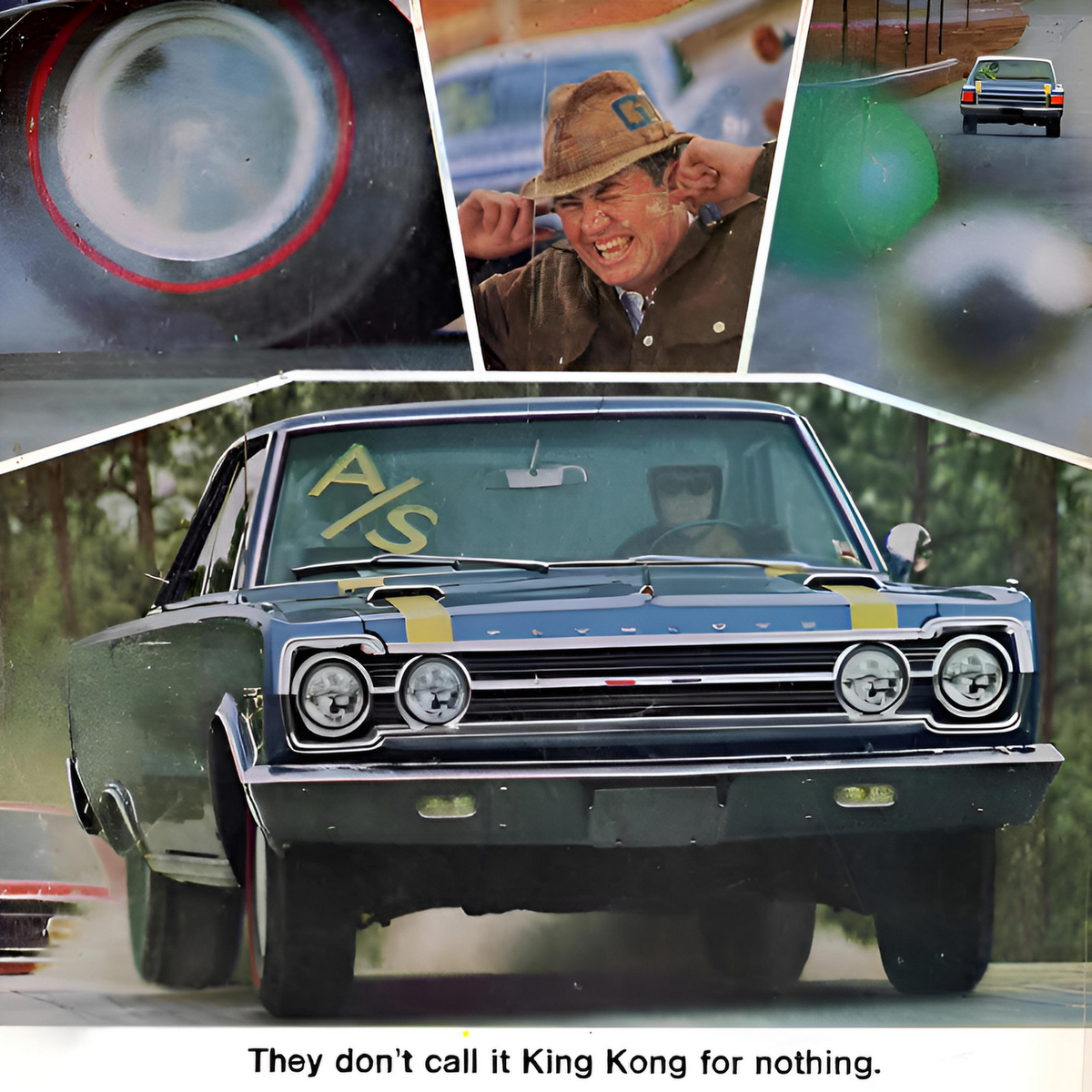
If that wasn’t enough, the next step was a 425-horse 426 hemi. That was another fake number to keep insurance companies at bay—but it was enough to make that King Kong nickname stick.
The GTX partner at Dodge was the Coronet RT and its ad copy read, “ENTER THE BIG BORE HUNTER”.
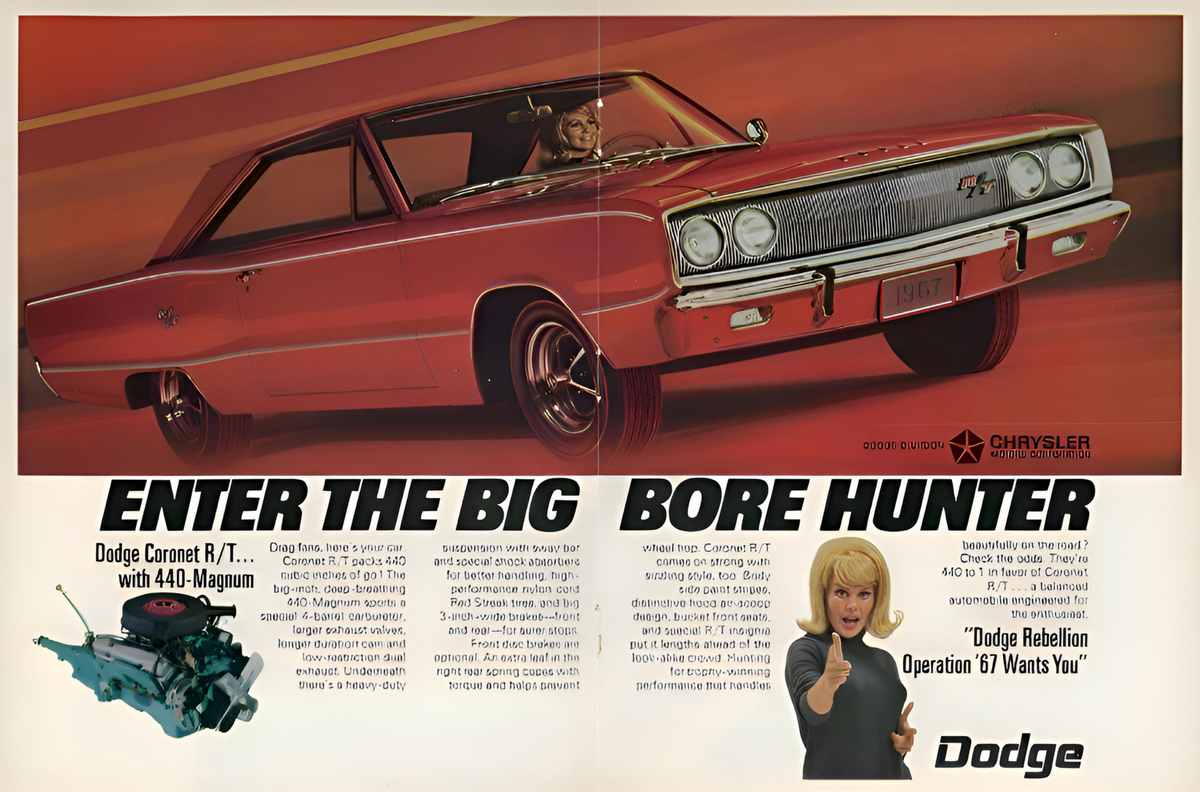
That was a direct reference to the 440 under the hood. This ad was part of the Dodge Rebellion campaign that year and the ‘big bore’ copy was another fine example of truth in advertising.
AMC was also in the muscle car game in 1968 with the Javelin. They wrote “Big Bad Javelin” on their ad because they were selling the Go Package (343/390) option.
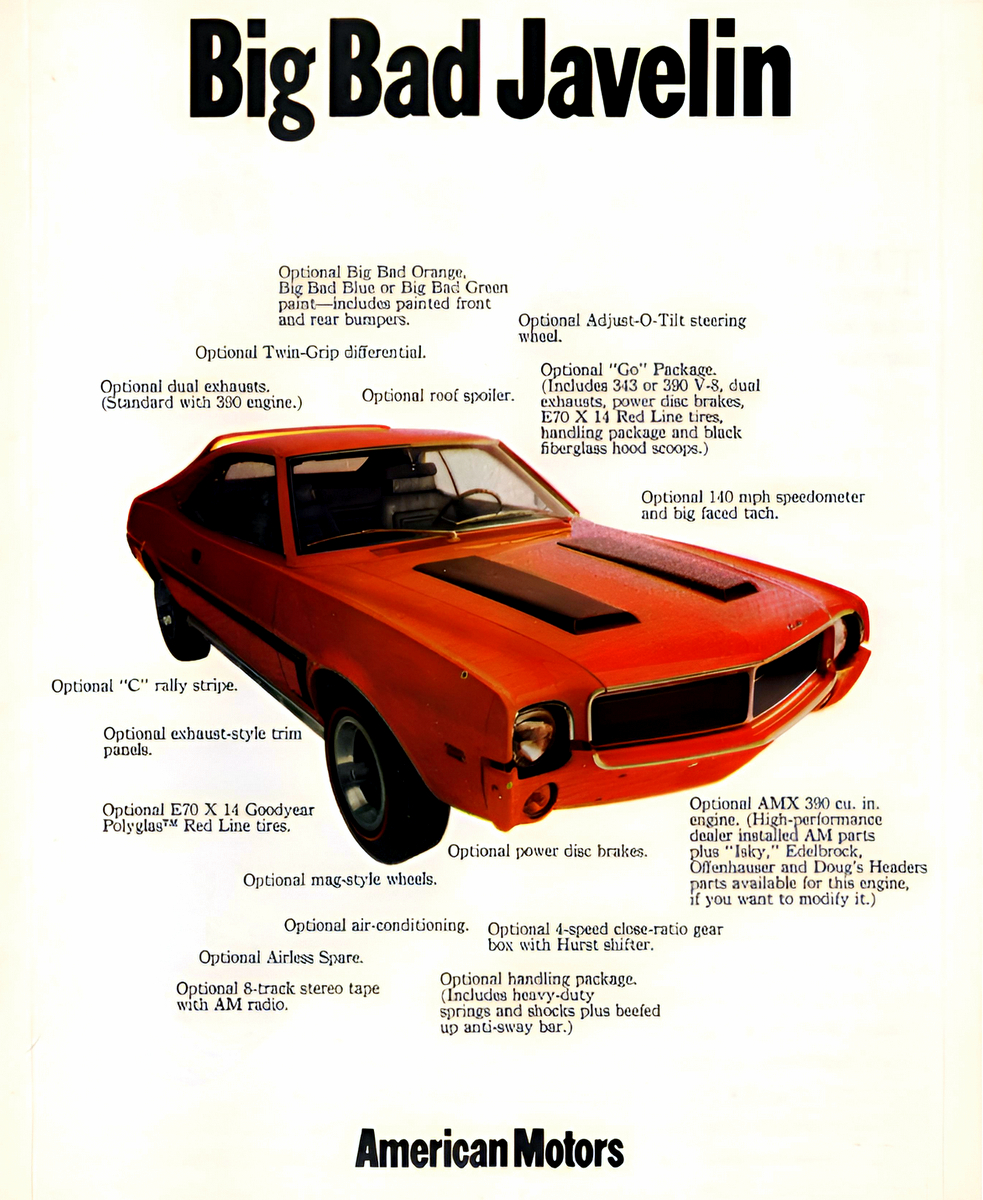
Again, this was more accuracy in advertising because these light little Javelins were rockets with the 390, 315-horse Go Package option under the hood.
GM also pumped out some great ads during the muscle car era, and one of the best was the 1966 Impala SS 427 with the Turbo-Jet big-block option.

The message in this ad was simple: “do not tease”. That was perfect, because the 427 Impala pumped out up to 425 horses if optioned up to its highest level—it was the perfect understatement car.
The 1968 Olds 442 was another solid example of GM muscle. They wrote “The hidden persuaders:” to sell this brute-force Oldsmobile.
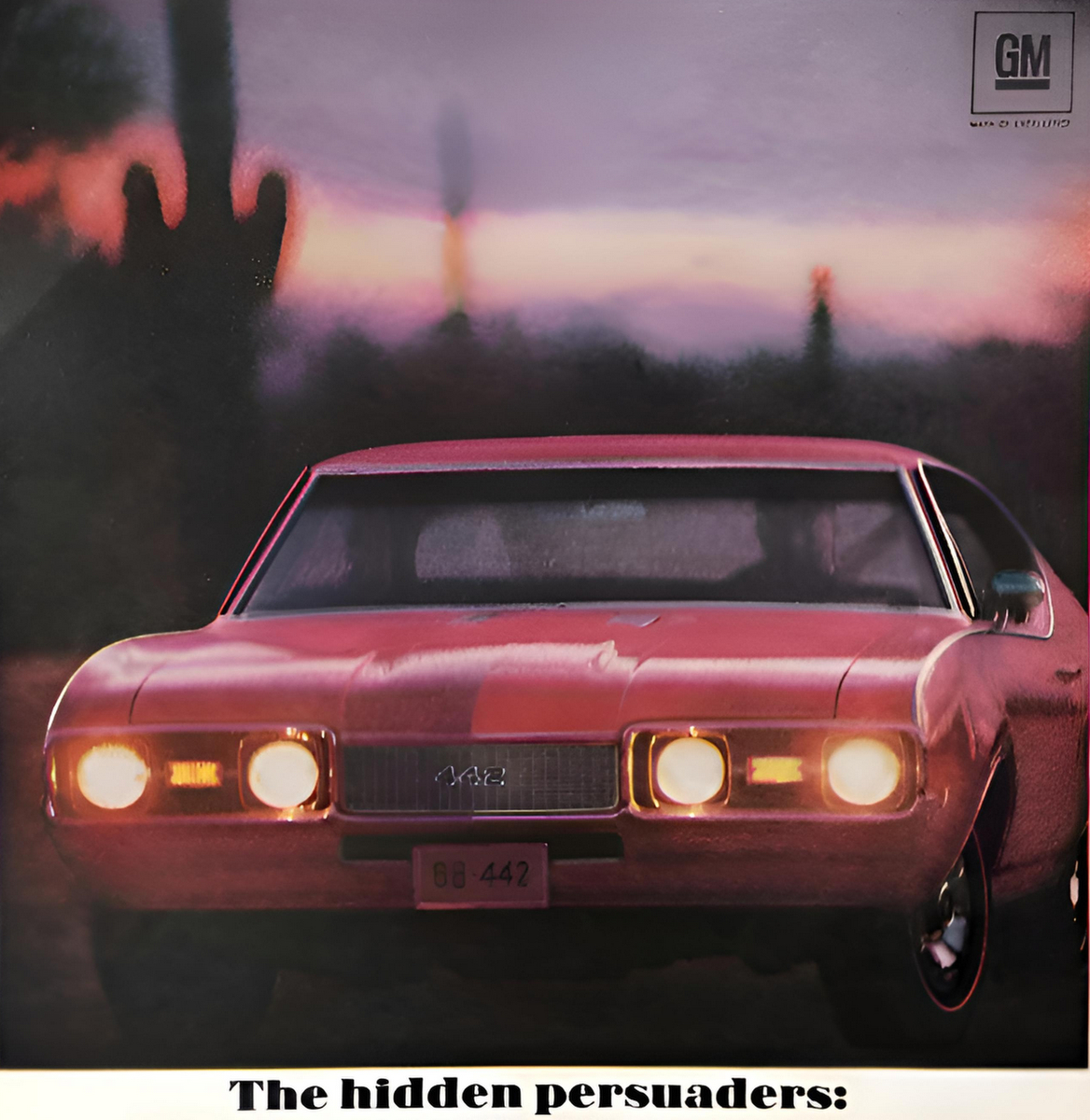
‘Hidden persuader’ was a good description of the ’68 442 because the Oldsmobile name was typically associated with bankers—not street racers. The 400 cubic inch, with the W-30 “Force-Air Induction System” pumped out 360 horses–it was an ambush in waiting.
The last entry in the 1960s muscle car ad campaign is the 1967 Corvette. They called it the “Wolf in wolf’s clothing”.
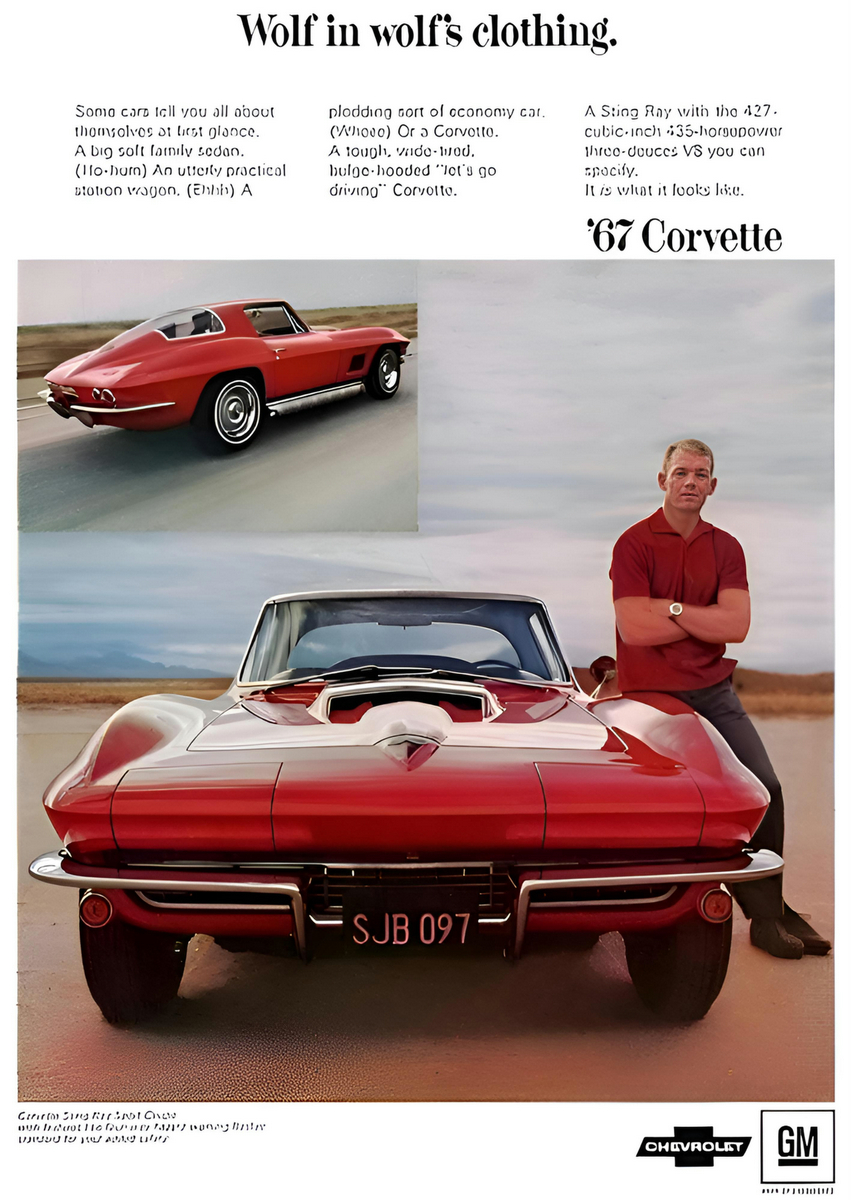
That was perfect ad copy because no one would ever confuse a ’67 Vette with a sleeper…in any form. The 427 option came in three forms—from 390 horsepower to the triple carb, 435-horse option. That was a wolf with a scary number of teeth.
We’ll never see another era in advertising like we saw with the classic 60s muscle cars…it was one of a kind.
Jerry Sutherland
By: Jerry Sutherland
Jerry Sutherland is a veteran automotive writer with a primary focus on the collector car hobby. His work has been published in many outlets and publications, including the National Post, Calgary Herald, Edmonton Journal, Ottawa Citizen, Montreal Gazette, Saskatoon StarPhoenix, Regina Leader-Post, Vancouver Sun and The Truth About Cars. He is also a regular contributor to Auto Roundup Publications.
- CLICK HERE TO SIGN UP FOR THE NEWSLETTER
- CLICK HERE to Like us on Facebook
- CLICK HERE to Follow us on Twitter
- CLICK HERE to Follow us on Pinterest