
















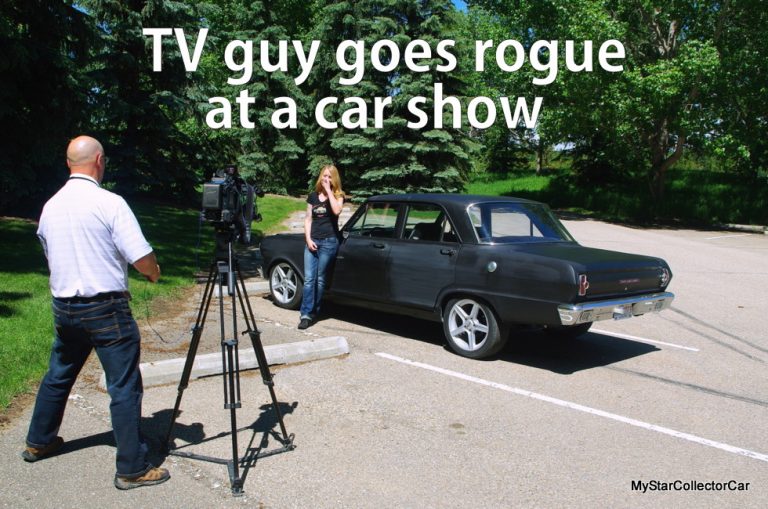
A TV REPORTER/MORON GETS FIRED FOR ALL OF THE RIGHT REASONS AT A CAR SHOW

0

One of the worst offenses that you can commit at a car show is any form of physical contact with the vehicles entered in the event.

Fortunately, most people are smarter than a house plant so they will keep their distance and not touch the vehicle unless otherwise instructed by the owner.
These wise decisions are based upon a simple principle: Common sense. This basic trait ensures that somebody else’s property will not be damaged by a thoughtless clown.

One of the most egregious examples of bone-headedness occurred in the bright glare of TV cameras when a flakey reporter visited a car show in Sacramento, California. He was part of a morning news crew whose main purpose appears to be standard issue puff pieces punctuated with grim tales of real news (death and destruction) delivered in the finest tradition of light-hearted breakfast journalism.
In this case, the roving reporter found himself covering the car show and he was emphatically not the right guy for the job because he was missing a crucial ingredient for the piece: A car guy soul.

This moron also had no sense of humor, although he did his level best to imitate a qualified comedian during his brief misadventure in automotive mayhem-and failed miserably at the task. He chose the standard route of the comically-challenged and attempted to convey an “offbeat and zany” approach to his car show report.
Many on-air personalities for morning news TV choose this same perilous path–and they also fail miserably at the funny game while on-air. However garden variety unfunny TV news crew people do not typically damage vintage vehicles.   

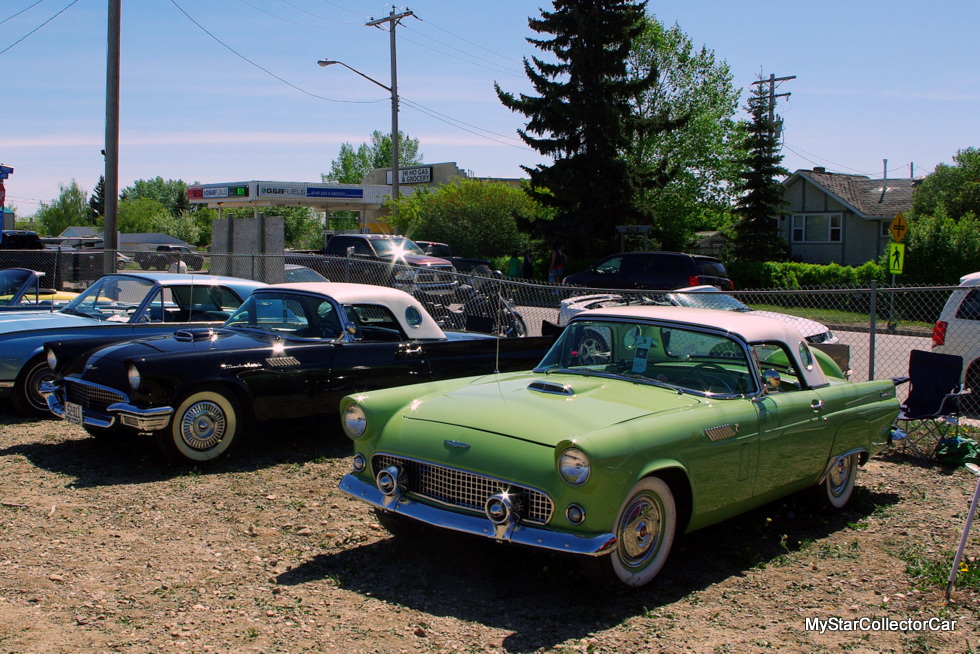
He chose to climb on the trunk of a vintage first-gen Ford Thunderbird while reciting vacuous babble-speak about how he “wanted to live on the wild side”. There are only two ways this moron could have realistically accomplished that mission: He could have attempted to stay on the trunk while the T-Bird was maxed-out at top speed (easily over 100 mph) or he could have faced the wrath of the car’s owner if the owner had spotted this idiot on the trunk of the vintage Thunderbird.
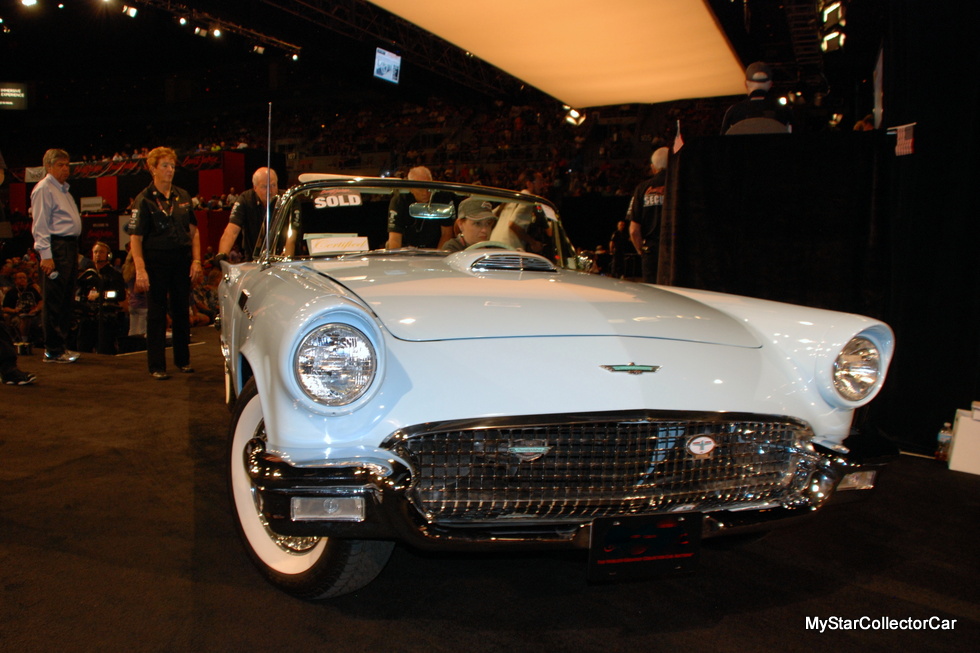
Either way would provide a huge hazard to this buffoon’s good health. As mentioned, no car guy of sound mind would even consider climbing on the truck of an incredibly well-restored classic car. The amount of money and work that went into the paint finish on the T-Bird to bring it to a high level of restoration would likely take at least a few years of this TV flake’s salary to cover the cost.
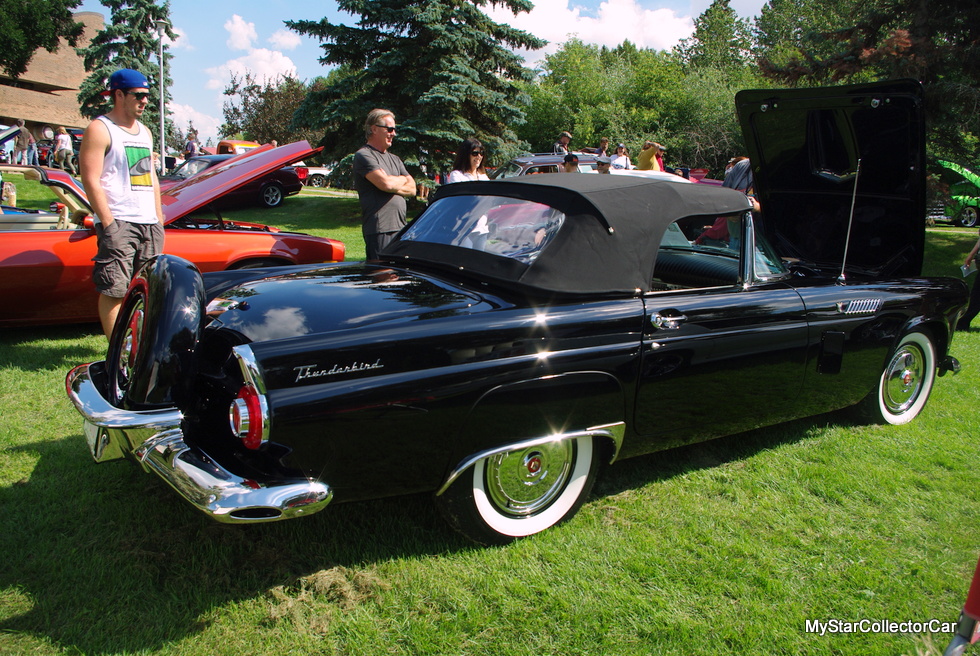
Then he upped the ante on the carnage when he opened the door of another first-generation Thunderbird and contacted the body panel on the vintage T-bird next to it. It was a horrifying moment for legitimate car guys and his disdain for the vehicles was obvious when he made another misguided attempt to be funny and wondered about the year of the car (“It’s a 1950…99?”) while damaging the perfect paint finish on the cars.

CLICK HERE for more information on how to advertise on the number one daily automotive e-zine in Canada

He had no sense of remorse about the incident and tried to make light of the incident. It was jaw-dropping TV for real car guys and a slow-moving train wreck of a piece. The two anchors in the studio appeared to be unfazed by his shenanigans, presumably because they must be used to his antics and were also not car people.
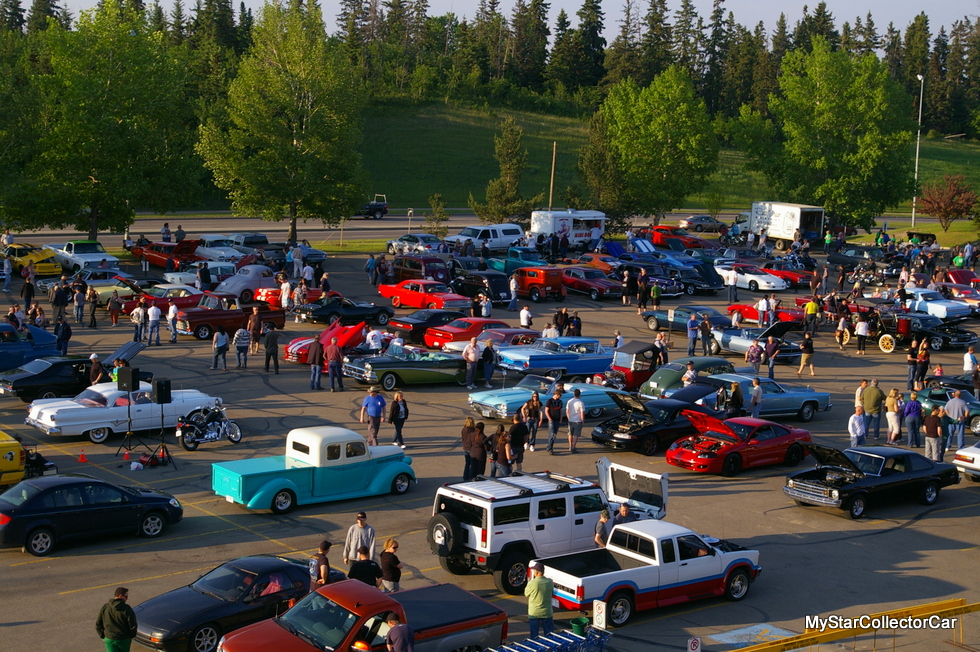
Either way, the owners of the vintage vehicles (and a new 2020 Ford that he also damaged in the clip) were not amused and the reporter was immediately fired for his stupidity. It was a life lesson that was clearly not taught to him during his formative participation trophy years when everyone is special.
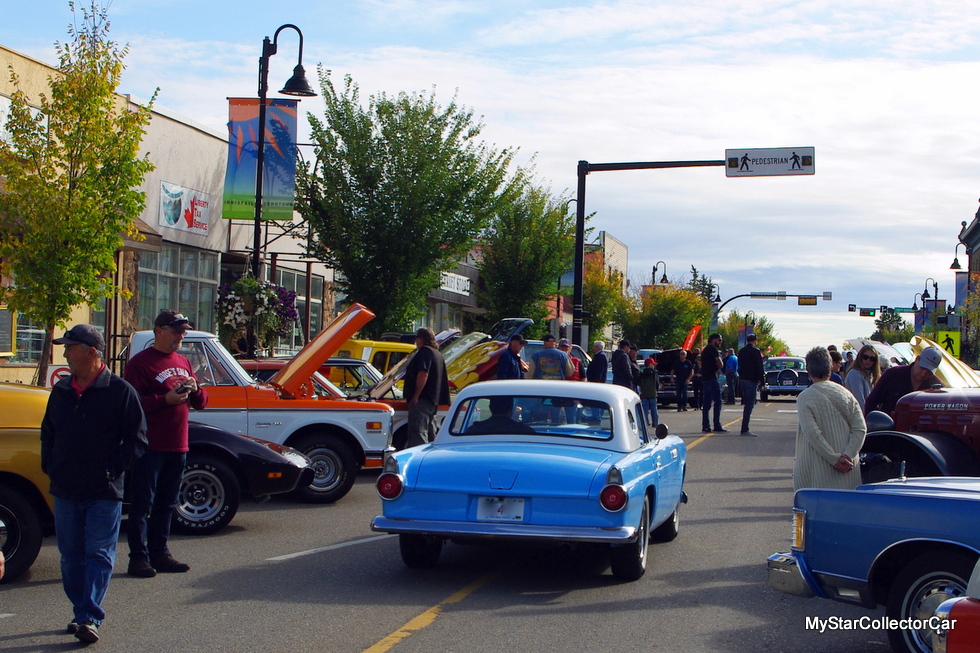
Instant karma ran over the roving reporter/moron and MyStarCollectorCar hopes it came in the form of a 1957 Ford Thunderbird.        

BY: Jim Sutherland

Jim Sutherland is a veteran automotive writer whose work has been published by many major print and online publications. The list includes Calgary Herald, The Truth About Cars, Red Deer Advocate, RPM Magazine, Edmonton Journal, Montreal Gazette, Windsor Star, Vancouver Province, and Post Media Wheels Section. 

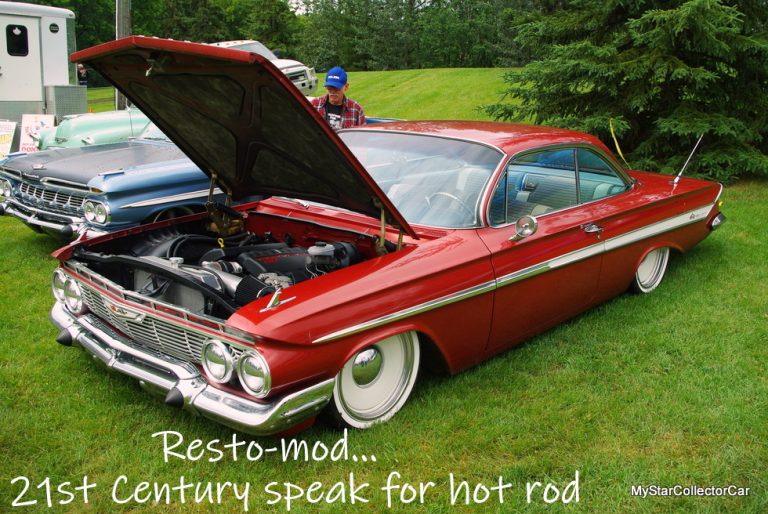
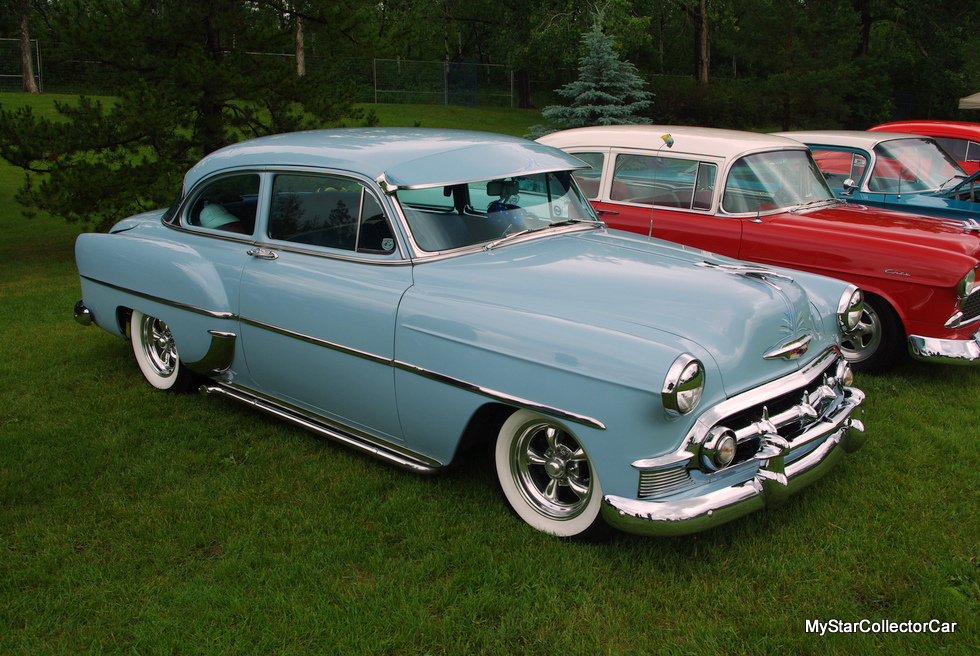
IS RESTO-MOD JUST 21ST CENTURY SPEAK FOR HOT ROD?

0

You see them more and more in the car hobby—they call them resto-mods.

A resto-mod is basically an old car (or truck) with high-tech components like fuel injected engines, massive brake systems and suspensions that would outperform every entry in the 1992 Indy 500.

They’re cool but are resto-mods really a cutting edge concept in the car hobby?

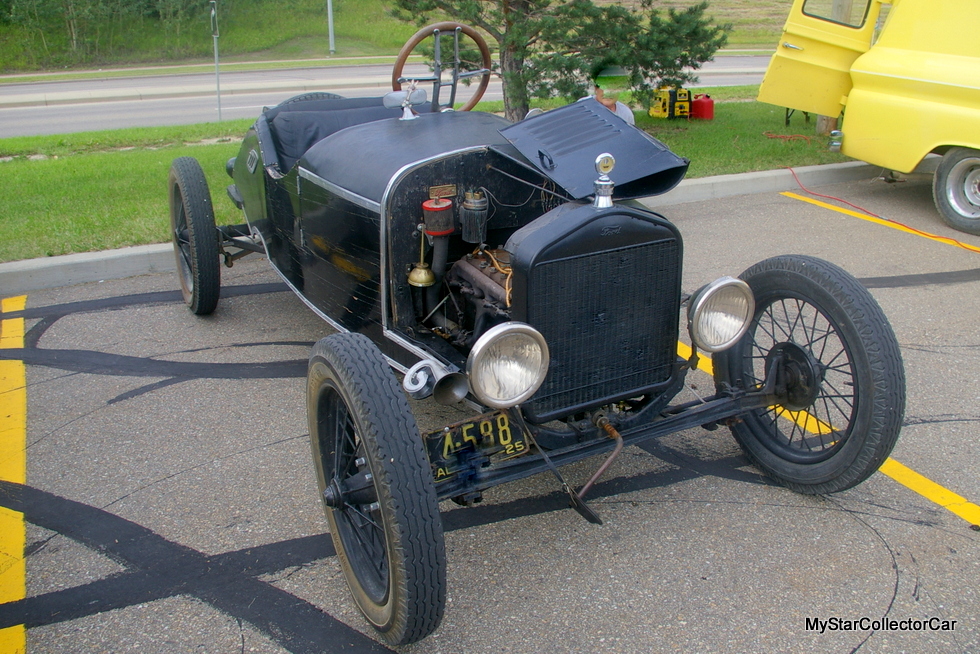
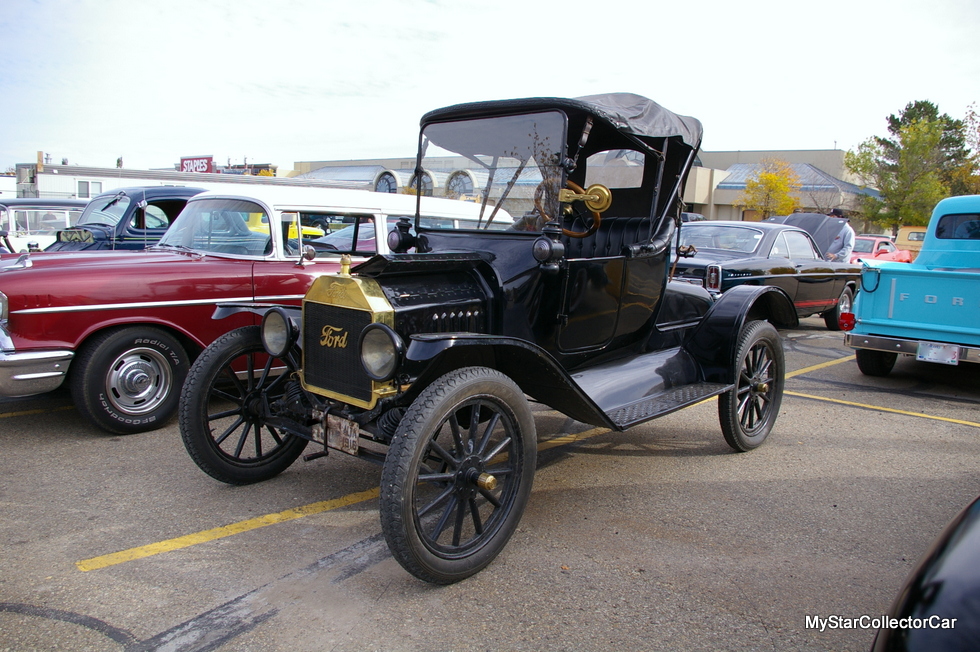
The answer is no. Tacking improvements on outdated cars is not new—it goes back to the early part of the century…the 20th century. Some guy back in 1910 found out his Model T went a lot faster without fenders and suddenly a new concept was born.   

Later that same year the same guy discovered a transplanted 65-horsepower 1910 Mercedes engine could take his Model T up to Warp 5. Unfortunately, he didn’t make it to New Year’s 1911 thanks to horrible turn-of-the-century roads, primitive brakes and a large horse on a blind corner.   

That’s when the next guy figured out that better brakes and better handling meant survival in the world of modified cars. V-8s were also becoming more mainstream as the century wore on so a lot of early 20th century Model Ts ended up with 1930s era Ford flathead V8s.

CLICK HERE for more information on how to advertise on the number one daily automotive e-zine in Canada

Hot rods were a big part of the pre and post war era even if there’s no official date when the term ‘hot rod’ was first used but it looks like it started with racing on dry lake beds in late 30s California. These cars were very likely an offshoot of the moonshine wars when guys needed cars that could outrun and out-handle law enforcement and carry a big load.

The late 40s and early 50s really saw the rise of the street rod—particularly with the availability of big Cadilllac V-8s and 1st Gen Chrysler hemis.  Hotrodders also liked other stuff like the finned brakes from Buick because unlike the guy who hit the horse in 1910; these guys knew brakes were a big ‘must have’ when a car gets over 100 miles per hour in less than a minute.

This history brings us to the resto-mod. The term itself is a 21st century term but it’s really a new term for an old concept so it’s a bit misleading.  The only real difference is found in the list of modifications because early hot-rodders were focused on speed—not comfort. Most of their cars were wide open to the weather so stuff that guys want in a resto-mod (air conditioning) would be a mystery to them. So are computer touch screens, backup cameras and satellite radio but in 2019 those options are high on the list in a resto-mod.

The difference is found in technology. The same technological advances that rendered the flathead V-8 obsolete in the early 50s gives us 700 horsepower Hellcats in 2019 that idle like a Rolls Royce and pull down 30 miles per gallon on the highway. That kind of technology is an easy decision for a car guy.

In the end, the guys who put high-tech modifications in a ’57 Chevy are the same guys who would have stripped the fenders off their 1908 Model T to go just a little faster 110 years ago.

The only difference? They didn’t call them resto-mods.       

Jerry Sutherland

Jerry Sutherland is a veteran automotive writer with a primary focus on the collector car hobby. His work has been published in many outlets and publications, including the National Post, Calgary Herald, Edmonton Journal, Ottawa Citizen, Montreal Gazette, Saskatoon StarPhoenix, Regina Leader-Post,  Vancouver Sun and The Truth About Cars. He is also a regular contributor to Auto Roundup Publications.

Please re-post this if you like this article.

MSCC OCTOBER 23 “WHAT’S IT?” WEDNESDAY—A WEEKLY TEST FOR CAR GUYS

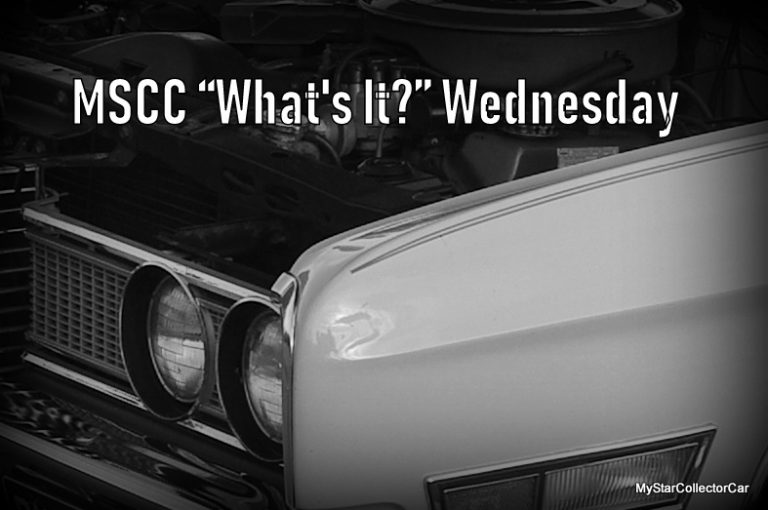
Just when you thought you’d left tests behind in school you get this one—but it’s a lot more fun so here’s the first clue to the test.

Here’s the 2nd clue.

Come back on Thursday for the answer below.    

It’s a ’72 Ford convertible.

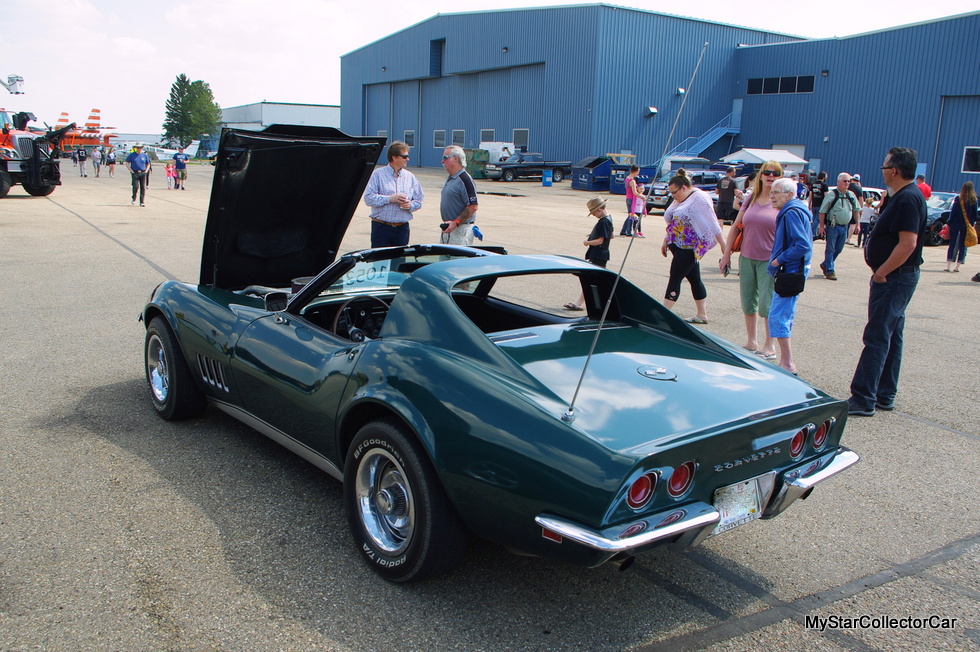
OCTOBER 2019: A 1968 CORVETTE STINGRAY IS BUILT INTO A 21ST CENTURY BEAST

The 1968 Corvette Stingray was a third generation sports car legend that was specifically designed to follow in the giant footsteps of the first two generations of Vettes.

The General’s people wanted to build a new Corvette that was completely different from the Gen-2 models in terms of style.

The net result was a bold statement of a car that practically screamed “Mission Accomplished” for the design and engineering team at General Motors.

They created a new C-3 (third generation) Corvette that looked nothing like the C-2 (second generation) Vette that debuted in 1963 and faded to black in 1967–just in time for the new 1968 model year.

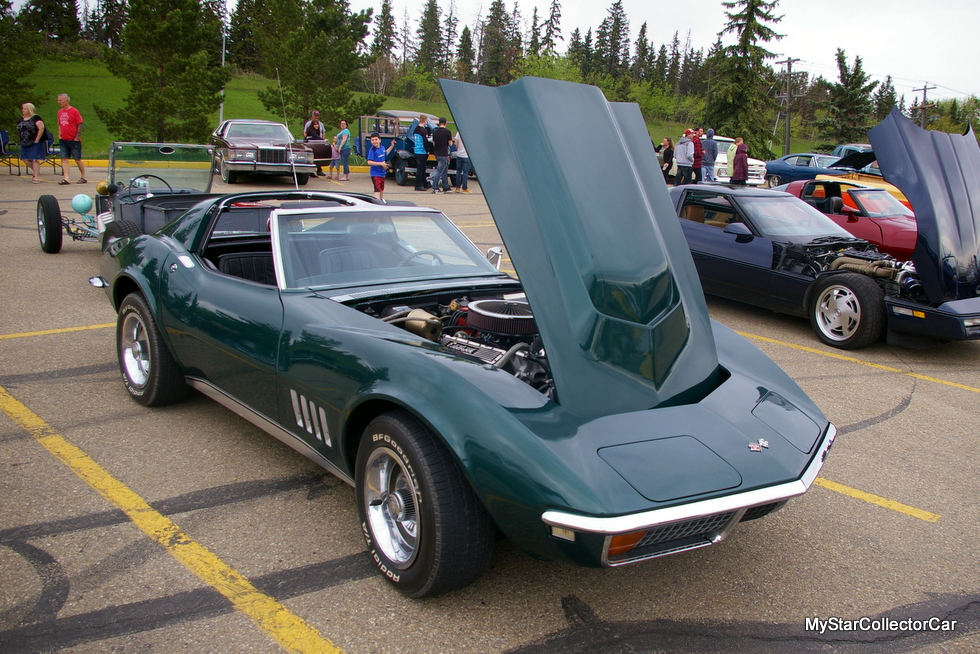
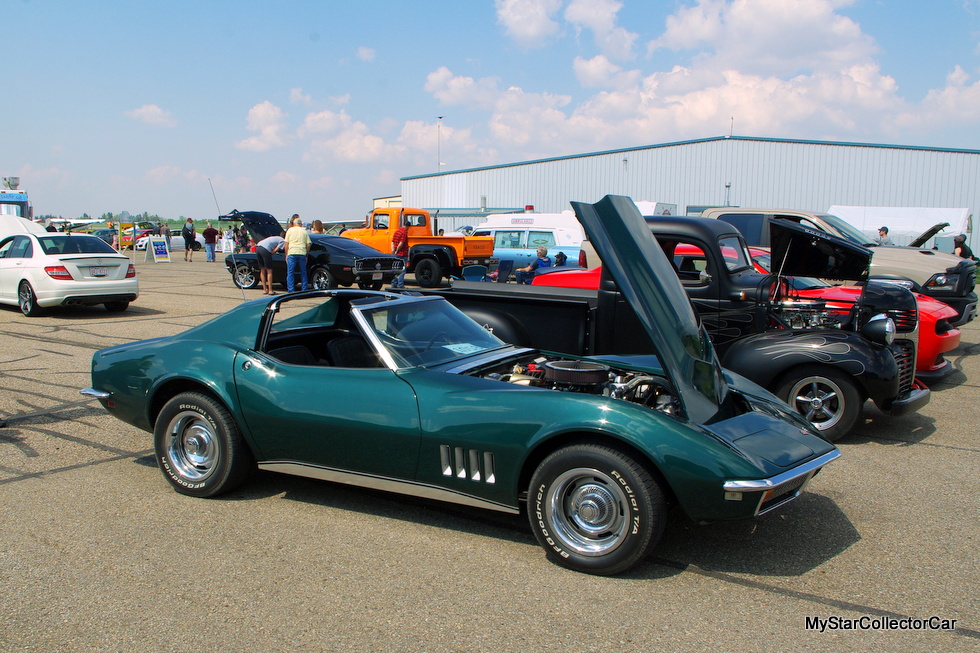
Steve Styles was always a big fan of the C-3 Corvettes and seized an opportunity to purchase his 1968 Corvette three years ago. He liked the style of the cars and wanted to specifically own a ’68 Vette because the cars represented the first year of the C-3 design.

The ’68 Corvette actually took many of its design cues from the Mako Shark II; a GM concept car that was introduced by GM in 1965 as an auto show vehicle. The Mako Shark II’s overall style was incorporated into the ’68 Corvette– although the production models had a subtler appearance.

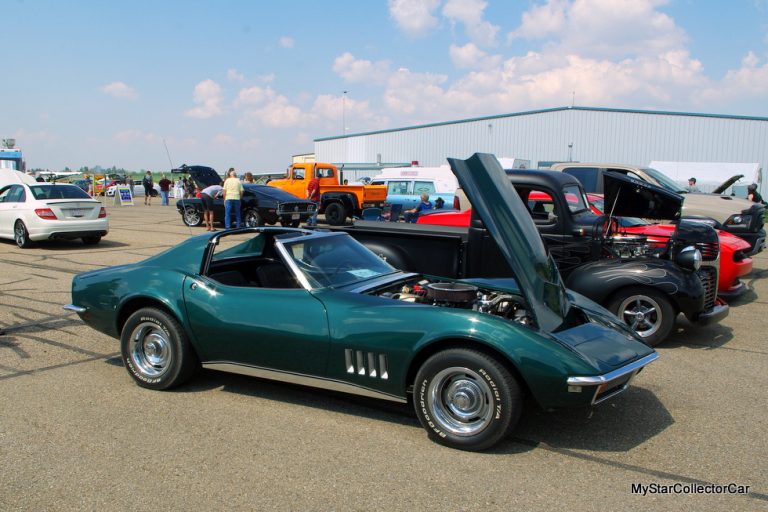
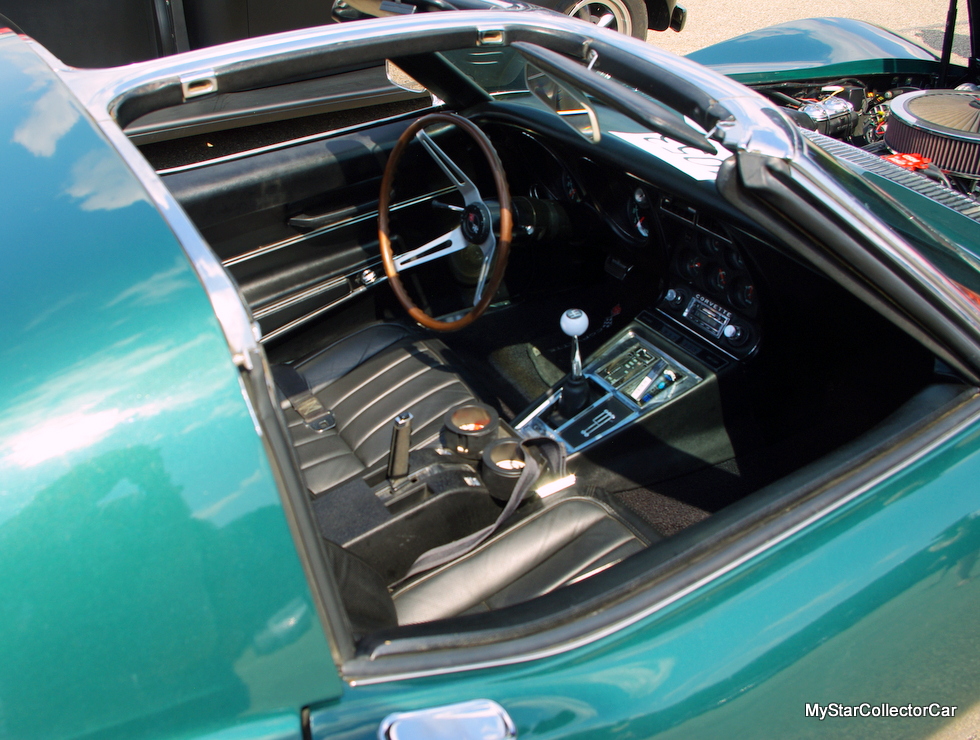
Nevertheless, the ’68 Corvette took the world by storm and left a huge impression on Steve over the years because of its timeless style. His Corvette has removable roof panels (aka T-roofs) by most of our MyStarCollectorCar readers) and a rear window that will vanish out of sight so its passengers can enjoy the convertible experience in a car that is not a drop top.

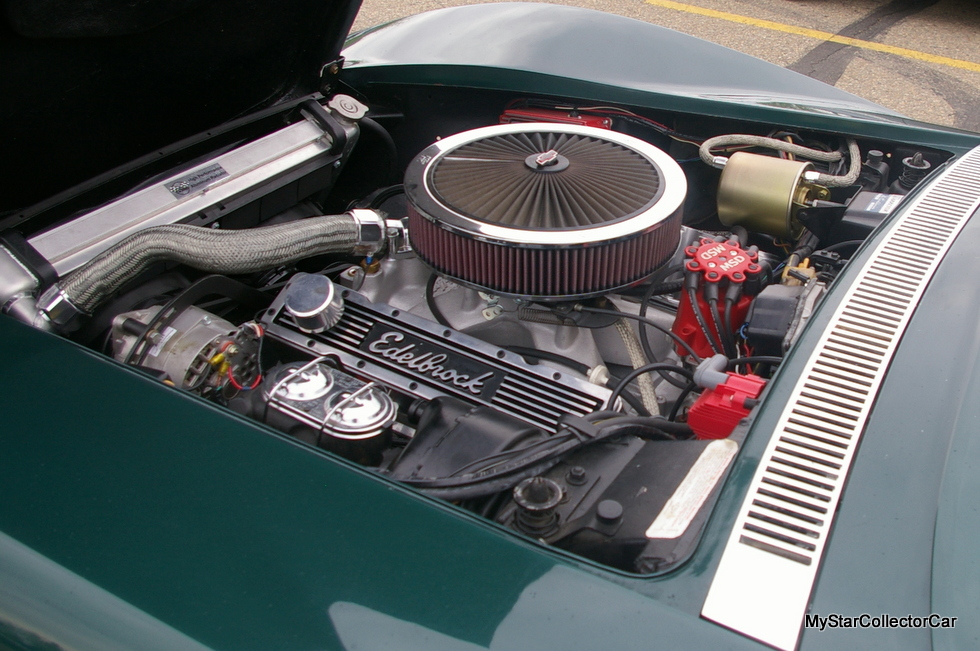
Steve mentioned that his Vette had a factory 327 engine from the factory  but now it sports a muscled-out 383 stroker under the hood. The famous performance small block is bolted up to the Vette’s factory four-speed manual transmission and is a massive horsepower upgrade for the car.

The other major upgrade in the Vette is the cooling system because it now has an aftermarket aluminum radiator and twin electric fans to keep the engine temperature at a safe level.

The changes have definitely been noticed by Corvette fans and some of them are purists by nature. Steve pointed to the chrome vents on the front fenders and mentioned the bright work was not available on the 1968 models-a contentious point with some Vette people.

Steve likes the extra vent chrome on his car because he likes the bright work on his Corvette and wanted to enhance its appearance with the add-on bling.

The performance upgrade on Steve’s Corvette was limited to the beefed-up stroker because he wanted to retain its factory engineering as much as possible. As a result, Steve resists the urge to push all those new horses under the hood into a full gallop because he gets this message from its factory front end: “I don’t want to do this for very long”– and neither does Steve for that matter.

A 1968 Corvette Stingray has checked off all of the boxes for Steve’s vision of an ideal car. He respects its heritage and has built a car that has plenty of the past and some of the present in its recipe for 21st century success.

BY: Jim Sutherland

Jim Sutherland is a veteran automotive writer whose work has been published by many major print and online publications. The list includes Calgary Herald, The Truth About Cars, Red Deer Advocate, RPM Magazine, Edmonton Journal, Montreal Gazette, Windsor Star, Vancouver Province, and Post Media Wheels Section. 


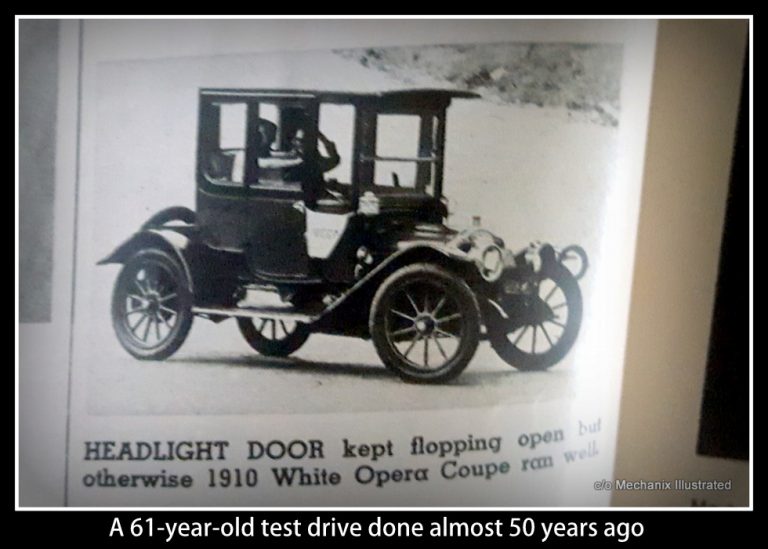
A RETRO MAGAZINE TEST DRIVE IN A VERY RETRO 1910 WHITE OPERA COUPE

0

I bought several old car magazines at a spring swap meet that were printed during the early years of the Nixon administration.

One of them was a March 1971 Mechanix Illustrated that I purchased for nostalgic reasons and the fact Tom McCahill was an automotive version of a rock star with the magazine.

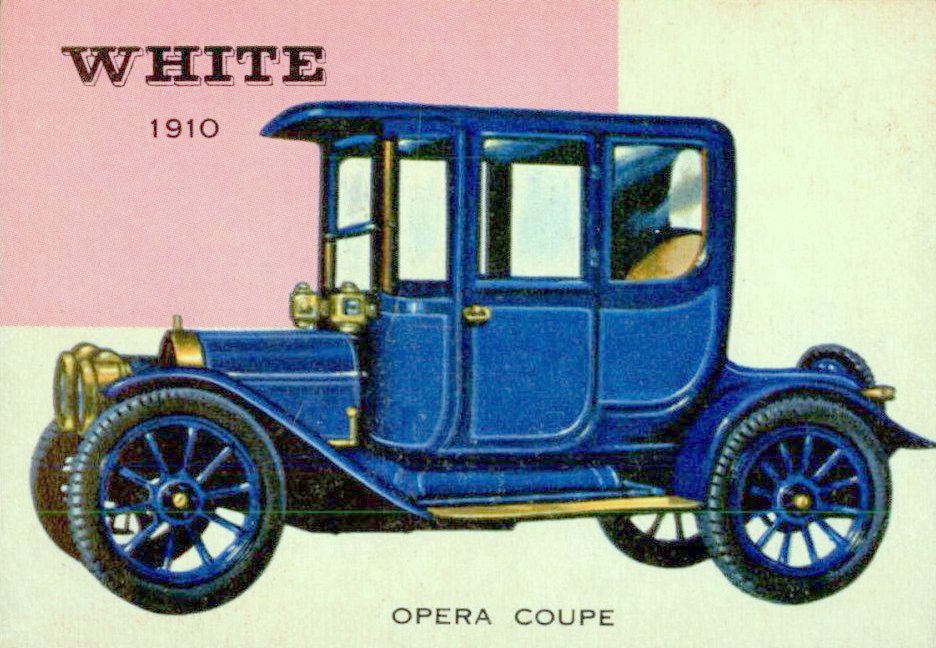
There were many other reasons to buy the old Mechanix Illustrated, including a test drive of a 1910 White Opera Coupe built during the early days of the car.

1910 was a time when cars were still duking it out with horses for king of the road and the internal combustion engine was a relatively new concept.

A 1910 Anything was still a novel concept at the turn of the 20th century and car builders were engaged in a bloodbath to become the most popular horseless carriage in a crowded market.

Enter the long forgotten White Opera Coupe into the car manufacturing fracas. The car was a tall and awkward-looking two-seater that embodied most of the brass car era features and engineering. The Mechanix Illustrated writer who test drove the 1910 White Opera Coupe in 1971 traffic had a colorful style that described why he had his hands full on the test drive.

Just for the record, the writer was not Tom McCahill and only included his initials (A.M.L.) in the article’s byline-but he was a talented writer in his own right. For example, A.M.L. described his impression of the car with this assessment: “People think of antique cars as being cute. This one is, but it is also frightening…..it’s also a lot more breakable and at the same time less fixable if you do break it. And then, there’s the driving of it.”

Incidentally, I lean toward heavily toward the idea A.M.L. was a male writer because the magazine was printed almost 50 years ago and female automotive writers were a rare species during the early 1970s. I also guessed A.M.L. might have been a Mechanix Illustrated editor named Angus Laidlaw, but I cannot confirm this belief.

At any rate, the writer detailed how many steps were involved just to crank-start the 1910 White Opera Coupe and involved accurate use of the spark advance lever to avoid an engine kick-back that will break your hand crank arm if you get it wrong.

CLICK HERE for more information on how to advertise on the number one daily automotive e-zine in Canada

There were other procedures that included hand throttle, fuel supply adjustments, and a compression release switch just to get the White Opera Coupe fired up, according to the Mechanix Illustrated writer. He also noted that a car guy with his arm in a cast got it wrong when he attempted to start his car.

The driving experience was unique, according to the Mechanix Illustrated test pilot. He disliked the thick steering wheel and wrestled with the non-synchronized manual transmission until he was able to push the car to about 30-35 mph (50-60 km/h).

The writer indicated the 1910 White Opera Coupe was capable of 55 mph (about 90 km/h) but, in his words, “30-35 mph was about as fast as any sane man would try to drive her.”

Ultimately, he was able to overcome his fear of modern traffic while behind the wheel of a then 61-year-old car and was willing to take the 1910 White Opera Coupe back on 1971-era roads.

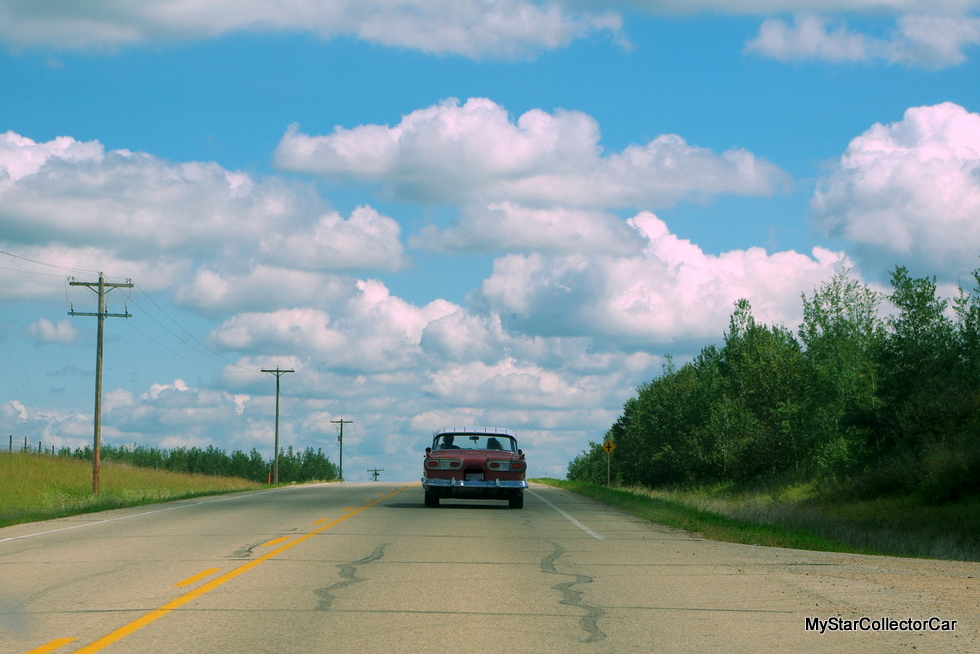
I thoroughly enjoyed this trip down memory lane in the March 1971 Mechanix Illustrated issue it dawned on me that driving a 61-year-old car on 2019 roads would have fewer complications because a 1958 vehicle is a lot closer to a 2019 model in terms of automotive advancement.

For one thing, you don’t have to crank start a ’58 Ford. For another thing, you might even get passed by a ’58 ford on the nearest freeway.           

BY: Jim Sutherland

Jim Sutherland is a veteran automotive writer whose work has been published by many major print and online publications. The list includes Calgary Herald, The Truth About Cars, Red Deer Advocate, RPM Magazine, Edmonton Journal, Montreal Gazette, Windsor Star, Vancouver Province, and Post Media Wheels Section. 

LET THE FISTFIGHTS BEGIN: 1956 FORD OR 1956 METEOR?

0

There are many similarities between a 1956 Ford and a 1956 Meteor.

The lookalike angle was a highly intentional decision by Ford of Canada to blur the lines between a Ford and a Meteor during the Fabulous Fifties.

Ford resurrected the Meteor name when they introduced their 1949 models and took the then- new look “Shoebox Fords” into legendary status within the car hobby. Incidentally, MyStarCollectorCar was correct to use the resurrection angle because the Meteor Motor Car Company (no Ford affiliation) used the Meteor name for its cars during the early 20th century days of the automobile-until the Meteor company began to build hearses and ambulances instead of passenger cars.

The early automotive era was essentially a get-rich-quick world of dreamers and schemers; most of whom would fall well short of their goal to dominate the horseless carriage market. Eventually mergers, unholy manufacturer alliances and bankruptcies sorted out the crowded car market and the Meteor name hit the dustbins of automotive history until Ford of Canada decided to run with the handle for its Mercury dealerships.

CLICK HERE for more information on how to advertise on the number one daily automotive e-zine in Canada

The main reason behind Ford of Canada’s choice to use the Meteor name was based upon small towns. There were many small rural Canadian communities that could not support both a Ford and a Mercury dealership because there were simply not enough customers in their region.

Ford wanted to add a lower cost model to its Canadian car lineup for Mercury dealers who were already in small town Canada and had to contend with a frugal customer base that was highly unlikely to buy a more expensive Mercury model from them.

The answer was simple for Ford of Canada: Build a basic Ford with a new name that could be sold at Mercury dealers to penny-pinching Canucks in the Canadian car market. The name was Meteor and its legacy within car hobby circles is felt to this very day.

The early Meteor models have become a bone of contention for their owners because many people call them “Mercury Meteors” when they were simply Meteors when they debuted in the Great White North. The confusion may occurred when Ford of Canada revived the Meteor name in time for their 1962 model year-plus they added Mercury to the full name on their cars.

The 1961 timeout for the Meteor name allowed Ford of Canada to move forward with the 1962 Mercury Meteor name and may have created a point of serious irritation for current owners of the first generation of Canadian-built Fords.

The blurred lines between Meteor and Ford models has created a source of confusion typically encountered by identical twins who are forced to endure an endless array of tactless compare-and-contrast observations that are destined to insult one, the other, or both twins.

Meteor and Ford models do indeed look alike–but they do not have feathers that can be easily ruffled by comments designed to figure out one from the other.

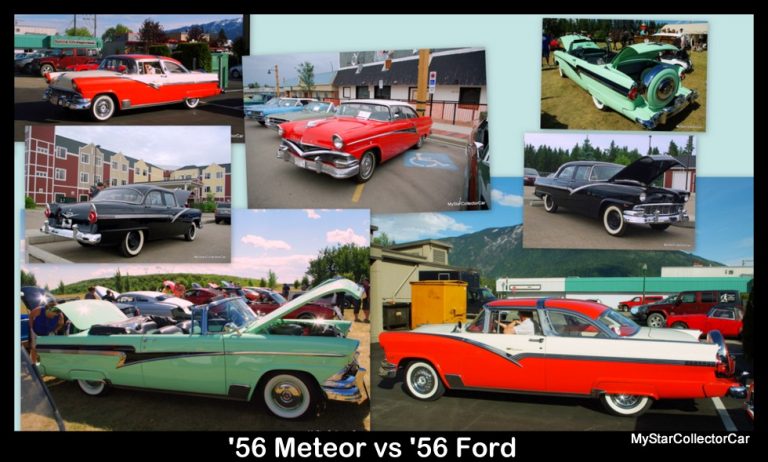
MyStarCollectorCar decided to choose the 1956 Meteor and Ford because they have enough similarities and differences to make the comparison interesting for car guys.

Basically, the cars are interchangeable in most design, style and engineering areas. The biggest differences are cosmetic and involve bright work differences.

For example, the 1956 Meteor has a very different front grille. The ’56 Meteor has a stylized V shape that drops down in the center of the car’s grille and is very different from the narrow rectangle-patterned grille on the ’56 Ford.

The side trim on the 1956 Meteor is also very different from the ’56 Ford’s side trim. The 1956 Meteor has a bolder lightning bolt design in its trim package that zigs and zags in the body panels of the rear passenger quarters. The 1956 Ford has a smaller lightning bolt design in its side trim that is located on the front doors of the car.

These two features represent the most obvious differences between the 1956 Meteor and Ford models. Most Meteor fans would likely also add these models had zero Mercury badges on their body panels-but they might be wrong if the cars still had their original Mercury dealership badges on them.

To be precise, the Mercury dealerships located in small town Canada in 1956.  

BY: Jim Sutherland

Jim Sutherland is a veteran automotive writer whose work has been published by many major print and online publications. The list includes Calgary Herald, The Truth About Cars, Red Deer Advocate, RPM Magazine, Edmonton Journal, Montreal Gazette, Windsor Star, Vancouver Province, and Post Media Wheels Section. 

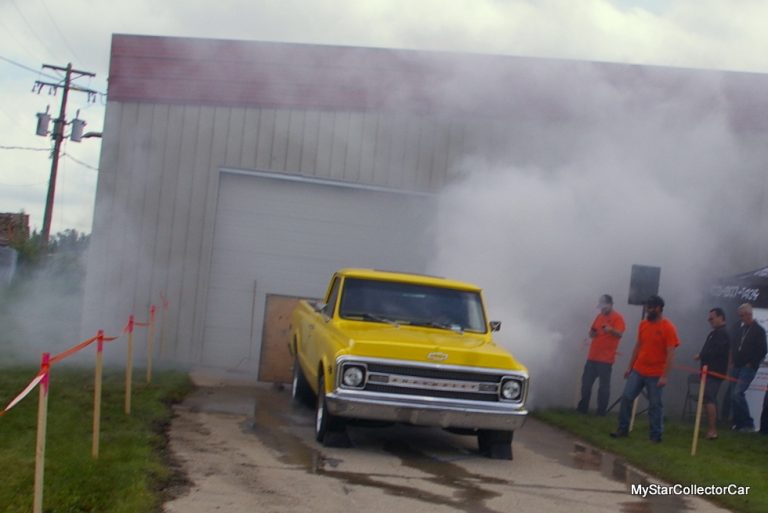
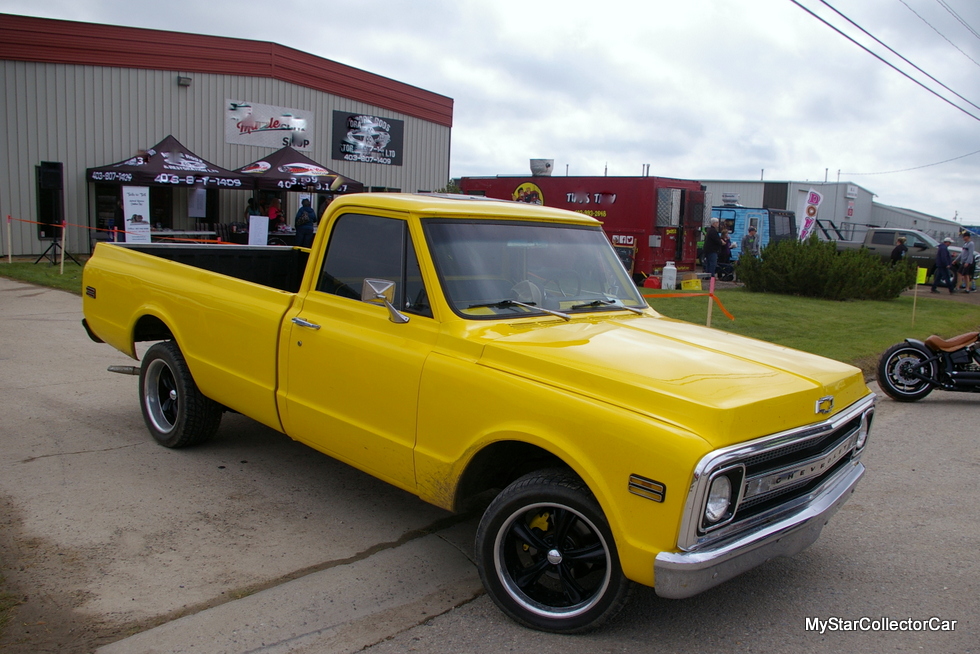
OCTOBER 2019: ‘MONZIE’ THE ’70 CHEVY TRUCK–A COLORFUL TRUCK WITH A COLORFUL FEMALE OWNER

0

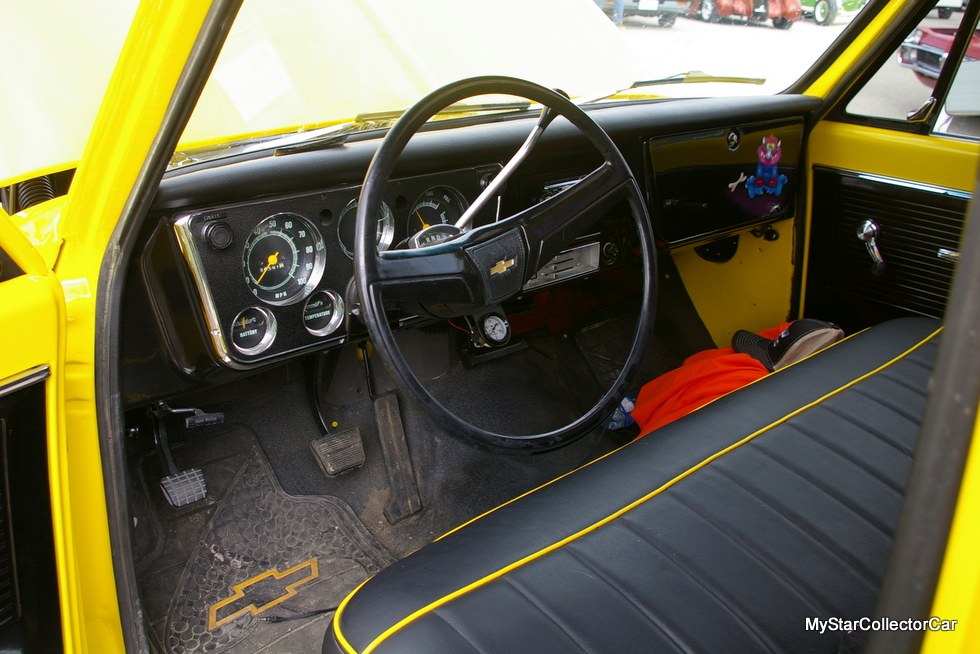
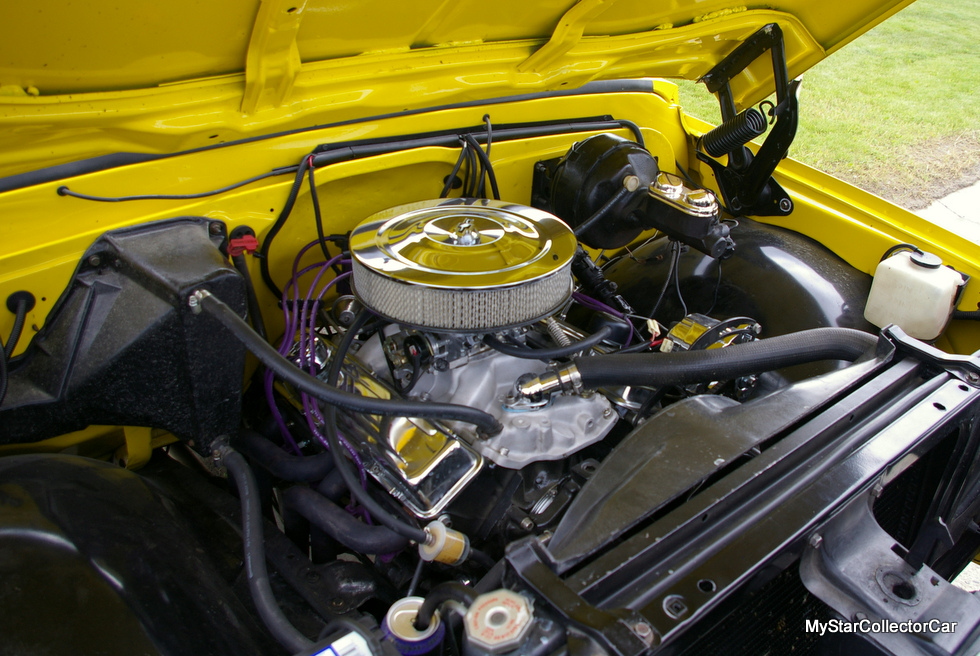
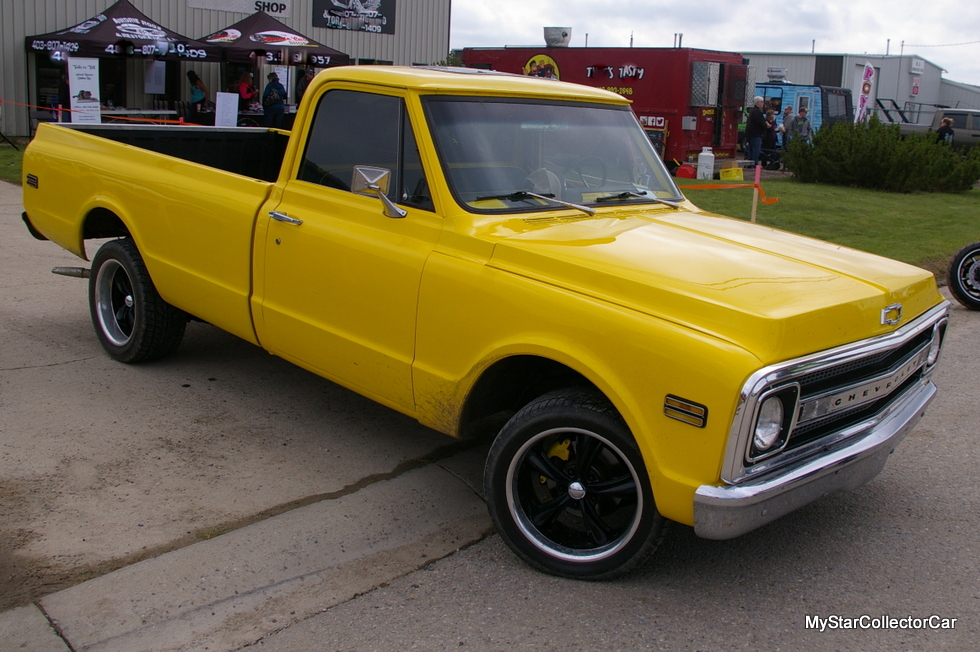
A yellow 1970 Chevy ½ ton resto mod started life as a factory orange ¾ ton Camper Special-complete with add-on camper.

That was not the vision that its new owner had for her truck when she purchased it 6 years ago.

Crystal Thorsteinson purchased the Chevy when she was an even younger car girl and decided to build her truck into a custom fit for her. Initially, she drove the ’70 Chevy ¾ ton for the summer and sold the camper that came with it.

The truck purchase became an easy decision for Crystal after she worked on her father’s vintage 1967 Ford F-100 pickup and found out she was not the heir apparent for the truck in the future. Her brother was in the mix for the Ford inheritance so Crystal decided to buy a vintage Chevy truck because she was a GM girl at heart.

‘Her father was heavily involved in the purchase because he is a seasoned car guy and has a good handle on the process behind a build. Crystal mentioned she “didn’t even see it live (in person)” when she became the owner because she trusted her dad’s judgment.

The truck was moved into a work area for the winter after its summer use and underwent a four-year transformation into a bright yellow beast of burden. The first major order of business was a frame swap from a ¾ ton into its current ½ ton status.

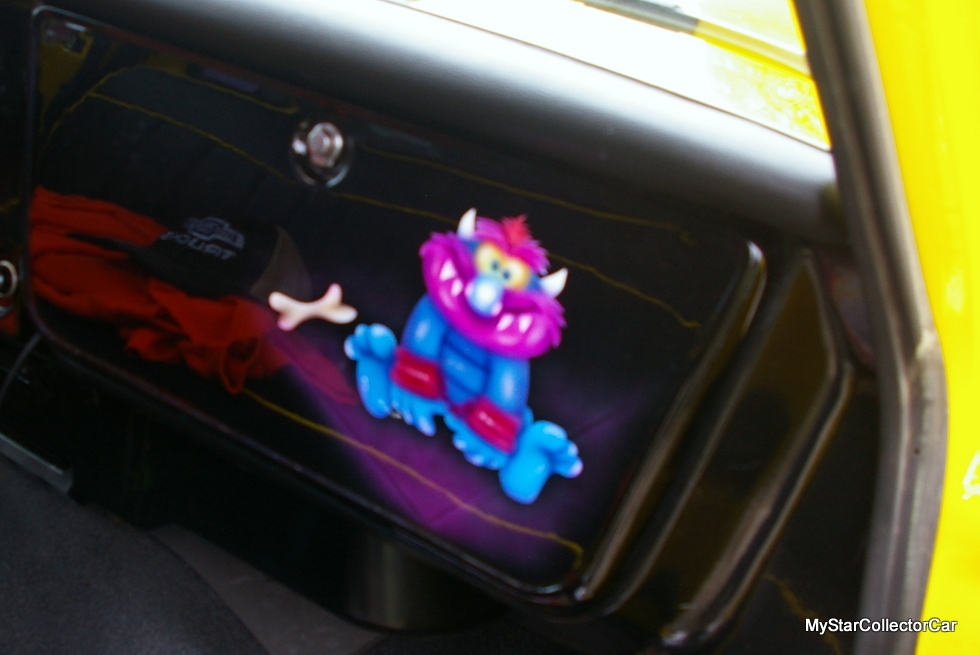
The truck was also christened Monzie in reference to the ‘My Pet Monster’ children’s TV cartoon program because Monzie was given to Crystal as a nickname by her parents when she was a little girl.

Crystal is a very hands-on owner who was more than willing to dive into the deep end of a major build and become part of the team. She mentioned her father liked her smaller hands because Crystal was able to reach places where he could not get access to mechanical components during her father’s F-100 project.

The ’70 Chevy has a 350 engine bolted up to a 350 Turbo 3-speed automatic and had enough ponies under its hood for Crystal to put on a good smoke show with it.

The project required three trucks to make one very cool pickup and Crystal mentioned that she had “8 doors at one point” during the build. She chose the best duo of the bunch in the best tradition of a seasoned car girl.

The ½ ton frame on the Chevy was donated by a 1972 Chevy truck and had factory discs on the front end. Crystal wanted to improve the truck during the process and an upgraded factory brake package was a great improvement for her ’70 Chevy.

It didn’t hurt that Crystal comes from a car guy family through her father and understands the technical side of a build. She also took automotive courses in high school to sharpen her skills.

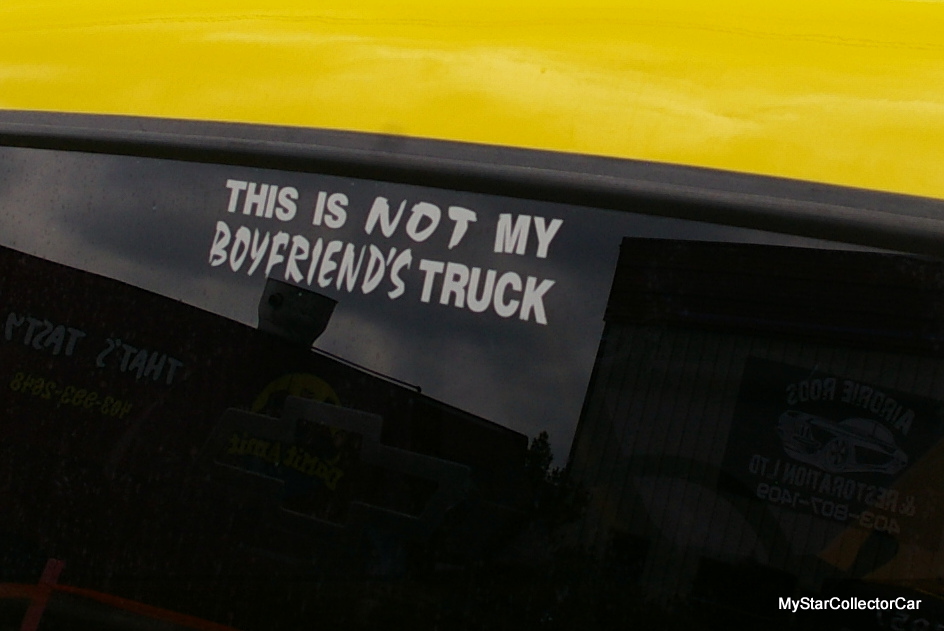
The happy ending was a very stylish 1970 Chevy ½ ton that was the result of car guy (and girl) teamwork. The decal in the back window says it all for Crystal: “This Is Not My Boyfriend’s”.

BY: Jim Sutherland

Jim Sutherland is a veteran automotive writer whose work has been published by many major print and online publications. The list includes Calgary Herald, The Truth About Cars, Red Deer Advocate, RPM Magazine, Edmonton Journal, Montreal Gazette, Windsor Star, Vancouver Province, and Post Media Wheels Section. 

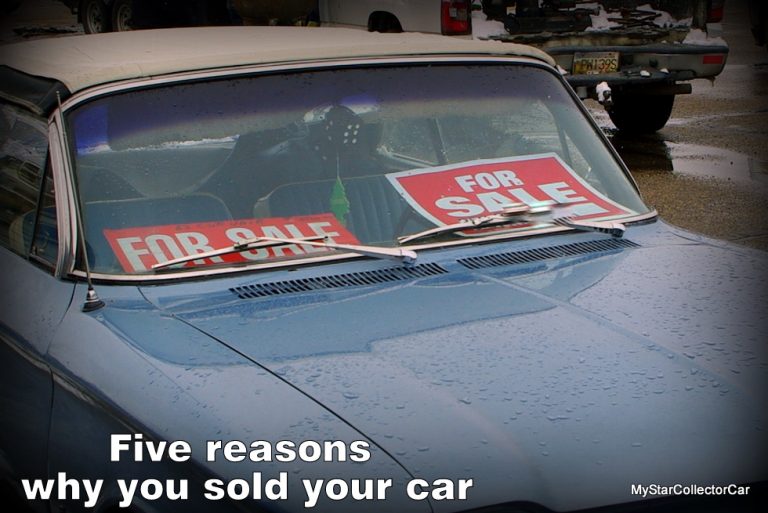
MSCC OCT 18 FEATURE FIVE FOR FRIDAY: FIVE REASONS WHY YOU SOLD YOUR BELOVED OLD CAR

Most people who own classic iron have a pretty big commitment to their old car or truck.

This type of commitment is less like the commitment you have to your brand new Kia SUV and more like the commitment you have to your 15-year-old Springer Spaniel.

Nevertheless, there are reasons why you have to part with your old classic so here are five of the most common reasons why someone else owns your ’55 Chevy.

The first reason?  You got married.

You may love the Road Runner you’ve owned since you were 16 and pumping gas to pay for it but ten years later you’re walking down the aisle and now you have split loyalties.

Two years after that your first kid arrives—goodbye Road Runner—hello minivan.  Your Plymouth is gone before the kid gets home from the hospital—replaced by something a lot less cool but a lot more practical. Welcome to Real Life 101.     

The second reason?  You got divorced.

Your cherished street rod just turned into a legal football and the odds are it’s going to a new home. It’s a piece of the jumbled mess called community property so color it gone—just like the garage you used to store it in. All you have left are a few memories and possibly the donor car you pirated parts from to build it.

The third reason?  Your finances took a big hit.

In most cases, this is a business-related decision so at least you can take comfort in the fact that a fiscal downturn sent your car away on a trailer. A drug/drinking/gambling habit carries far less honor as a reason for parting with your beloved old Ford so in this case a recession was a better option.

CLICK HERE for more information on how to advertise on the number one daily automotive e-zine in Canada

The fourth reason?  Reality stepped in.

You took it apart, pumped a lot of time and money into it and eventually ran out of time and money so now you have a pile of parts and no game plan. Actually, there is only one game plan—take a big hit on your investment and help the next owner load it up.

He may have a better game plan to finish it or your car is simply going to end up in an online auction for car parts and he makes a lot more than what he paid you. Call it a good life lesson and an even better free enterprise lesson.

The fifth reason? You died.

Your classic just became part of an estate sale and there’s nothing you can do about it. You had a good run together but now your automotive soul partner is going to be part of somebody else’s fleet—it’s an asset that’s going to be liquidated in a cold business deal.

This reason may sound depressing but it does carry the most honor in car guy world because it ended with the words “til death do us part”.          

Jerry Sutherland

Jerry Sutherland is a veteran automotive writer with a primary focus on the collector car hobby. His work has been published in many outlets and publications, including the National Post, Calgary Herald, Edmonton Journal, Ottawa Citizen, Montreal Gazette, Saskatoon StarPhoenix, Regina Leader-Post,  Vancouver Sun and The Truth About Cars. He is also a regular contributor to Auto Roundup Publications.

Please re-post this if you like this article.

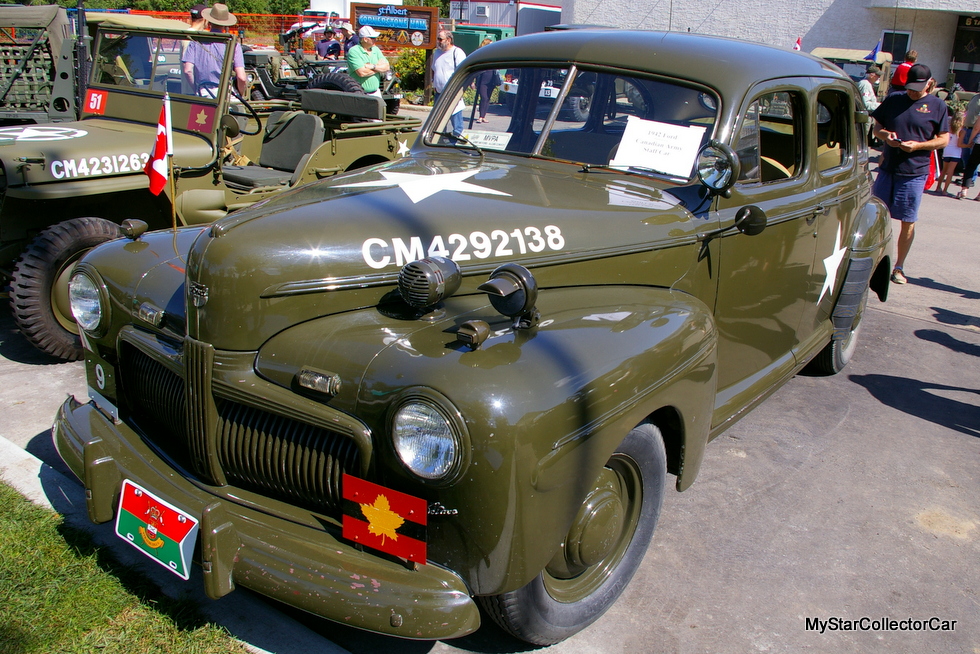
MSCC OCTOBER 16 “WHAT’S IT?” WEDNESDAY— IT’S THE STANDARD ONE HEADLIGHT-ONE TAILLIGHT PATTERN

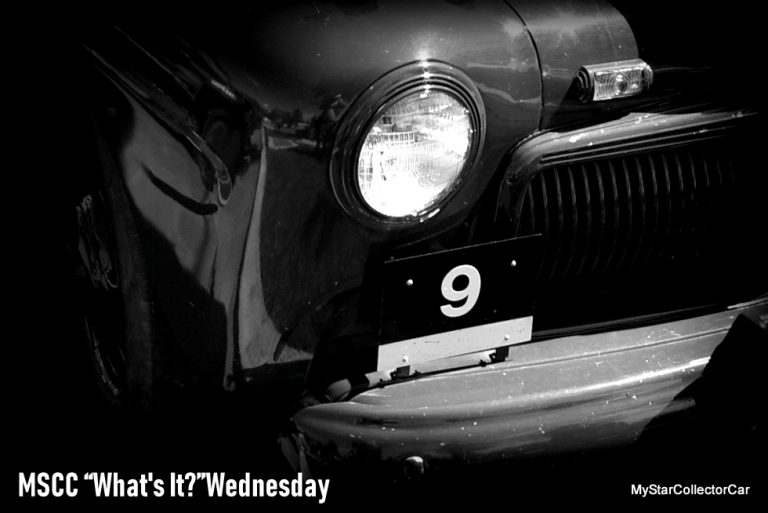
These “What’s It?” Wednesday clues can go down many paths but one of the most popular is a head light (see above).

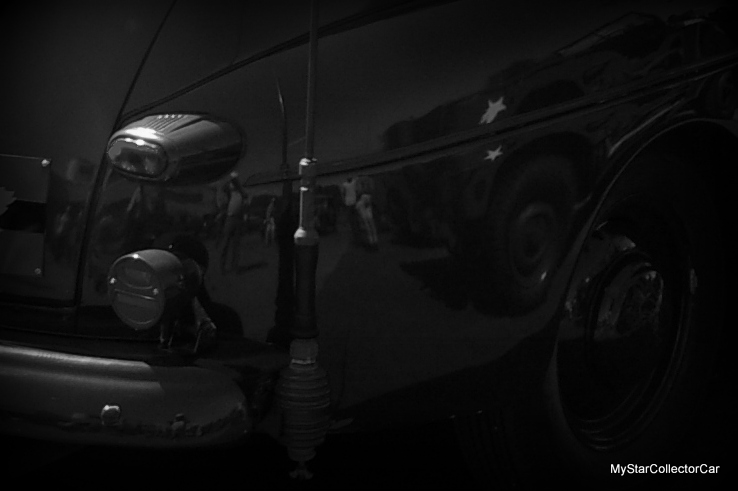
Followed by a taillight (see below).

If that doesn’t work you can get the whole car/solution (see below on Thursday).

It’s a 1942 Ford staff car.

By: Jerry Sutherland

Jerry Sutherland is a veteran automotive writer with a primary focus on the collector car hobby. His work has been published in many outlets and publications, including the National Post, Calgary Herald, Edmonton Journal, Ottawa Citizen, Montreal Gazette, Saskatoon StarPhoenix, Regina Leader-Post,  Vancouver Sun and The Truth About Cars. He is also a regular contributor to Auto Roundup Publications.

Please re-post this if you like this article.

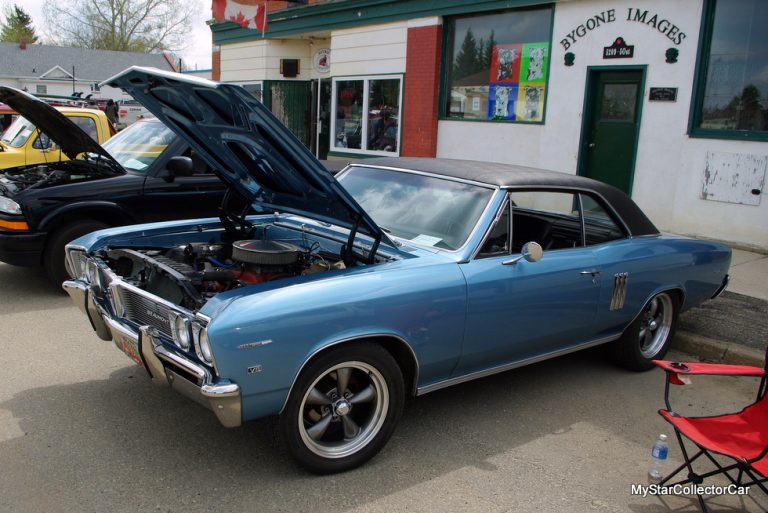
OCTOBER 2019: “IT’S JUST A BEAUMONT”– NOT A GOOD WAY TO DESCRIBE THIS CANADIAN BEAUTY

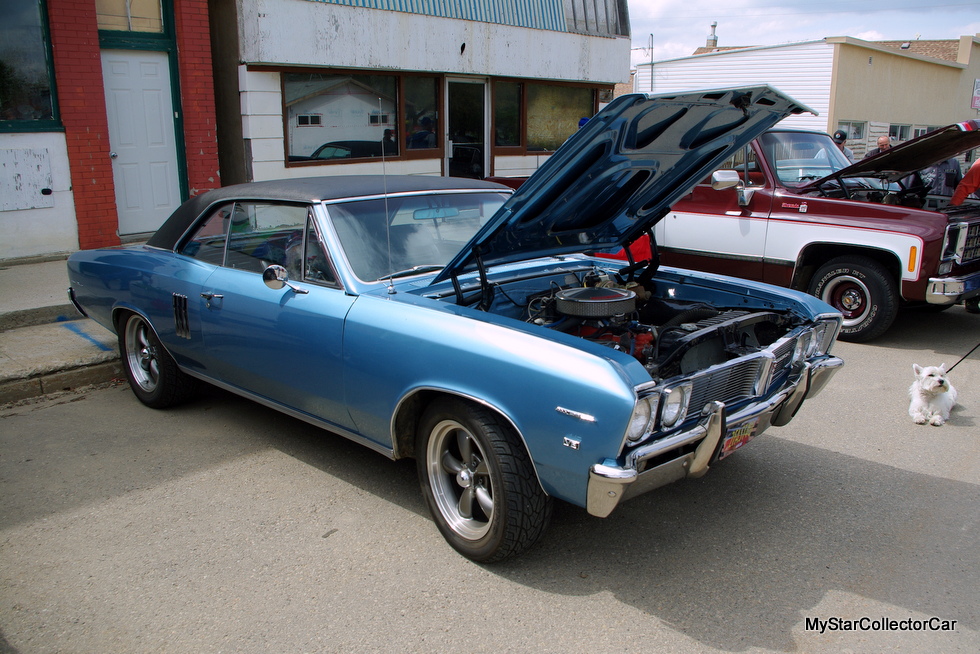
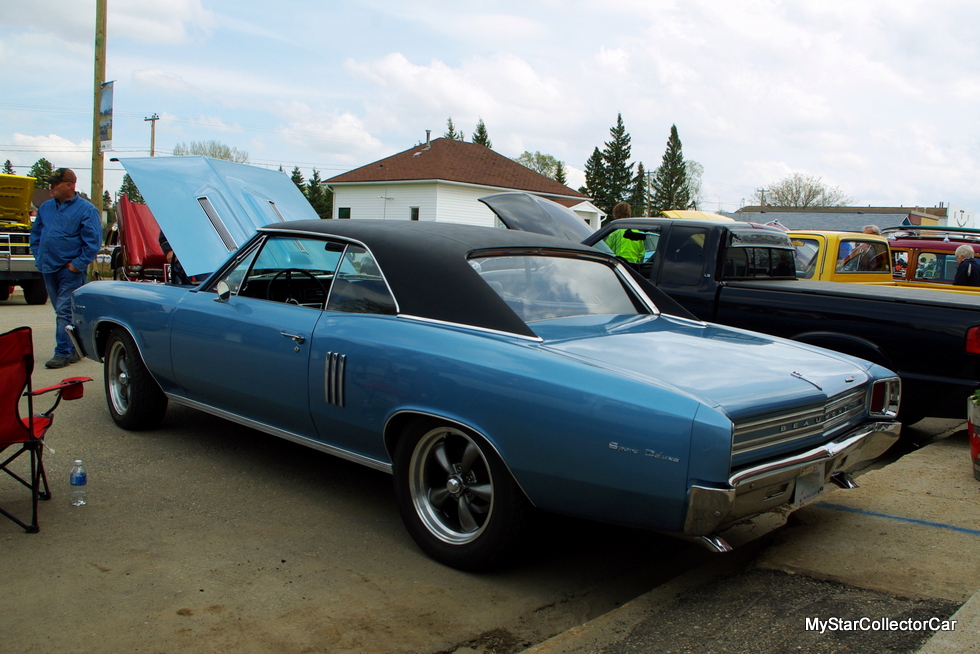
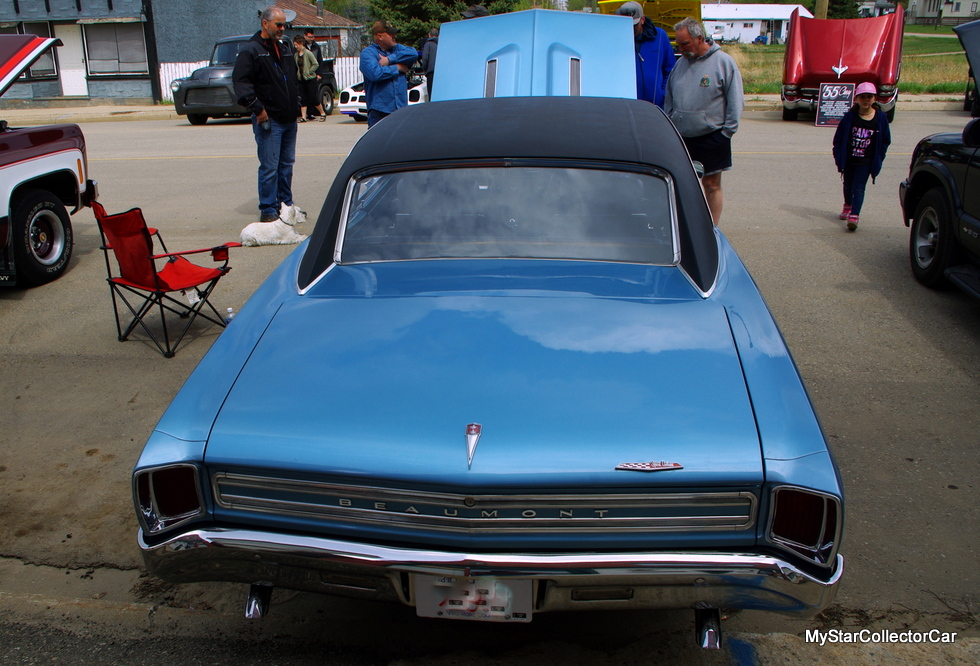
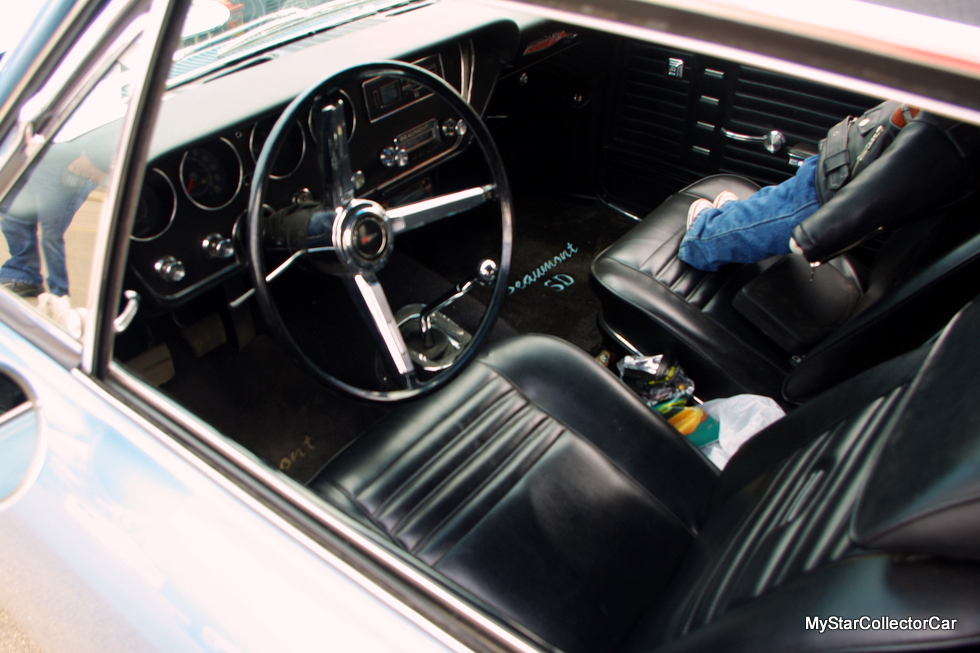
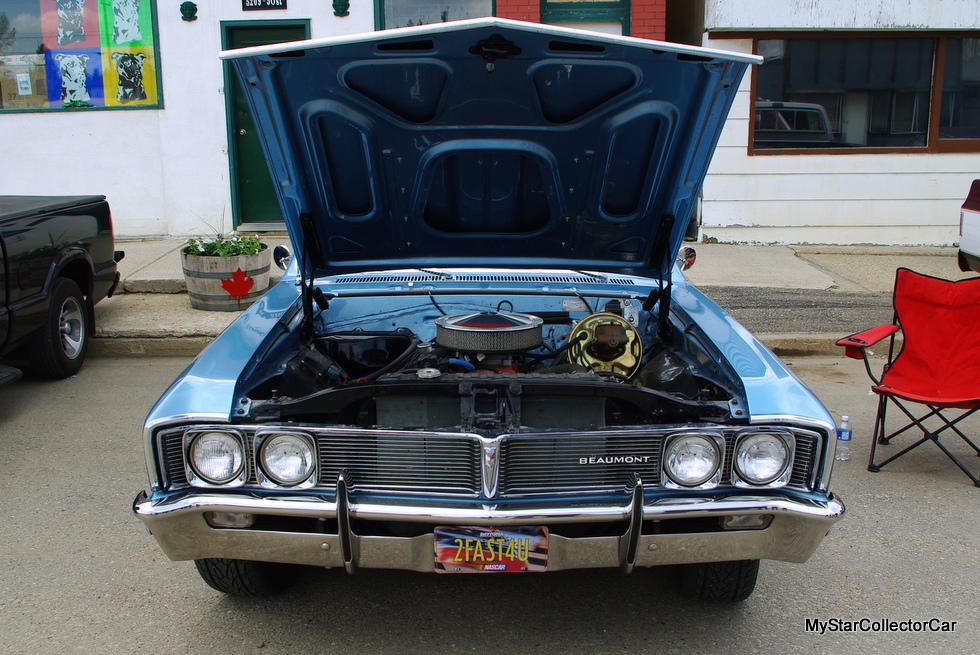
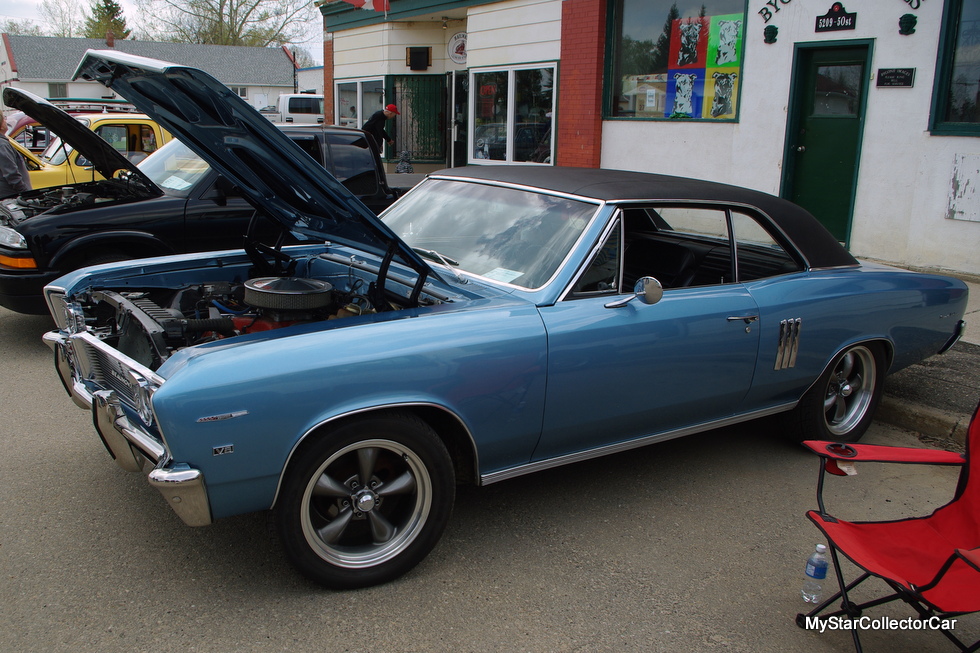
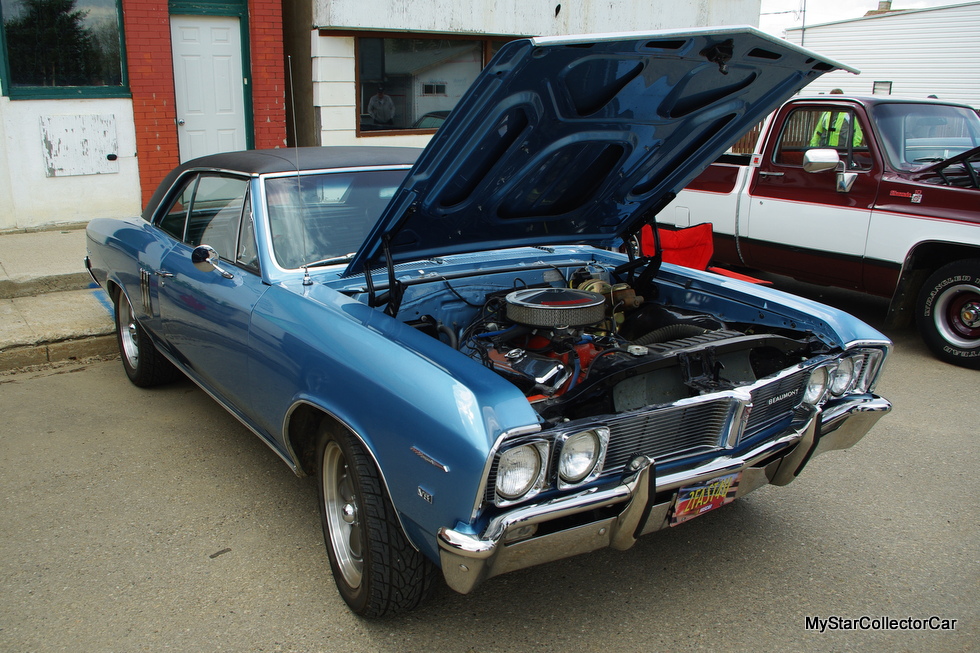
Tim Beausoliel has been the proud owner of a 1967 Beaumont SD 396 for the past 21 years.

Many car guys may not even have heard of a Beaumont because it was built for the Canadian market and eventually became a casualty of the US-Canada Auto Pact agreement that essentially merged the automotive market in the two countries.

The Beaumont model was a Chevelle lookalike that was sold by Canadian Pontiac dealers so they could offer their version of the famous Chevy model. The cars have caused quite a stir in the collector vehicle hobby because few people are aware of their existence and are confused by them at shows.

The Beaumont models had a brief run from 1966 to ‘69 as a standalone brand so they are not viewed in the same light as a Chevelle by some car guys. In fact, Tim can recall a reaction when his rare car was deemed “Just a Beaumont” by a few geniuses.

Tim’s car is even rarer than most other Beaumonts because the Canuck vehicle is a rare combination of brute force and oddball options like power door locks. In 1967, customers were able to mix and match when it came to choices so Tim’s car has bucket seats–but no console, head rests, front bumperettes, a 3:55 Posi-trac rear end, along with mirrors on both front doors.

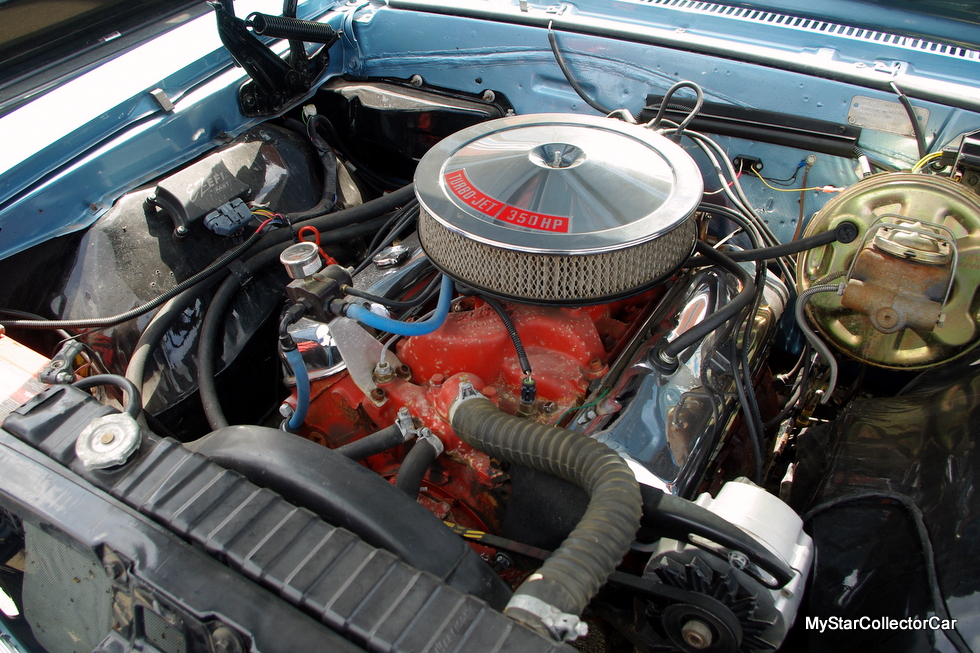
The Beaumont also has its original 396 cubic inch engine that went back into the car in place of a 427 Rat engine because the car was a ¼ mile track racer, according to Tim. The car only has 66,000 miles on it because of its race history where it moved down the road a quarter mile at a time for much of its time.

Tim spotted the car in a farmer’s field in the late 1990s and exchanged a summer of farm work for the Beaumont. He became the proud owner of a car that required a ton of work to return to its former glory, including a full rotisserie restoration along the way. The Beaumont’s frame was also twisted, likely because of the massive torque from the Rat engine during its racing days, so Tim repaired that problem.

The process included a few upgrades along the way. Tim added an aftermarket EFI system to the original big-block Chevy engine to squeeze extra performance out of the engine. The result is a solid power boost according to Tim, along with a significant increase in mileage thrown into the mix.

Tim wanted the car to go fast but he also wanted the car to stop fast when the situation warranted it-so he added disc brakes to all four wheels on his Beaumont.

Tim notices that a lot of people tend to walk by his Beaumont, completely unaware of the legacy behind this very rare Canuck muscle car.

The brief history of the Beaumont models made them a fascinating part of Canadian car history because Tim’s car was never “just a Beaumont”. In fact, none of these cars were just Beaumonts. 


BY: Jim Sutherland

Jim Sutherland is a veteran automotive writer whose work has been published by many major print and online publications. The list includes Calgary Herald, The Truth About Cars, Red Deer Advocate, RPM Magazine, Edmonton Journal, Montreal Gazette, Windsor Star, Vancouver Province, and Post Media Wheels Section.