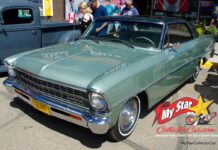
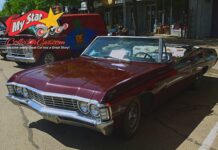
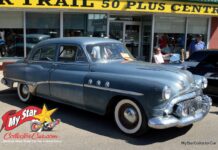
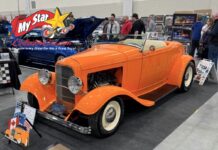
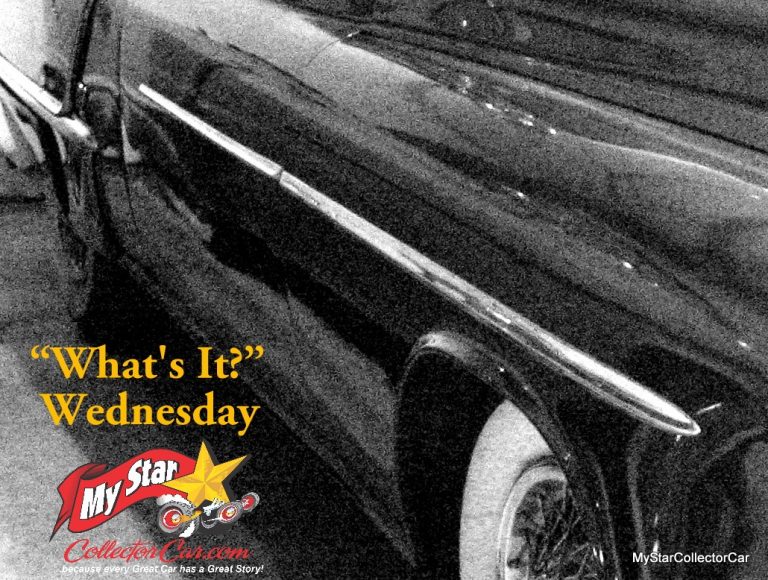
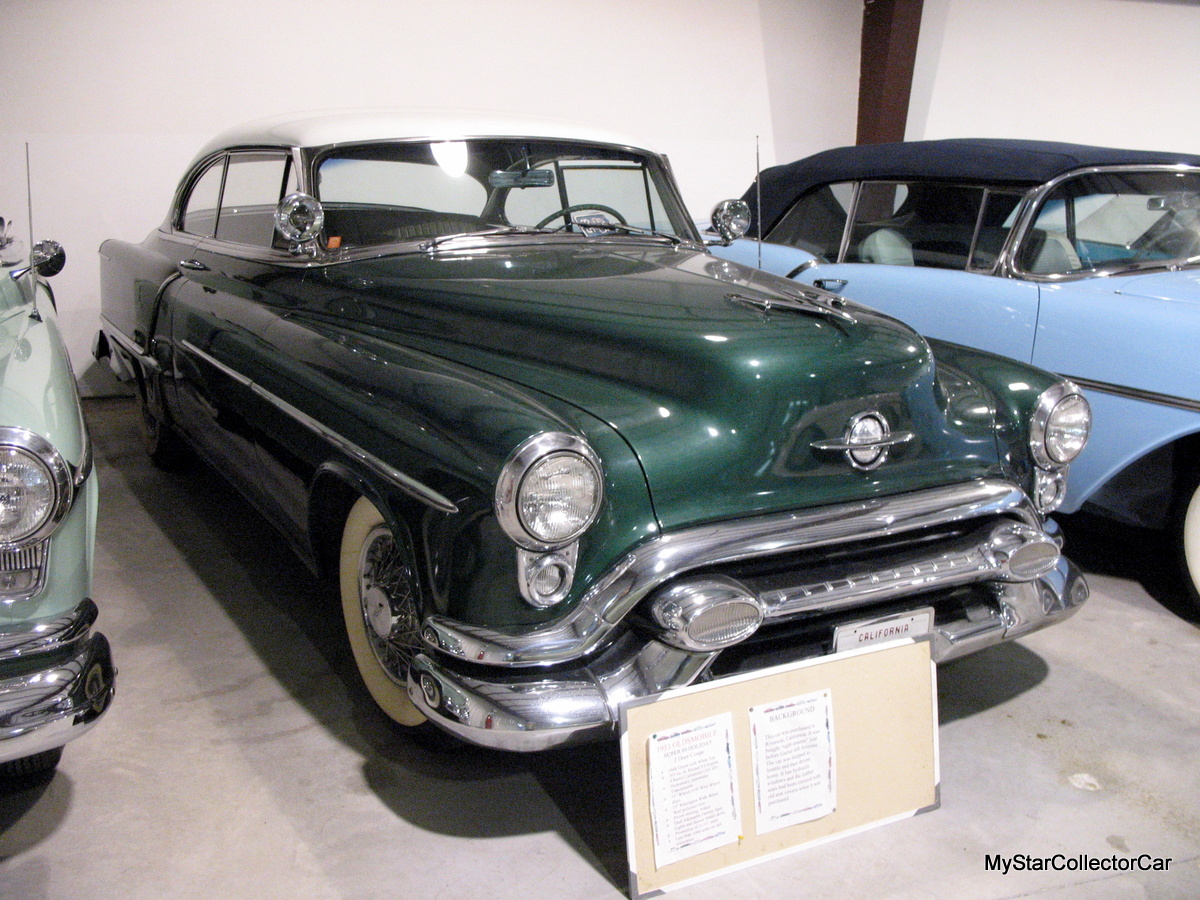
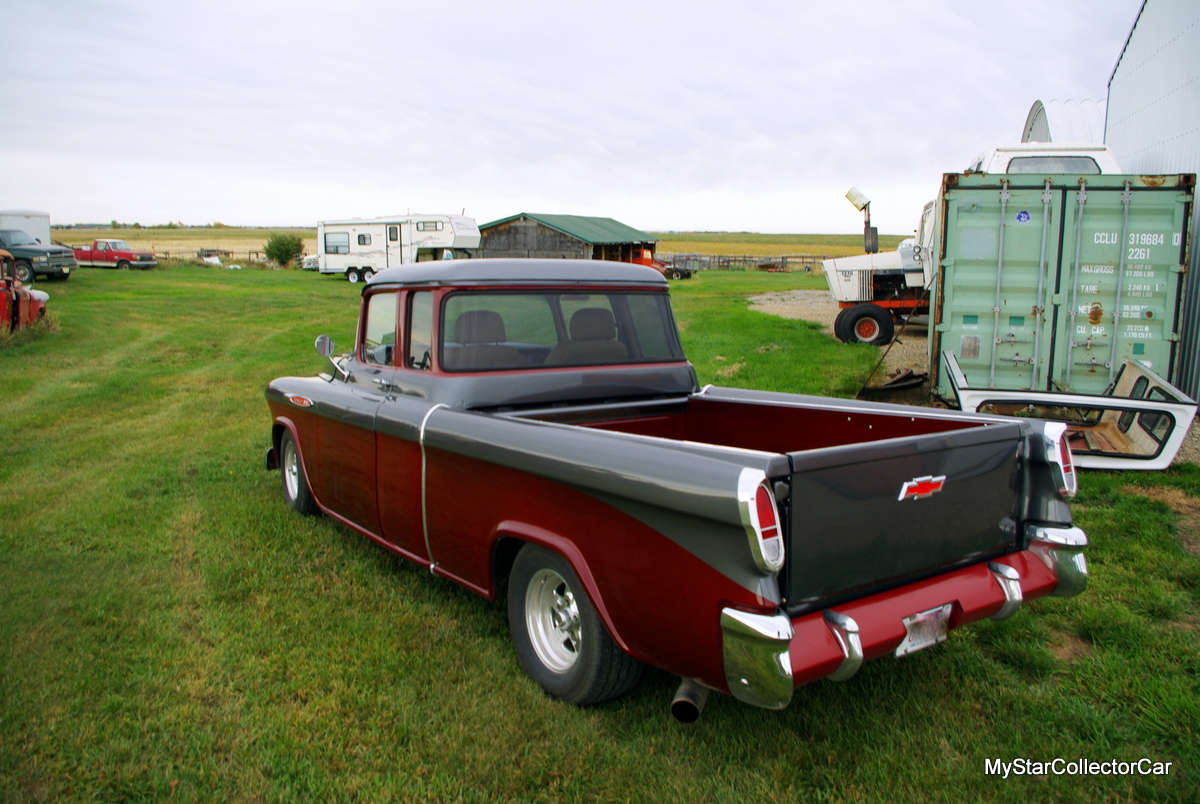
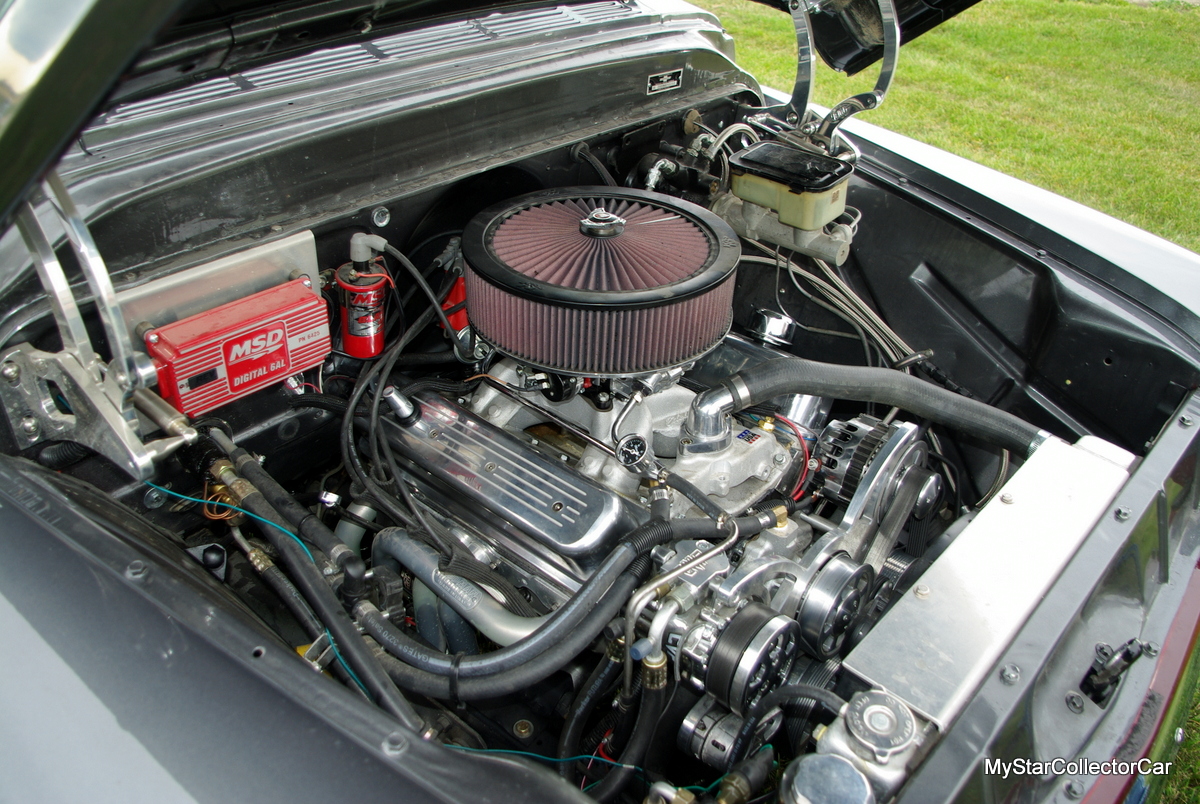
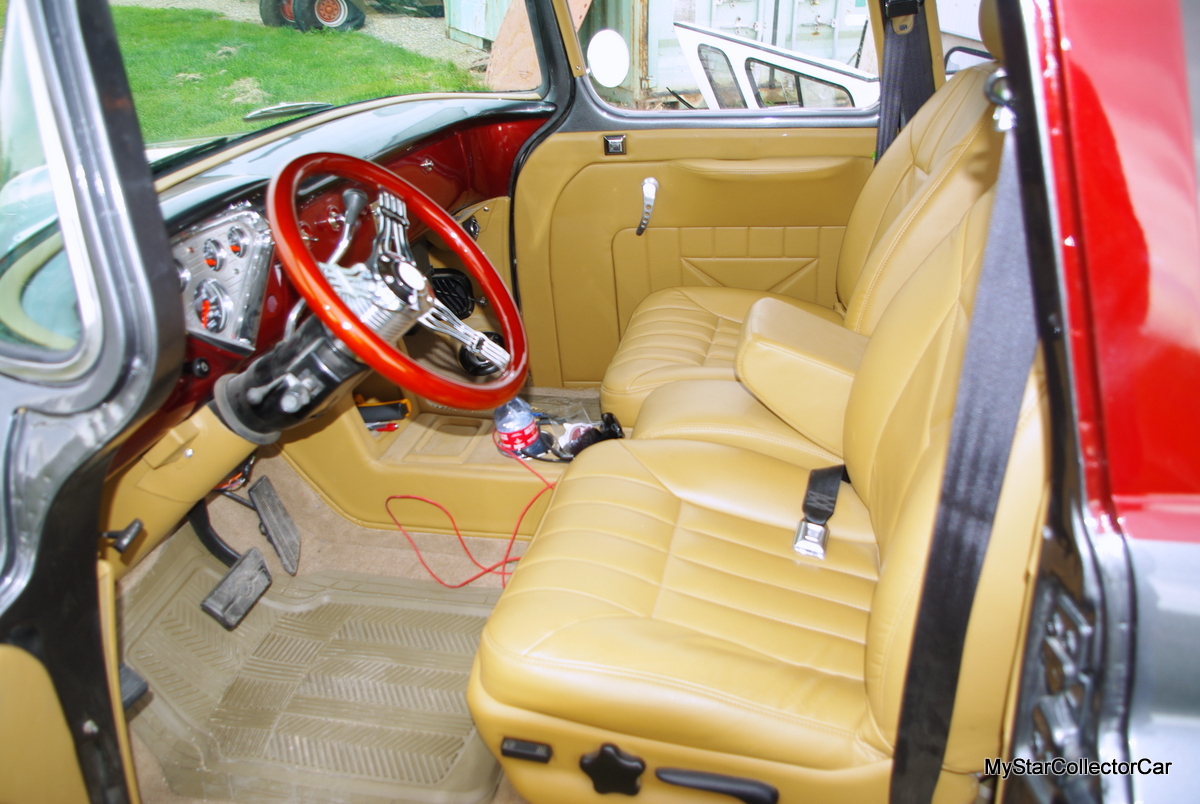
Here’s the first clue for today’s “What’s It?” Wednesday.
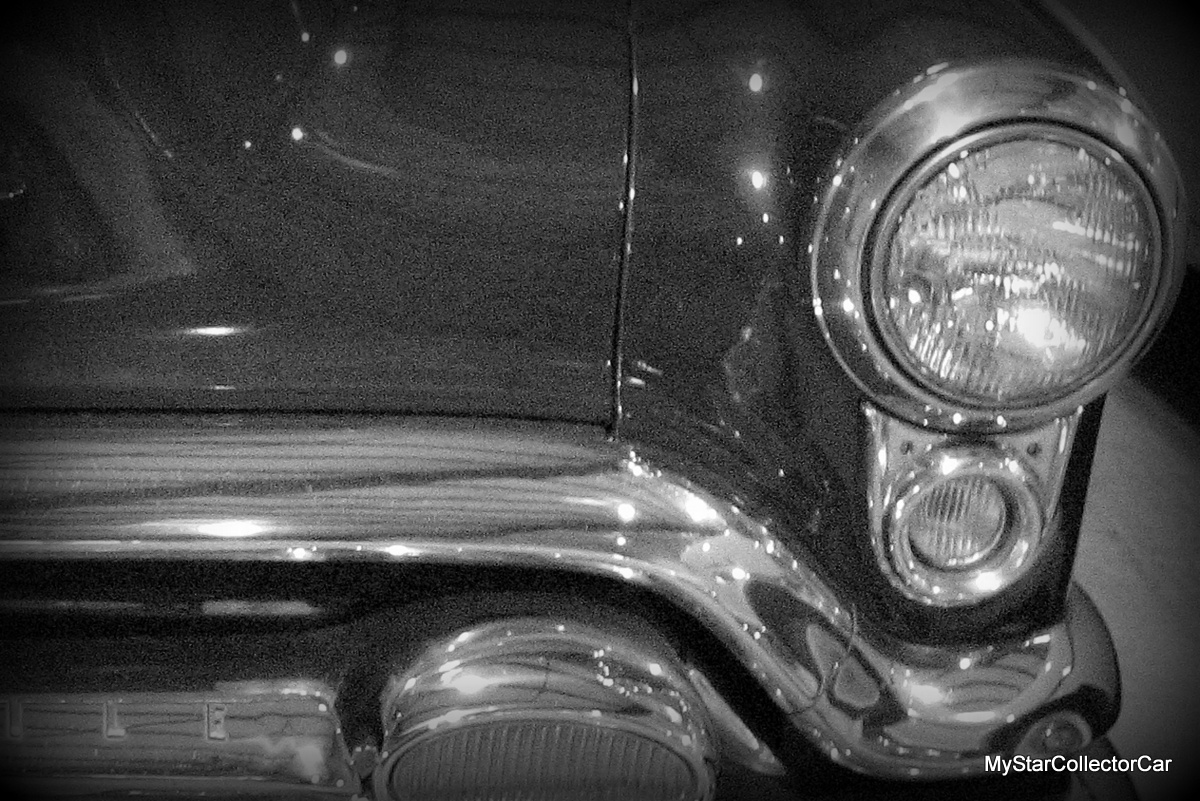
And here’s the second clue.
Check below for the answer on Thursday.
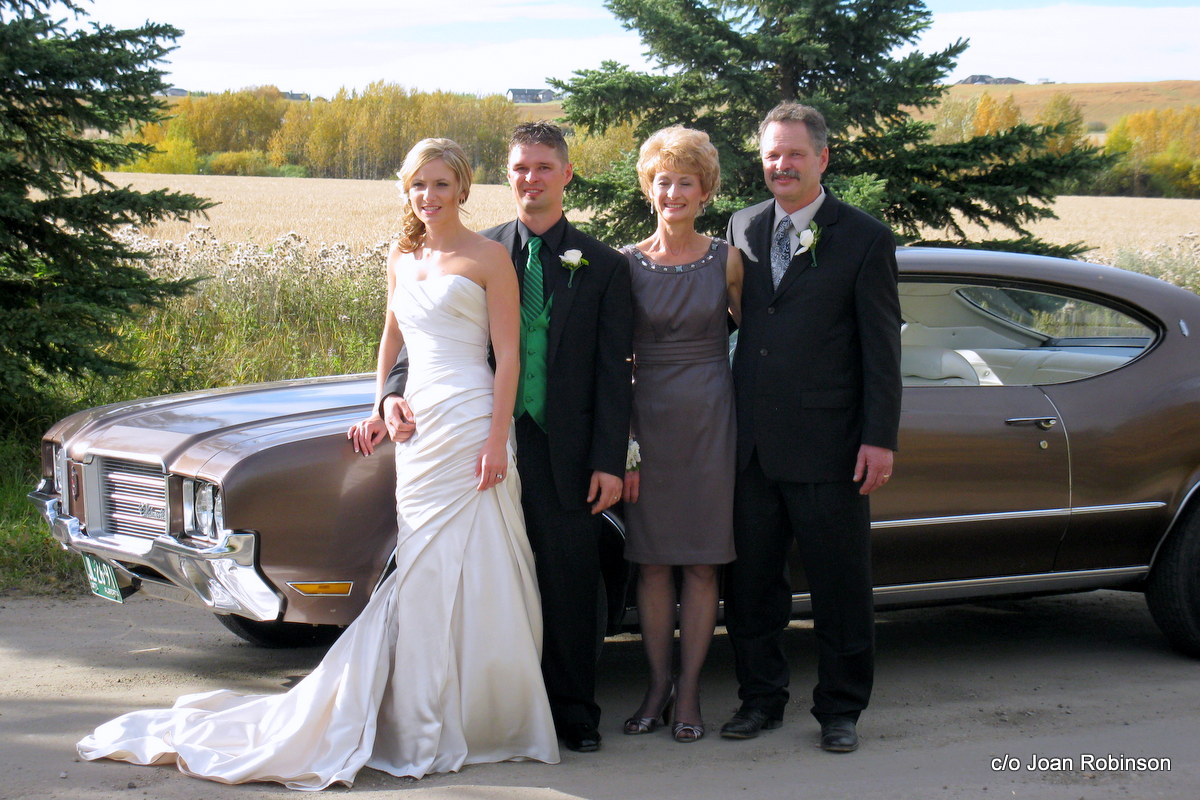
It’s a 1953 Olds Super 88 Holiday Coupe.
By: Jerry Sutherland
Jerry Sutherland is a veteran automotive writer with a primary focus on the collector car hobby. His work has been published in many outlets and publications, including the National Post, Calgary Herald, Edmonton Journal, Ottawa Citizen, Montreal Gazette, Saskatoon StarPhoenix, Regina Leader-Post, Vancouver Sun and The Truth About Cars. He is also a regular contributor to Auto Roundup Publications.
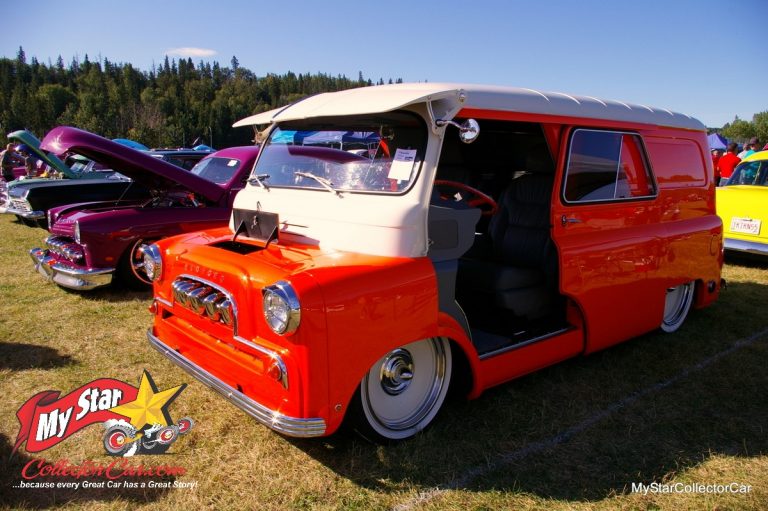
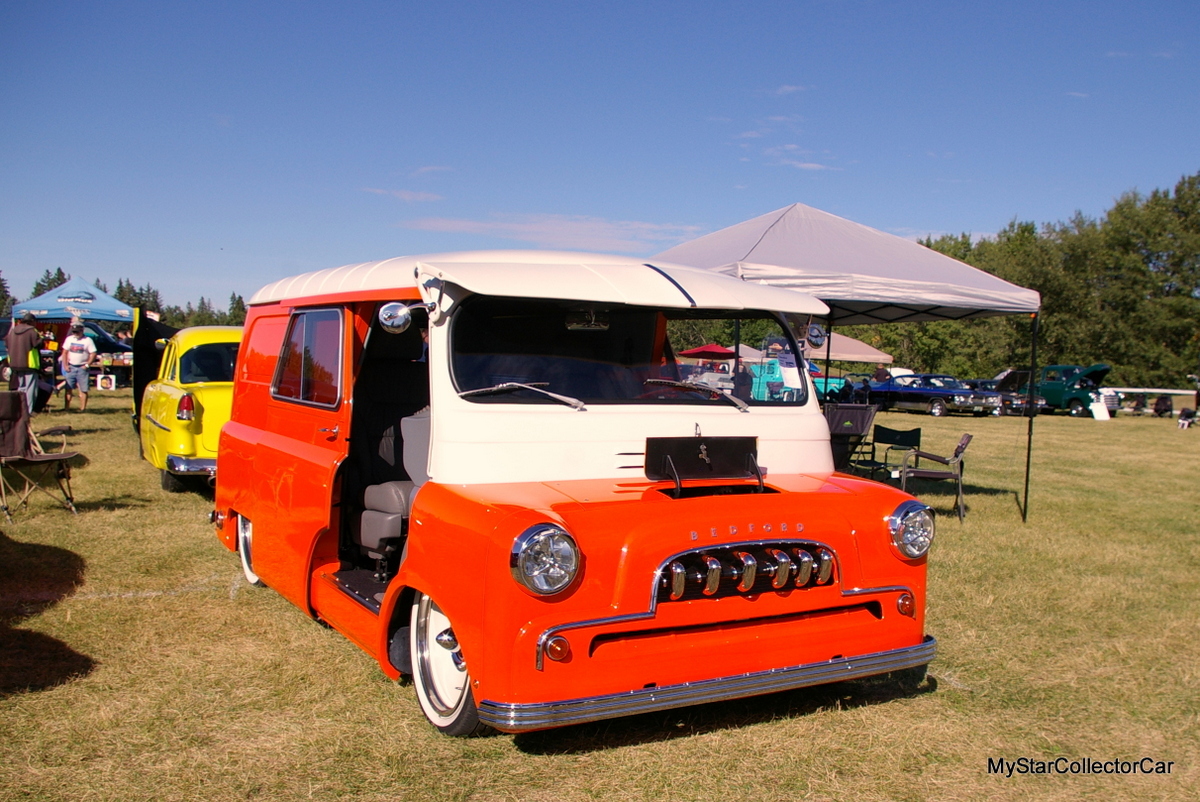
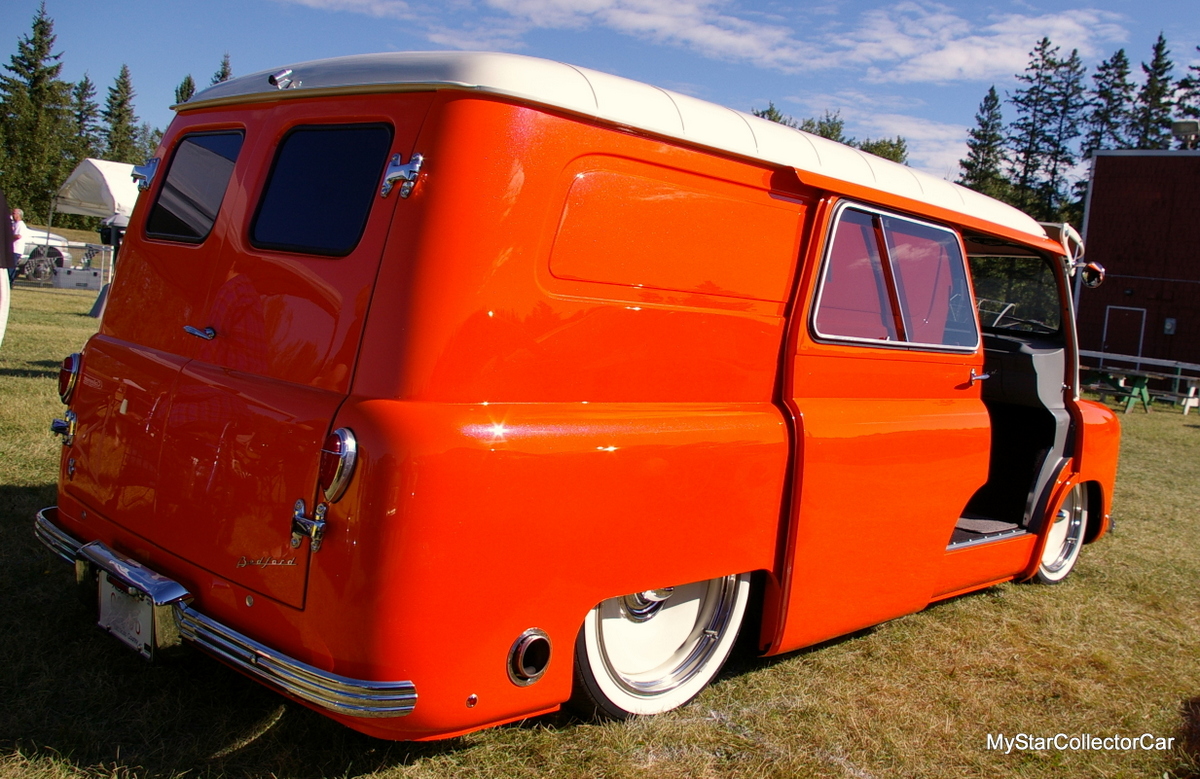
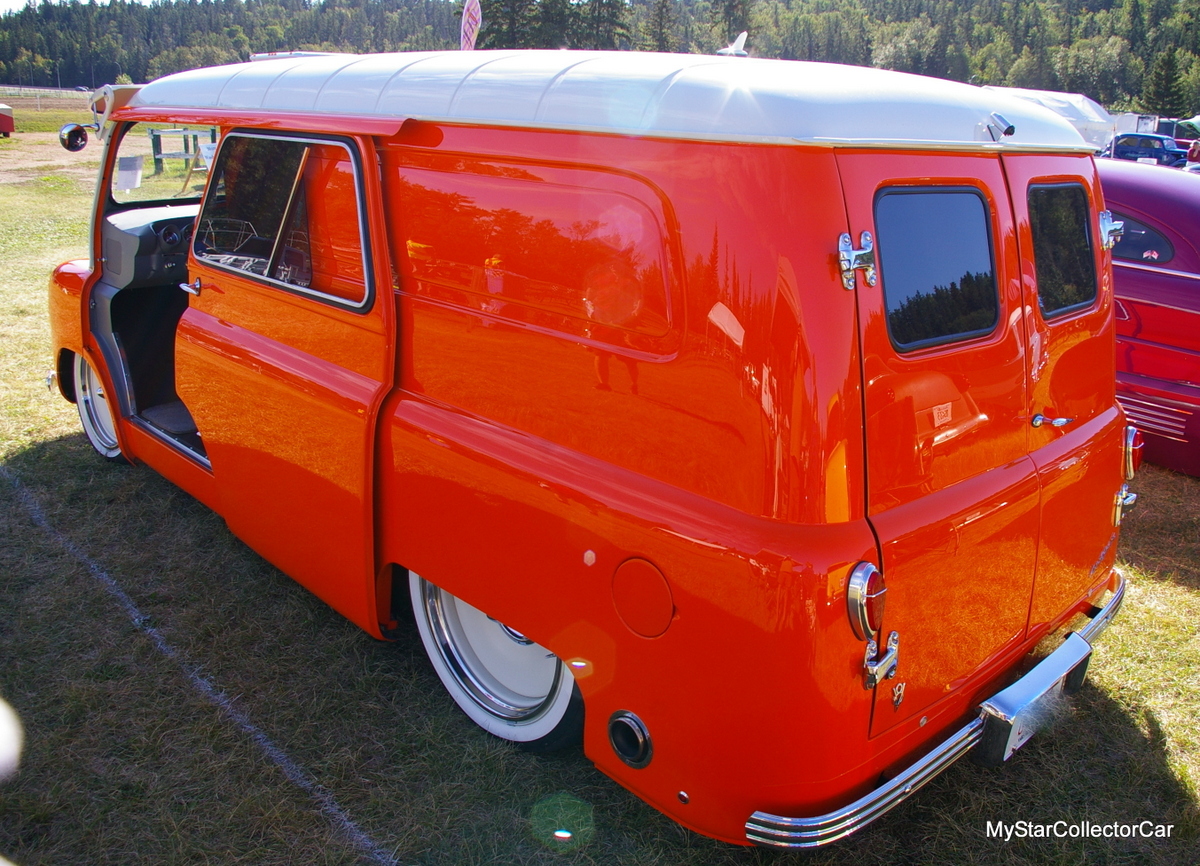
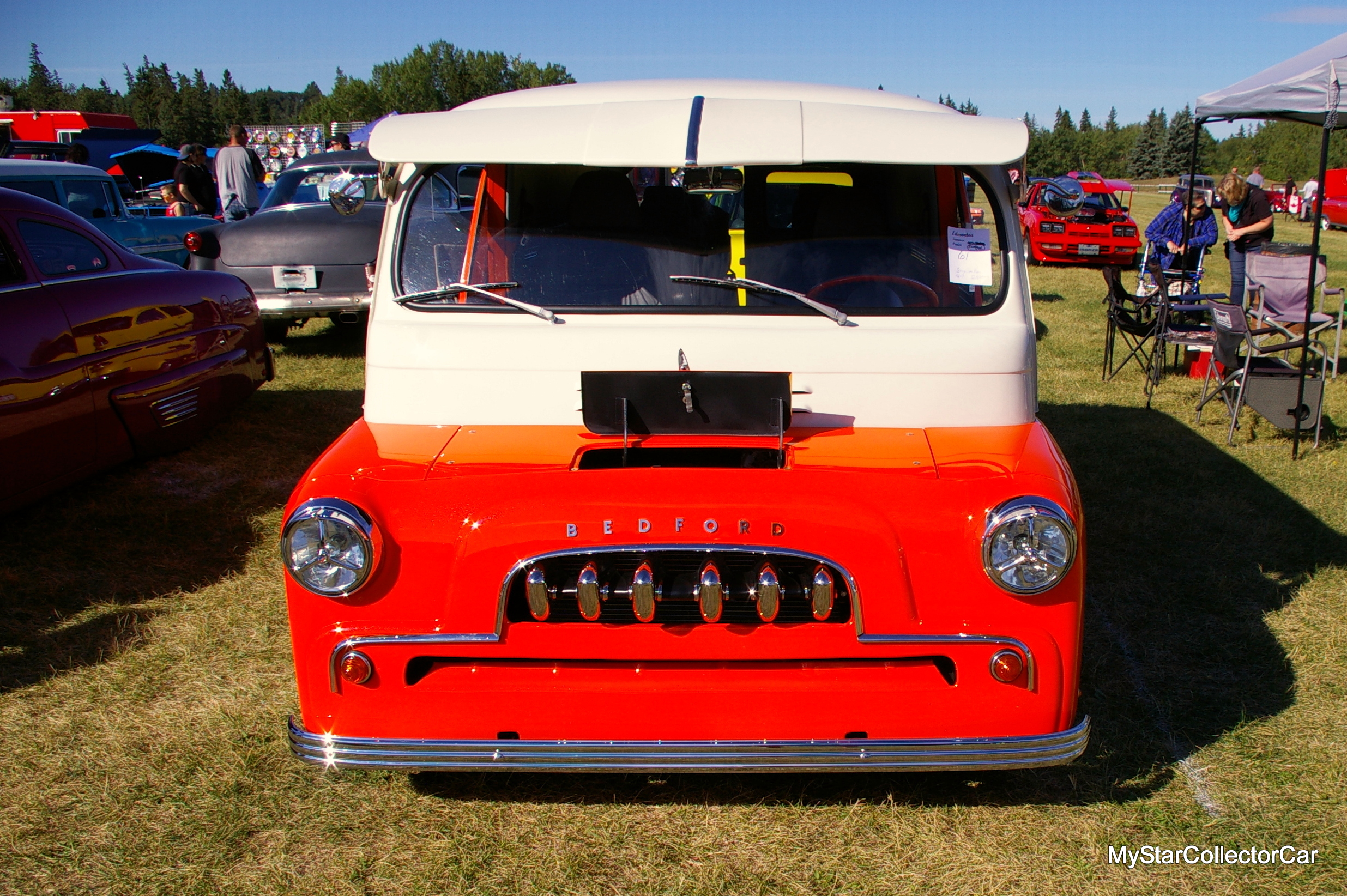
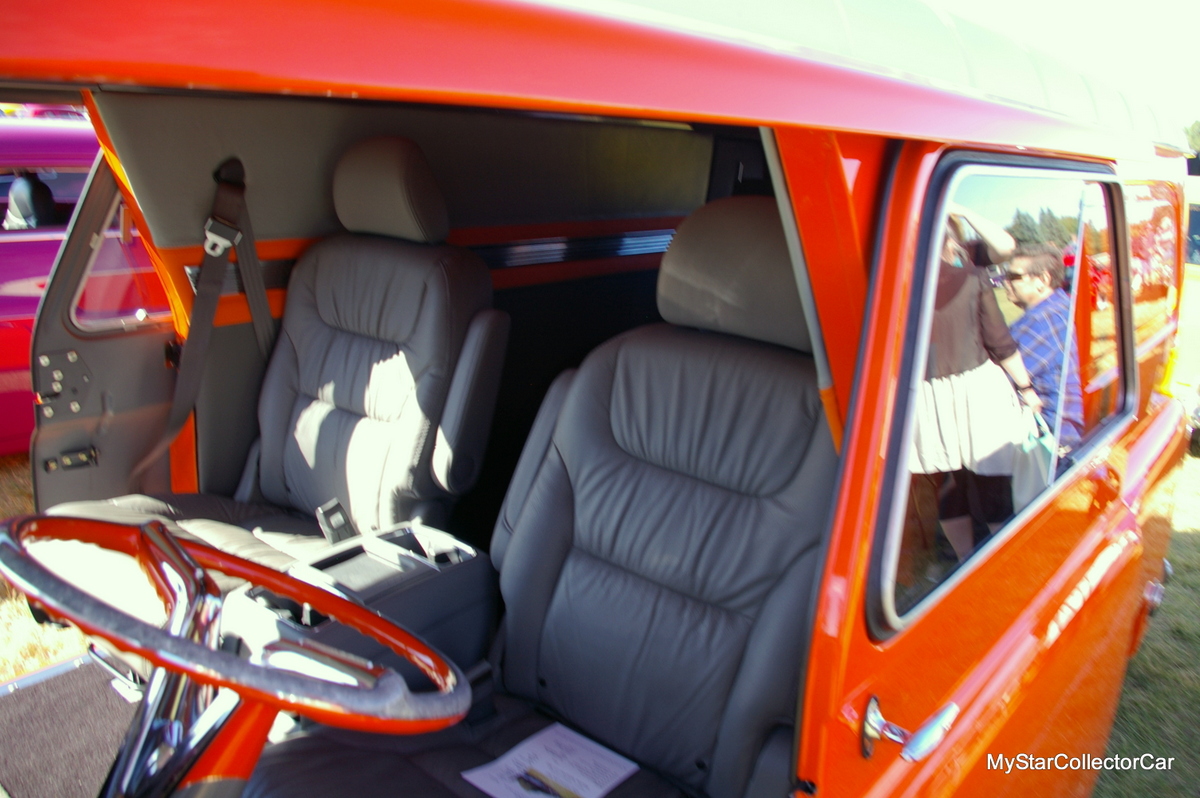
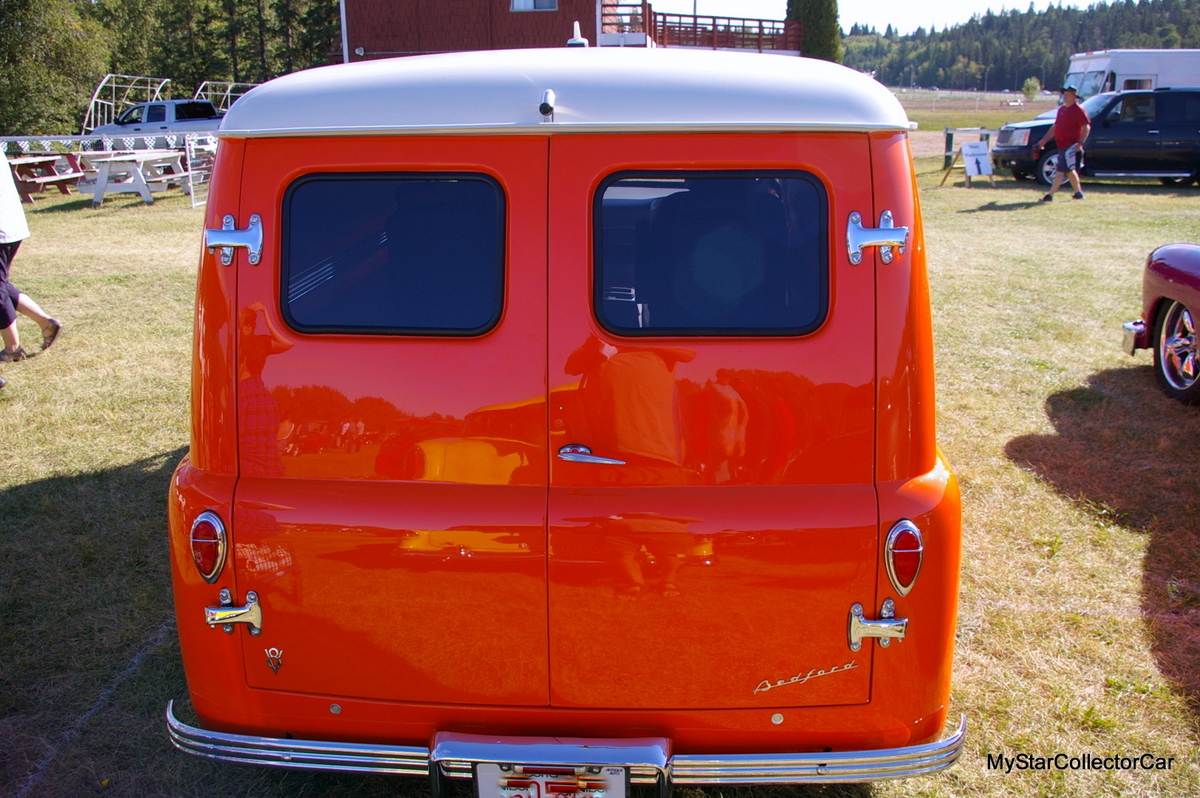
Peggy Vanhees is the proud owner of a very cool 1959 Bedford CA van that has undergone a major transformation from a mild-mannered little British delivery vehicle into a customized show-stealer.
Just for the record, the Bedford CA was not common in the North American market, but the van was very popular in its homeland of England where its small size allowed the Bedford to wend its way through the crowded and cramped road systems in that country’s urban areas.
Jim Sutherland
The Bedford CA van was equipped with a modest little engine that delivered great gas mileage with very limited horsepower, two important factors that made it an ideal vehicle for urban use, along with its smallish size.
Peggy thought her left-hand drive Bedford was likely used as a milk delivery van in an urban Canadian environment where it could showcase its frugal gas consumption as a commercial vehicle. Those days of active service were well behind the Bedford by the time Peggy spotted it in a field and no longer in use.
Peggy’s reaction to the Bedford was instantaneous: “OMG it’s cute!”, a reaction to the van that was common for women, given its overall style. Peggy and her husband decided to buy the vehicle, although he drew the line at a pink paint job on the Bedford.
Instead, he reached a compromise with Peggy and included a subtle pink pearl fleck in its two-tone paint job. The rest of the build process was a radical departure from the Bedford’s humble factory beginnings.
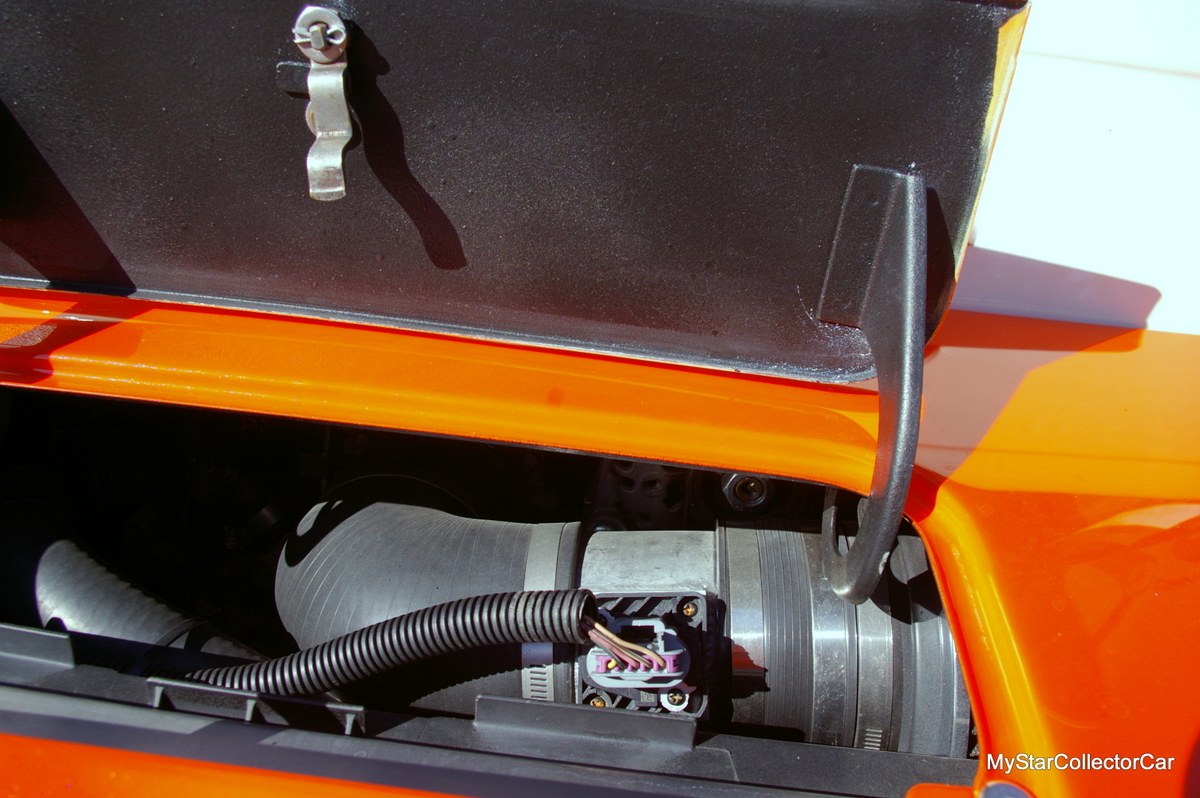
The Bedford has undergone a major heart transplant from its modest 4-cylinder engine to a beastly LS2 engine commonly found in 21st century GM performance vehicles. The new muscular engine is bolted to a 4-speed automatic that gives the Bedford a much higher rate of speed upon request.
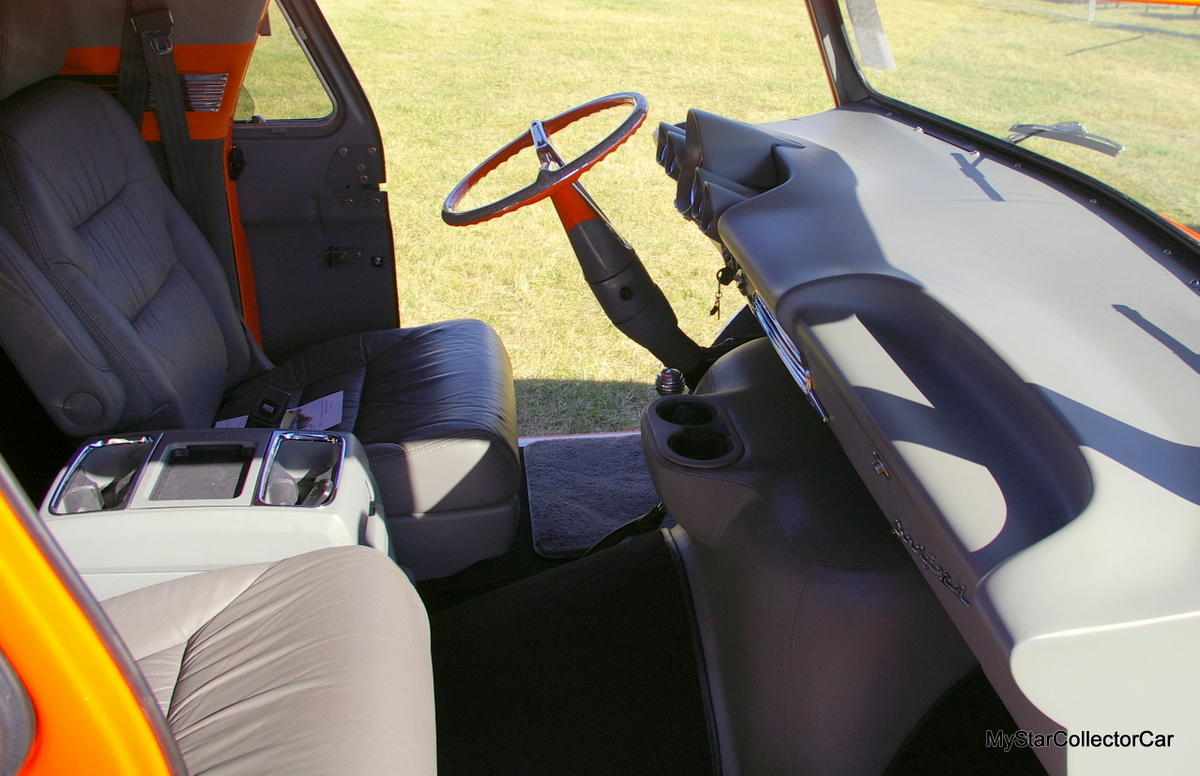
Peggy loves to drive the van and keeps a steady pace on the road behind the wheel. Sharp-eyed MyStarCollectorCar readers will notice the Bedford’s instrument panel because it was donated by a 1959 Chevy and is a very cool custom touch in the van. It also sports a complete gauge package to monitor the LS2 engine’s vital signs.
The Bedford can handle the new horses under its hood because it now has rack-and-pinion steering and a four-wheel disc brake system to harness the extra ponies.
Peggy’s Bedford van has also been upgraded with many creature comforts, including tilt steering, power brakes, power steering, air conditioning. The interior of the van is now passenger-friendly because it is no longer a simple milk truck, it’s a people hauler in Peggy’s world.
In fact, her Bedford’s passenger list includes grandchildren who love rides in her van. The rear quarters of the van now have seats for her grandkids to enjoy the ride.
The driving experience in the resto mod Bedford is off the charts for Peggy. She told MyStarCollectorCar that her van is “Beautiful on the road-like a brand-new car”, in Peggy’s viewpoint.
The formerly humble little British delivery van has become a road machine-and a big part of Peggy and her family’s world. It may also be the coolest Bedford CA van in the world.
BY: Jim Sutherland
Jim Sutherland is a veteran automotive writer whose work has been published by many major print and online publications. The list includes Calgary Herald, The Truth About Cars, Red Deer Advocate, RPM Magazine, Edmonton Journal, Montreal Gazette, Windsor Star, Vancouver Province, and Post Media Wheels Section.
Long-term MyStar readers know my favorite car guy writer of all time is the legendary Tom McCahill.
Uncle Tom reached me when I was a 9-year-old kid and–if Gen X and the Batman franchise has taught us anything–it’s that your heroes when you’re nine are still your heroes when you’re decades older.
P.J. O’Rourke entered my world later in life.
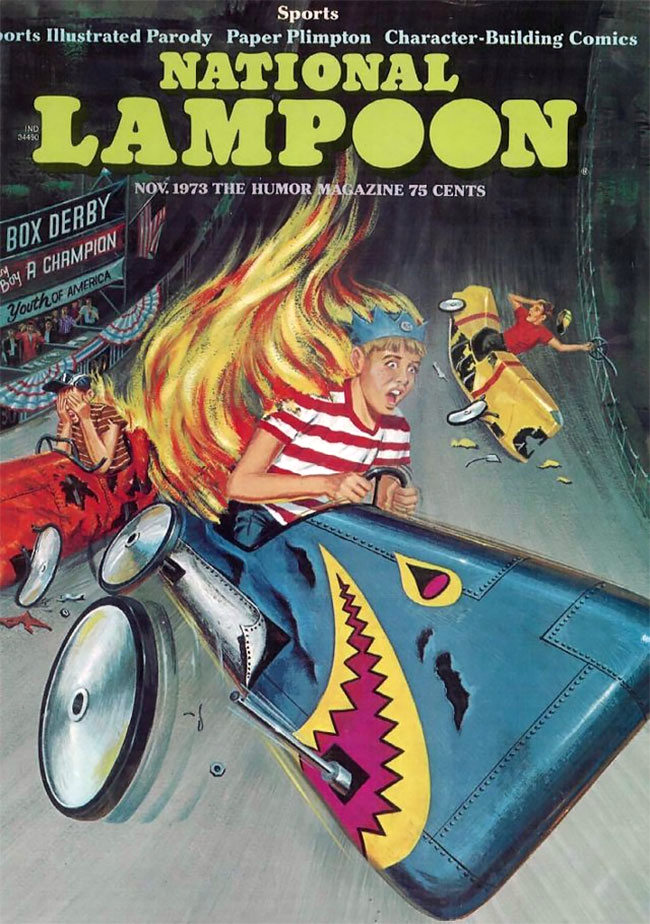
I was in high school when I discovered National Lampoon–P.J. O’ Rourke was a force at that legendary magazine. P.J. was part of a shrinking demographic–guys with English degrees. I’m part of that demographic too, so a guy like P.J. O’Rourke gave us all hope there was a brighter future than being a lifer at 7-11.
The critical difference between most English degree guys and P.J. O’Rourke was how easily his incredible talent blended with his twisted view of the world–most English degree guys are still pushing Big Gulps at 7-11.
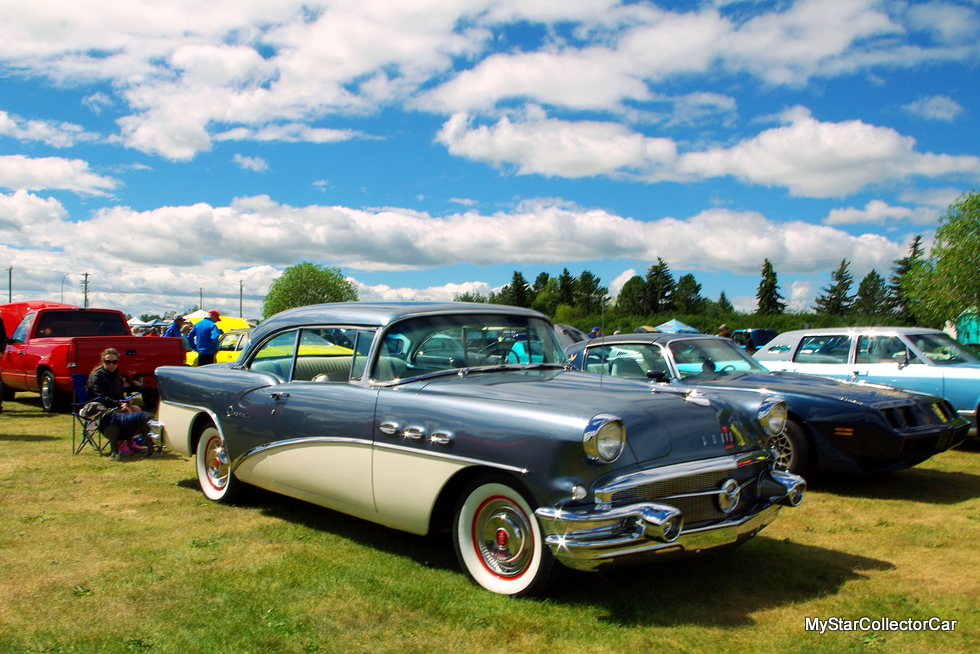
I didn’t discover P.J. O’Rourke’s car guy connection until years after he wrote ‘Sgt. Dynaflo’s Last Patrol’ in February 1978 for Car and Driver when he drove a ’56 Buick from Florida to California. I’m going to do the impossible and edit this legendary writer down to my favorite quotes.
He was traveling with an English photographer named Humphrey and this is how the trip started: “We had a cooler full of beer, and there was nowhere in the world that I would have rather been than behind that sailboat-sized steering wheel. Humphrey and I were both in a better mood than anyone over the age of 30 has any right to be in. We drove 150 miles across Florida like that, and the car looked fabulous and ran perfectly right up until the moment it suddenly quit.”
They ended up in a sketchy bar when the car quit again: “Then just when I was sure we were going to be killed, somebody wanted to know if that was our old Buick out front with the hood up. We said yes, and somehow that made us okay. Trunk lids popped up, tool cases snapped open, and in minutes our engine compartment was packed with fearsome drunk Florida crackers undoing fuel lines, pulling off plug wires, and wrenching on things that I couldn’t see while beer bottles piled up in front of the radiator and spilled out over the grille.”
There was a happy ending: “Finally, Jack rounded up some local fellow who took a big screwdriver, jammed it once into the points, slapped on the distributor cap, and started the car first try. “Used to have one just like it,” he said.”
P.J. had more adventures because this ’56 Buick took the concept of vapor lock and overheating to soaring new levels–but they always had help–even if it was sketchy. “Finally, I got one fellow who said, “Hell, I had one just like it, and I just tore the damn thermostat out. Threw it away. If you ain’t got a gasket, just slap some damn cardboard in there. Damn thing’ll run like hell. I was too embarrassed to admit that I didn’t know exactly where thermostats made their home, but the station owner did.”
The ending to the road trip was just like the beginning–disastrous. “It had taken eleven days and we’d had some kind of breakdown every single day except that last, and when we pulled into Bel Air, Humphrey missed Sargent’s home, went to turn around, and reverse gear gave out. Gave out completely—the Buick couldn’t even be pushed backward.”
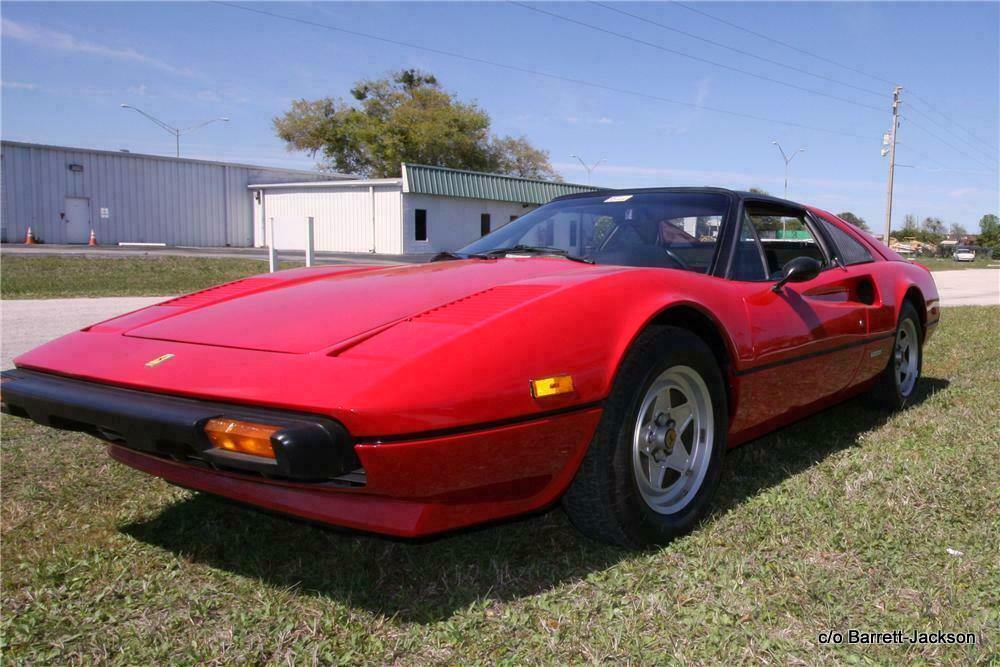
P.J. O’Rourke took another road trip two years later in a Ferrari 308GTS. This one was more successful–and a lot faster: “We came by a 930 Turbo Porsche near the Talladega exit. He was going about 90 when we passed him, and he gave us a little bit of a run, passed us at about 110, and then we passed him again. He was as game as anybody we came across and was hanging right on our tail at 120. Ah, but then—then we just walked away from him. Five seconds and he was nothing but an overturned-boat-shaped dot in the mirrors. I suppose he could have kept up but driving one of those ass-engined Nazi slot cars must be a task at around 225 percent of the speed limit.”
I was amazed at how O’Rourke could elevate and demean a Ferrari in one sentence—that’s an art form: “They have their engines in sideways and backwards, and you sit down on the floor where you can’t see your fenders, your feet, or the road. Or that’s the way they seemed to me when I sat in one at the auto show, which was the only time I ever had sat in one. And because they were so funny-looking, I assumed they were hard to drive. Besides, I’m opposed on principle to things with wheels that cost more than $20,000 and don’t have “Atchison, Topeka, and Santa Fe” written down the side. Why, there are people starving in Italy. Or going hungry, anyway. Well, maybe not hungry, but I’ll bet they don’t have enough closet space and the kids have to share a bedroom.”
Nobody could take a car story and weave it into a philosophy better than P.J. O’Rourke : “We may not have Ferraris, but just think what our Polaris-missile submarines are like. And, if it feels like this in a Ferrari at 130, my God, what can it possibly feel like at Mach 2.5 in an F-15? Ferrari 308s and F-15s—these are the conveyances of free men.”
P.J. was a true Renaissance Man when it came to driving so, he wasn’t afraid to push everything–including a pickup–to its limits as he explained back in 1982. “An experienced pickup truck driver is a person who’s wrecked one. An inexperienced pickup truck driver is a person who’s about to wreck one. A very inexperienced pickup truck driver doesn’t even own a pickup but will probably be mistaken for a wild antelope by people jack-lighting pronghorns in somebody else’s pickup truck. The foremost high-speed-handling characteristic of pickup trucks is the remarkably high speed with which they head from wherever you are directly into trouble. This has to do with beer. The minute you get in a pickup you want a beer. I’m not exactly sure why this is, but personally I blame it on Jimmy Carter having been President.”
Who else could sum up a truck like this? “A pickup is basically a back porch with an engine attached. Both a pickup and a back porch are good places to drink beer because you can always take a leak standing up from either. Pickup trucks are generally a little faster downhill than back porches, with the exception of certain California back porches during mudslide season. But back porches get better gas mileage.”
“You may also want to know if a pickup truck is truly useful. I’m afraid the answer is yes — all too much so. But, when all is said and done, it really would have looked silly at the end of Easy Rider if Peter Fonda and Dennis Hopper had been shot by a couple of guys in a Fiat Brava. And what’s life for if you never get a chance to shoot the likes of Peter Fonda and Dennis Hopper? Besides, you’ll never really appreciate the profound and astonishing beauties of nature if you don’t get stuck in the woods now and then. And you won’t appreciate them half as much if you don’t have a lot of beer along.”
Jim wrote a MyStar piece about P.J. O’Rourke back in 2011. I have to admit–he made a solid case for a tie with the legendary Uncle Tom McCahill for excellence in automotive journalism.
Thank you P.J. You made a solid case for car guys with English degrees.
By: Jerry Sutherland
Jerry Sutherland is a veteran automotive writer with a primary focus on the collector car hobby. His work has been published in many outlets and publications, including the National Post, Calgary Herald, Edmonton Journal, Ottawa Citizen, Montreal Gazette, Saskatoon StarPhoenix, Regina Leader-Post, Vancouver Sun and The Truth About Cars. He is also a regular contributor to Auto Roundup Publications.
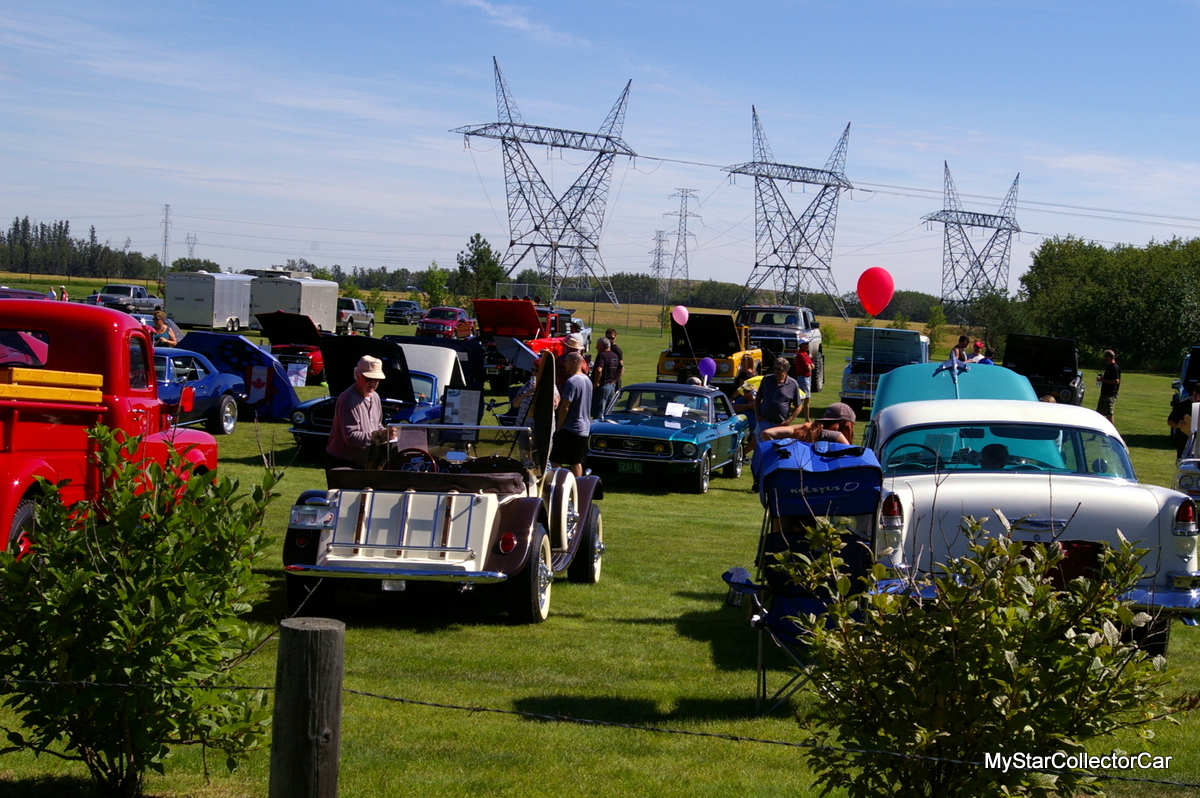
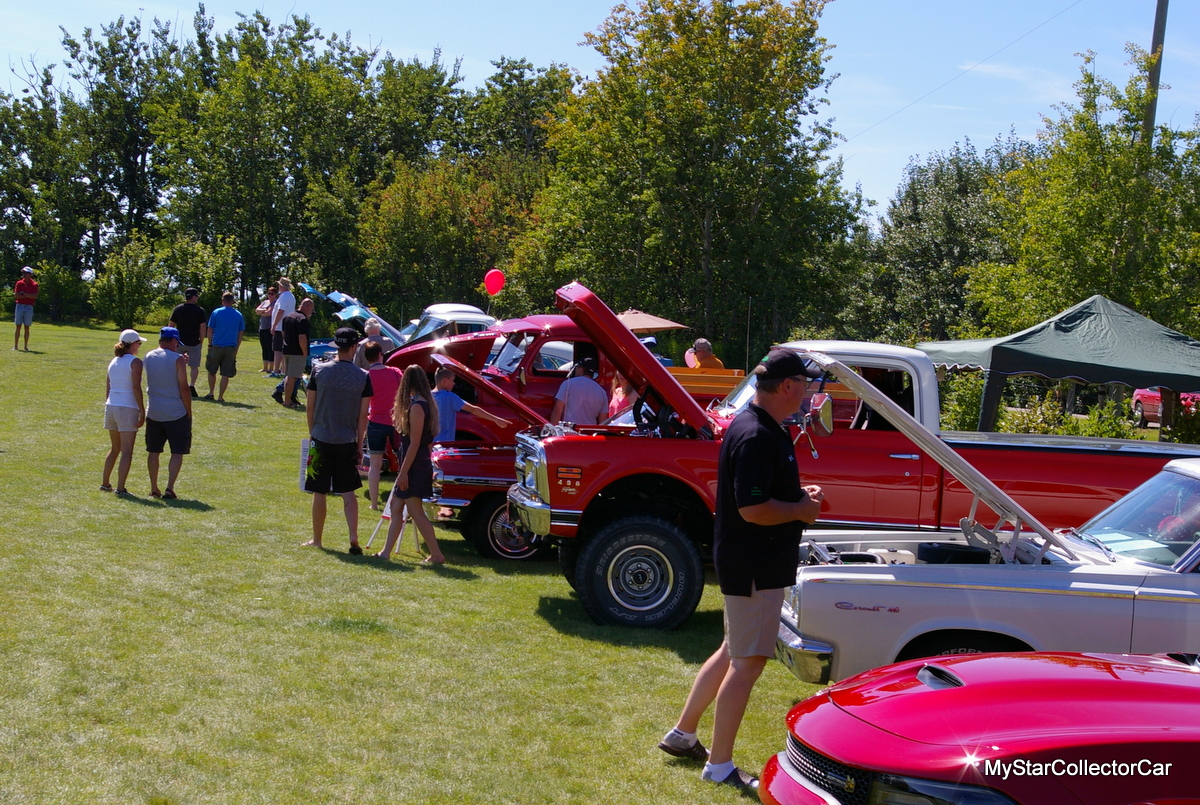
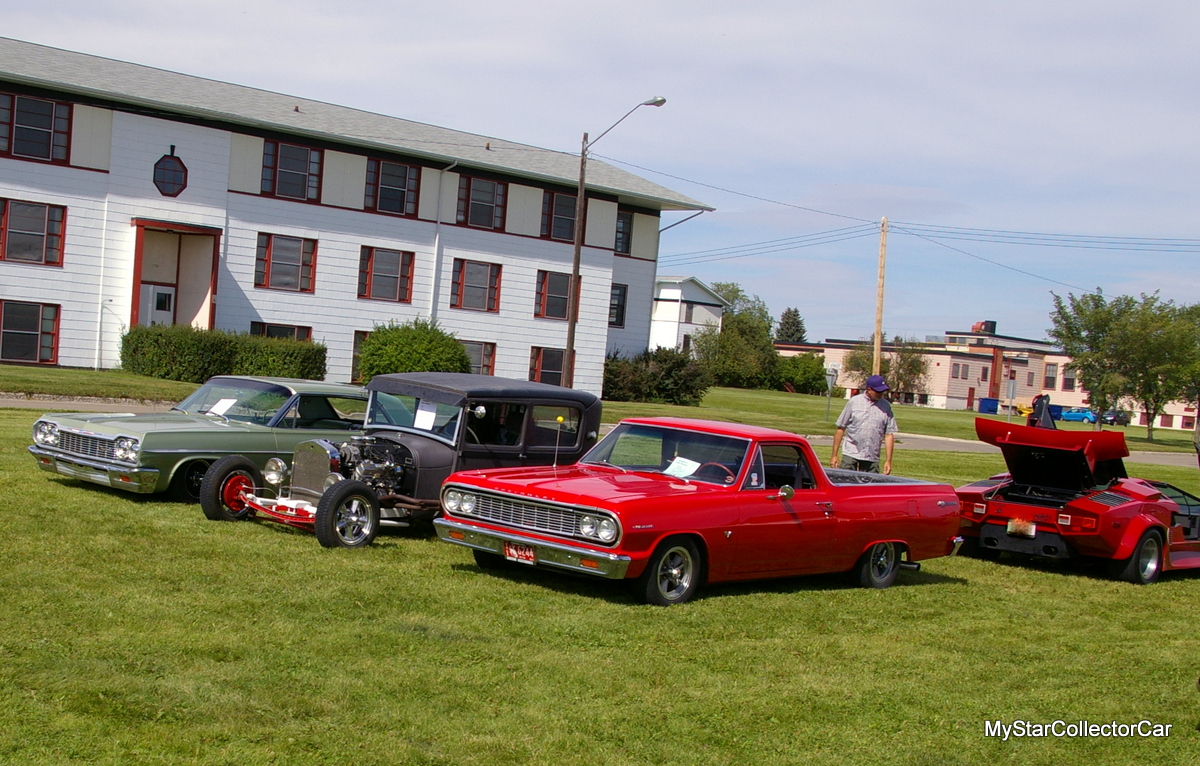
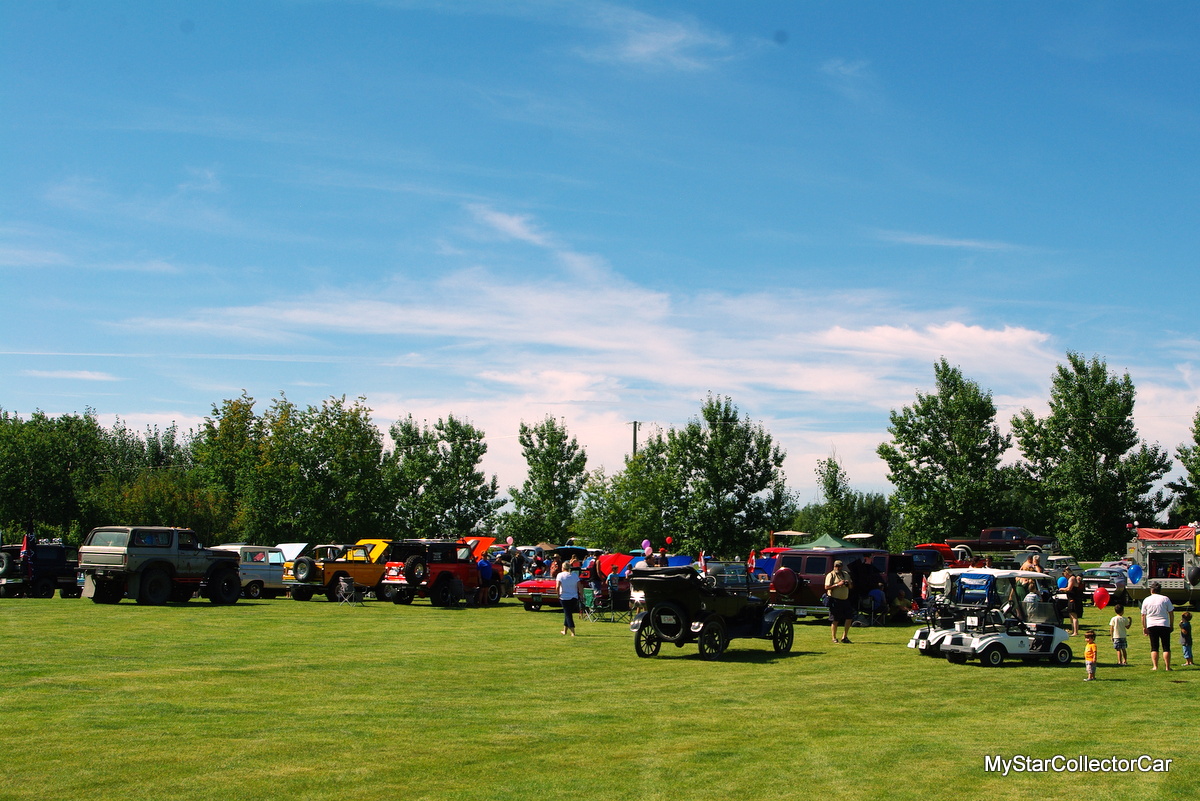
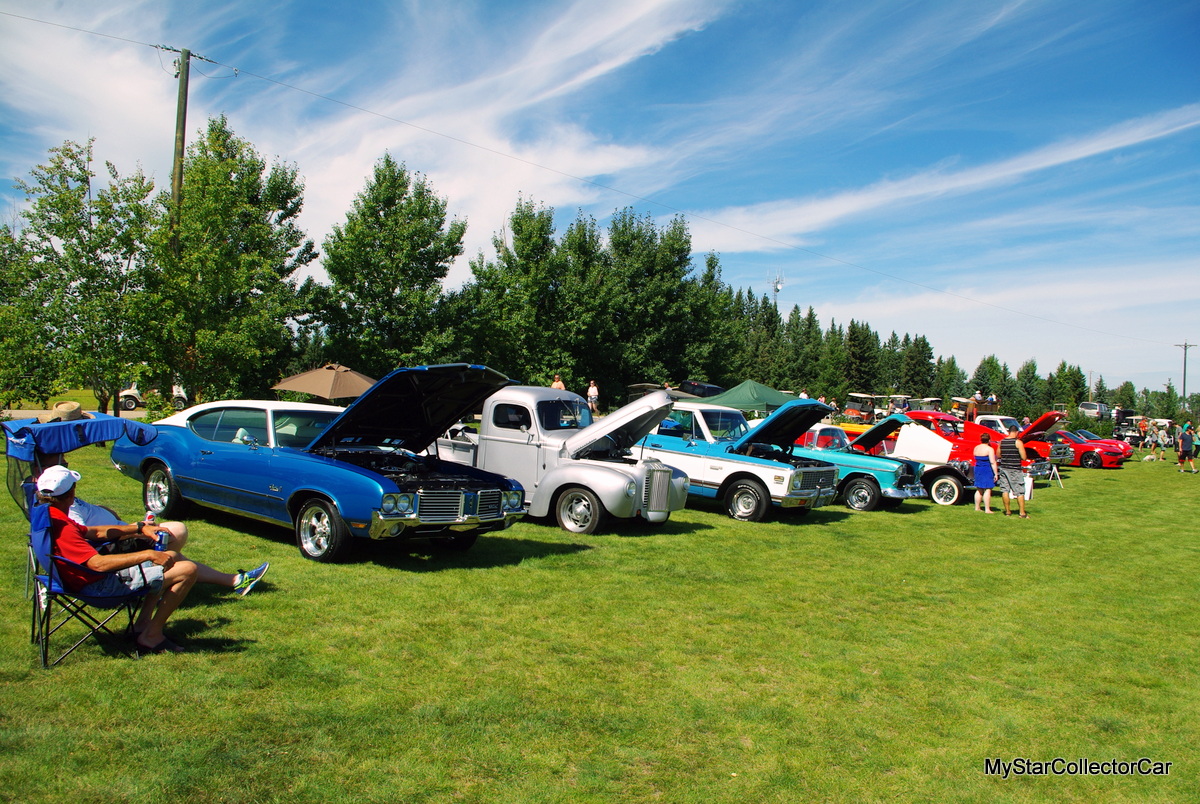
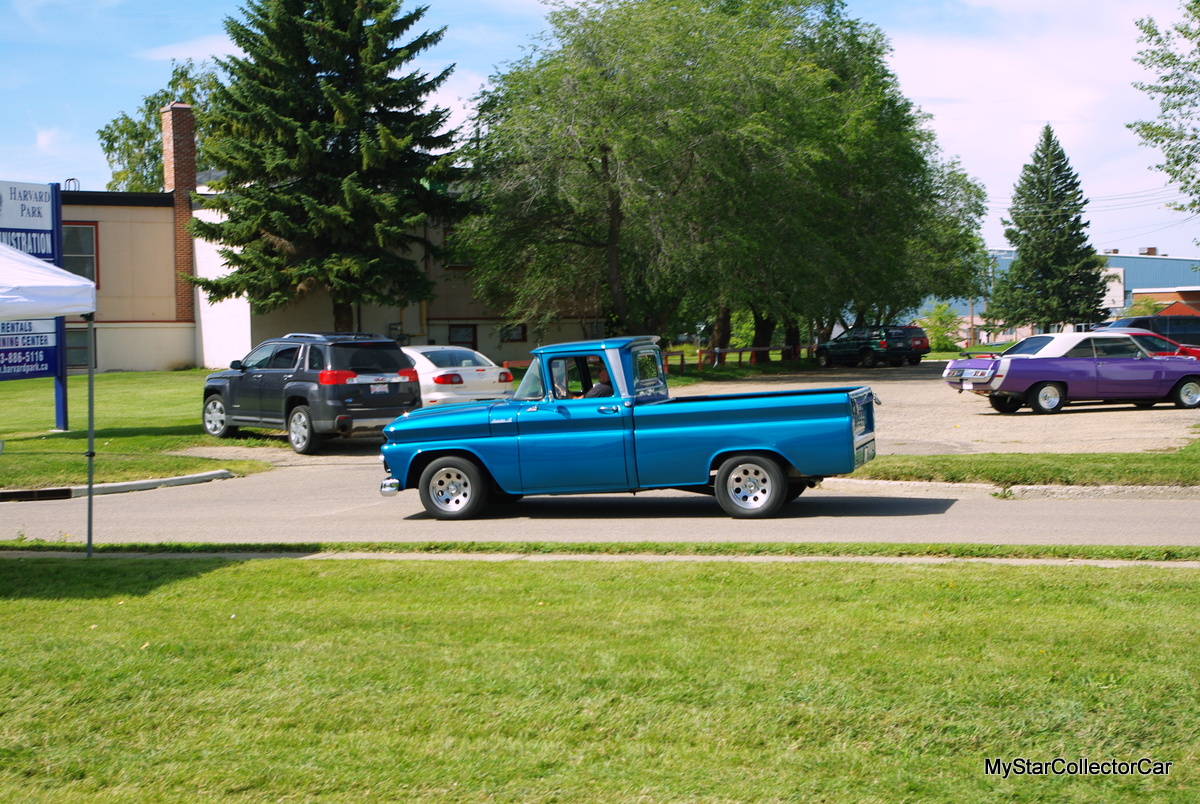
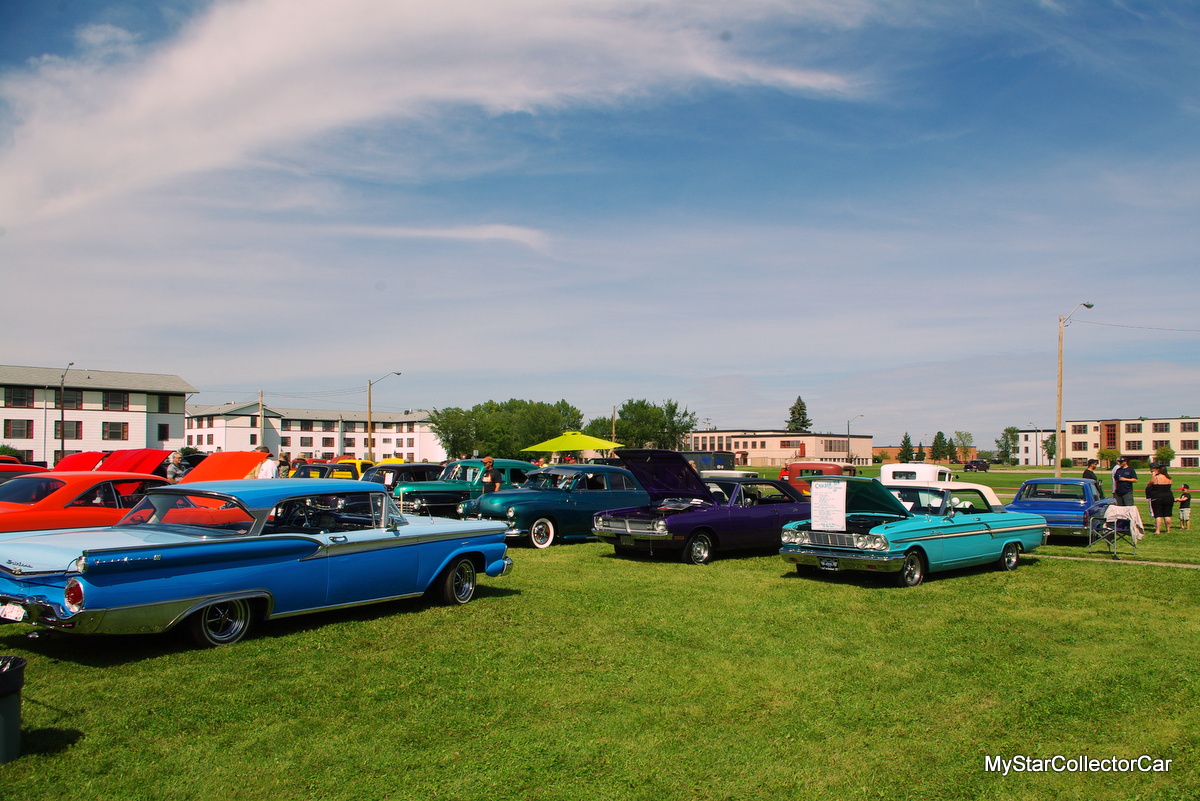
There were two shows on August 20, 2016 and they were a few miles apart so MyStar hit them both that day.
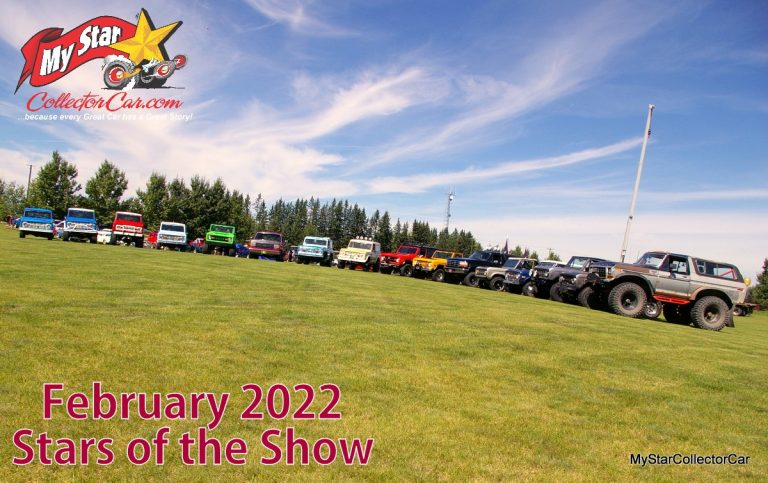
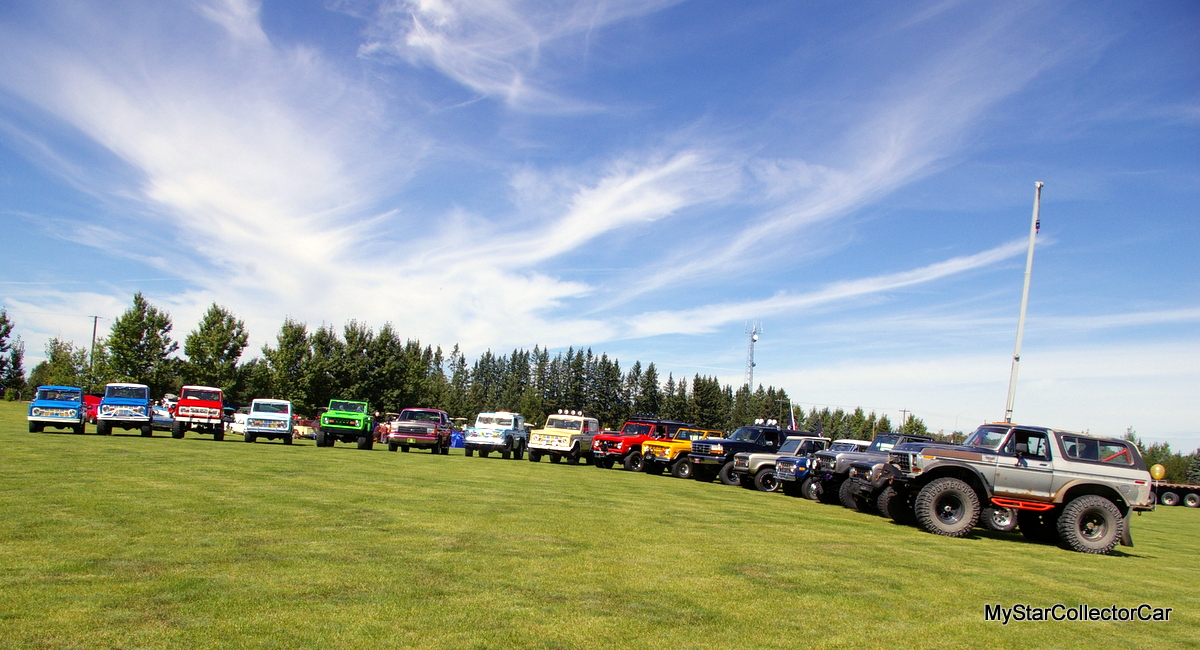
The Glennifer Lake show was full of Broncos that day because the Bronco club was on a tour.
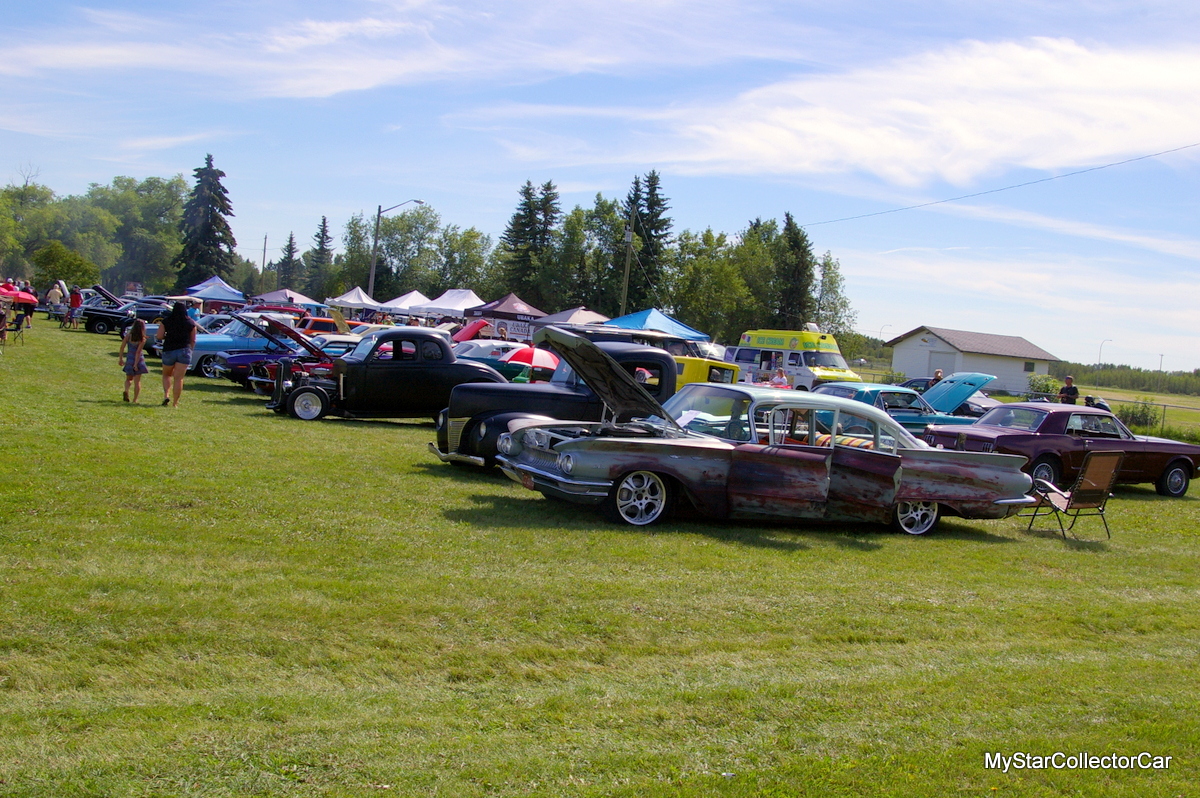
There were other cars at Glennifer Lake to round out the lineup.
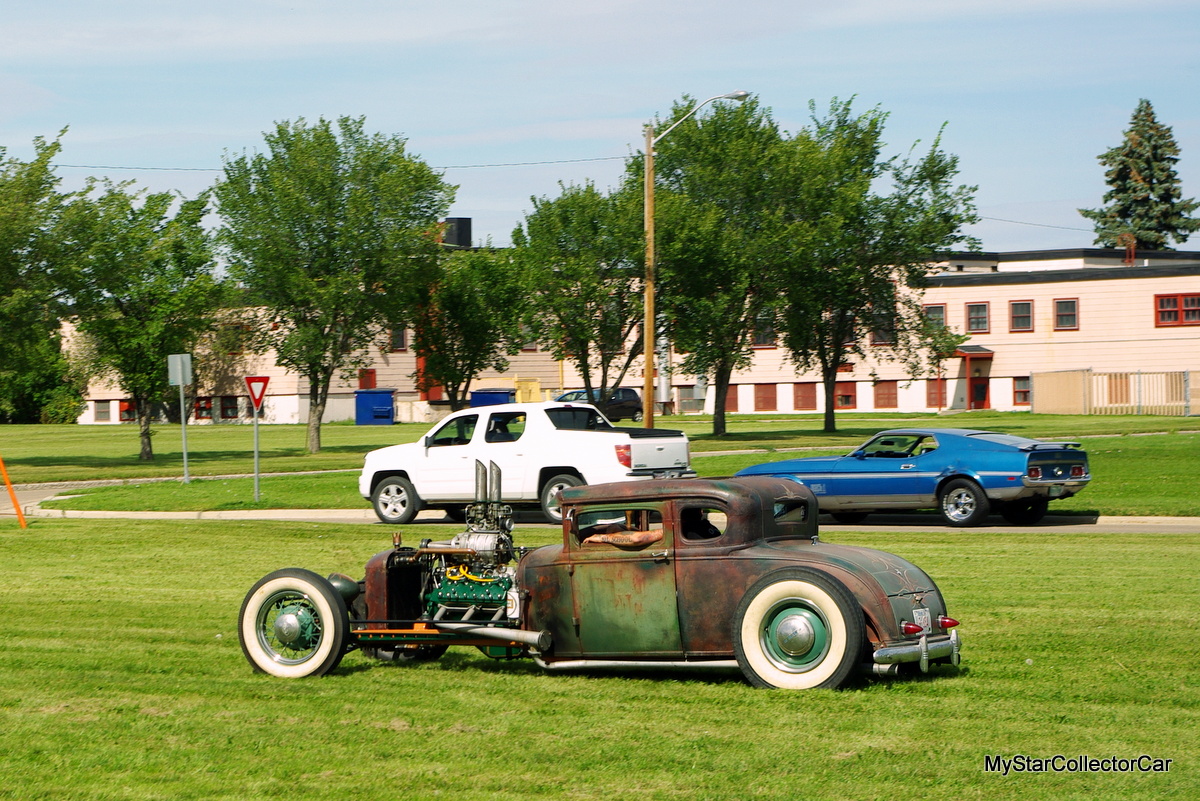
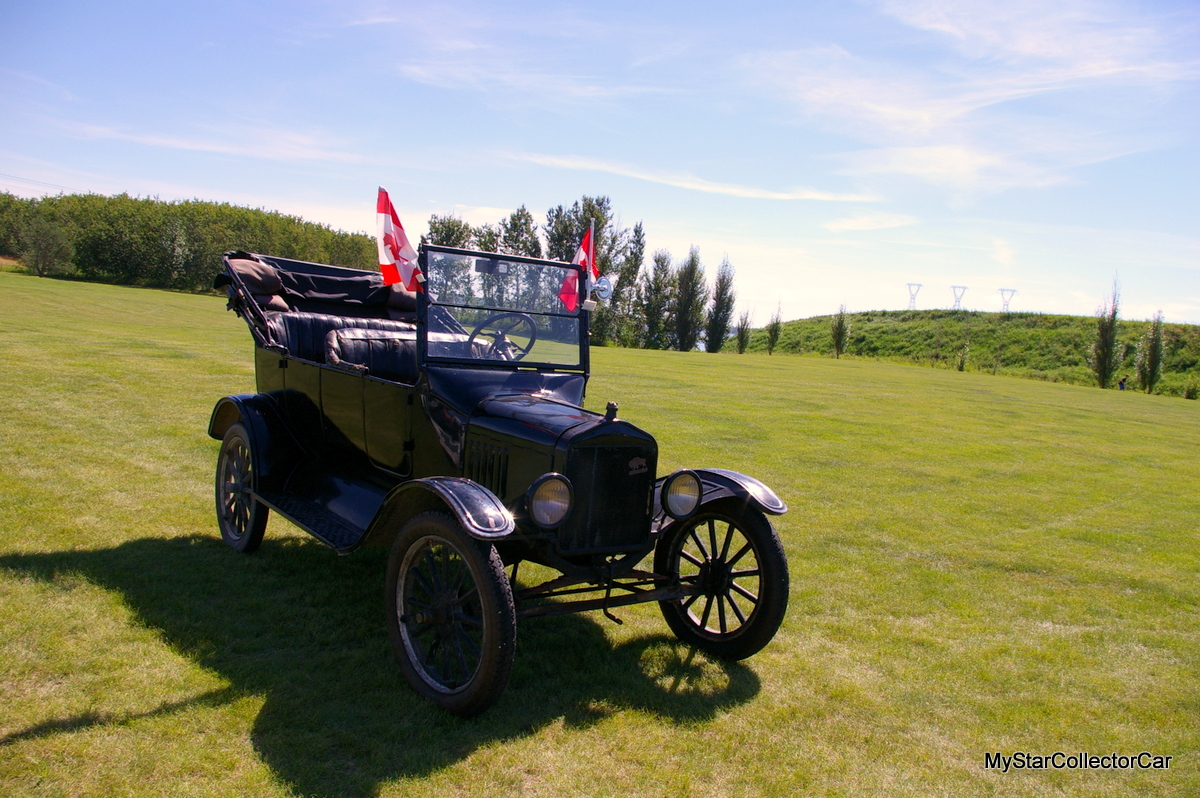
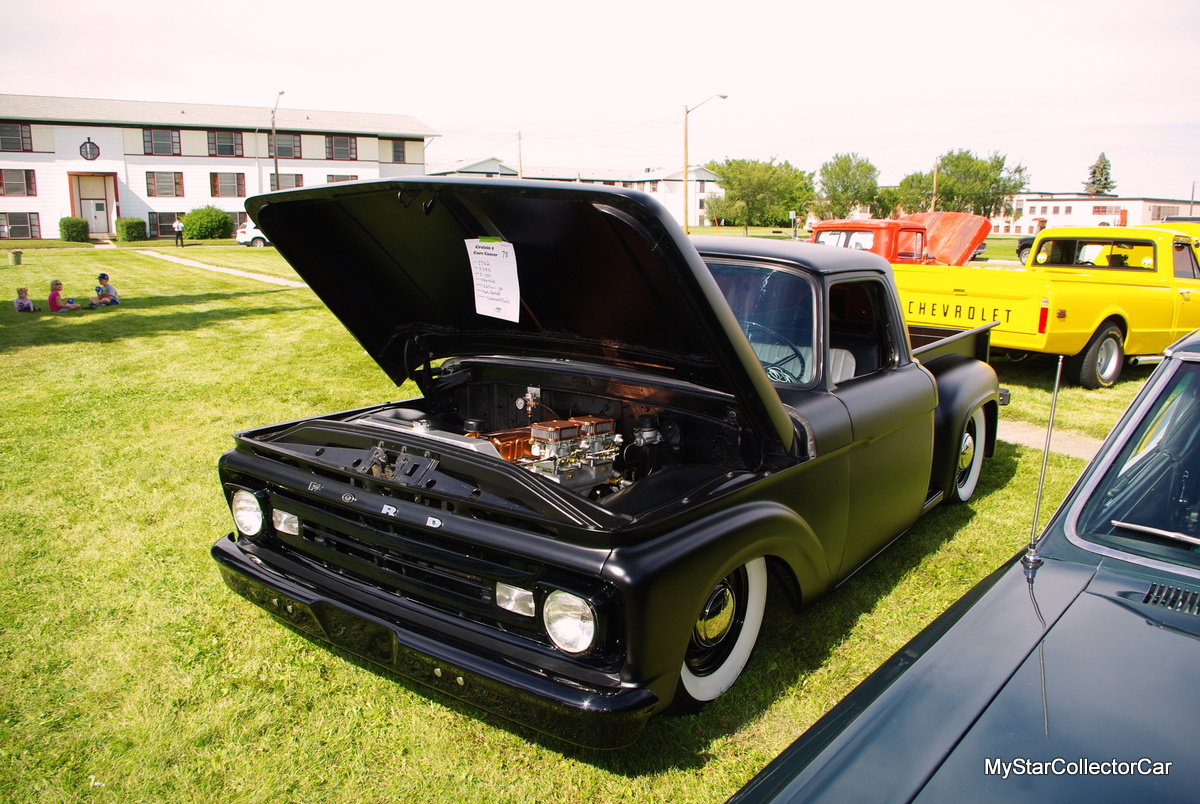
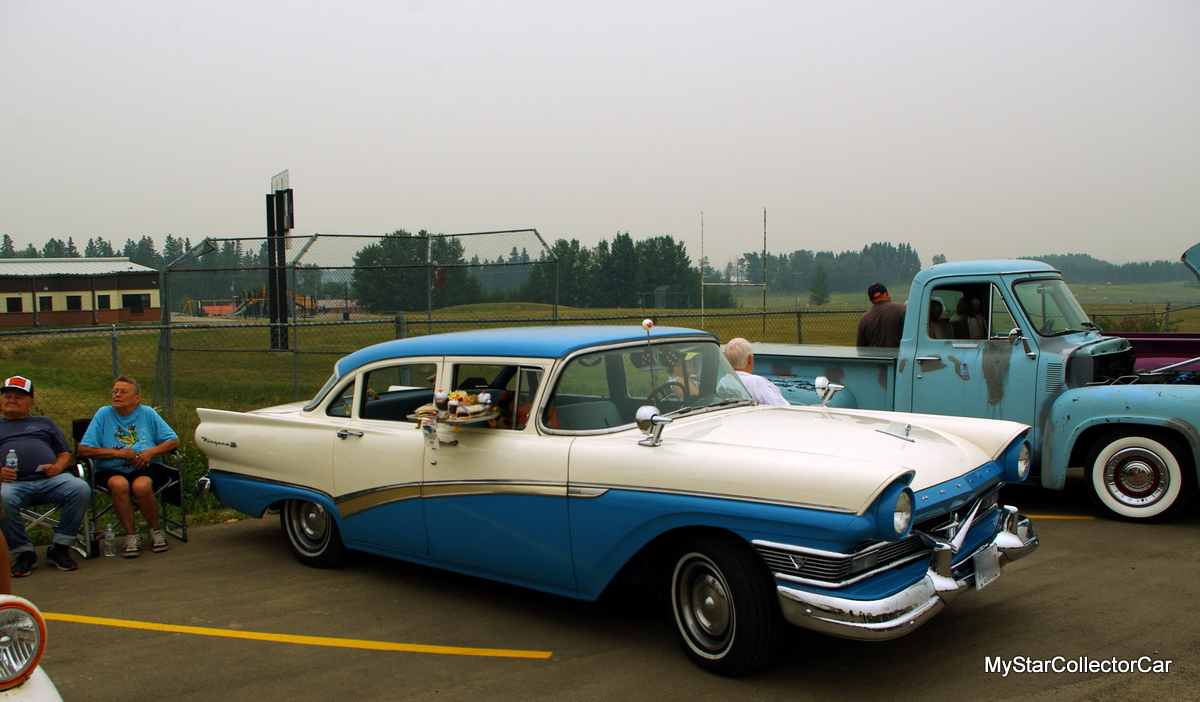
The Springbrook show also had a few gems in the show like this rattie.
Between the two shows ,that was what you could call a well-rounded day of car shows so check out what else was there.
By: Jerry Sutherland
Jerry Sutherland is a veteran automotive writer with a primary focus on the collector car hobby. His work has been published in many outlets and publications, including the National Post, Calgary Herald, Edmonton Journal, Ottawa Citizen, Montreal Gazette, Saskatoon StarPhoenix, Regina Leader-Post, Vancouver Sun and The Truth About Cars. He is also a regular contributor to Auto Roundup Publications.
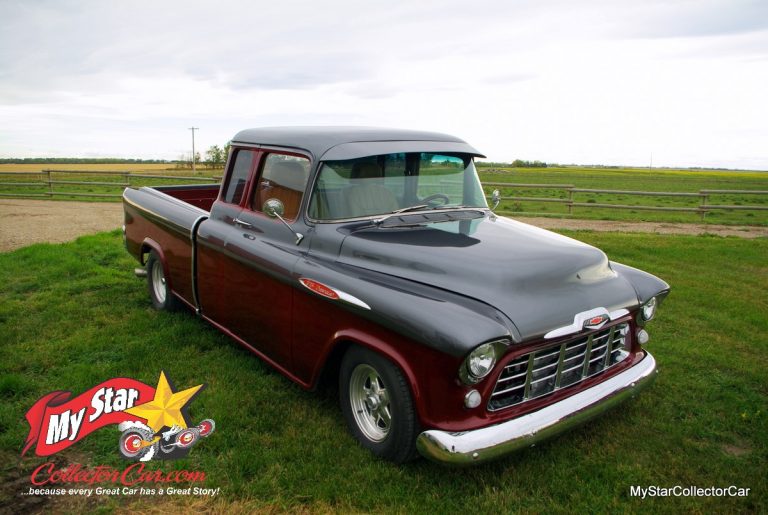
The 1955 Chevrolet 3124 Cameo truck is a mouthful of numbers and letters when recited to people who wonder how a pickup got the back end of a ‘55 Chevy car.
The 3124 number designation was specific for Cameo models in ’55, but exactly none of these rare Chevy pickups left the factory with an extended cab on it.
Jim Sutherland
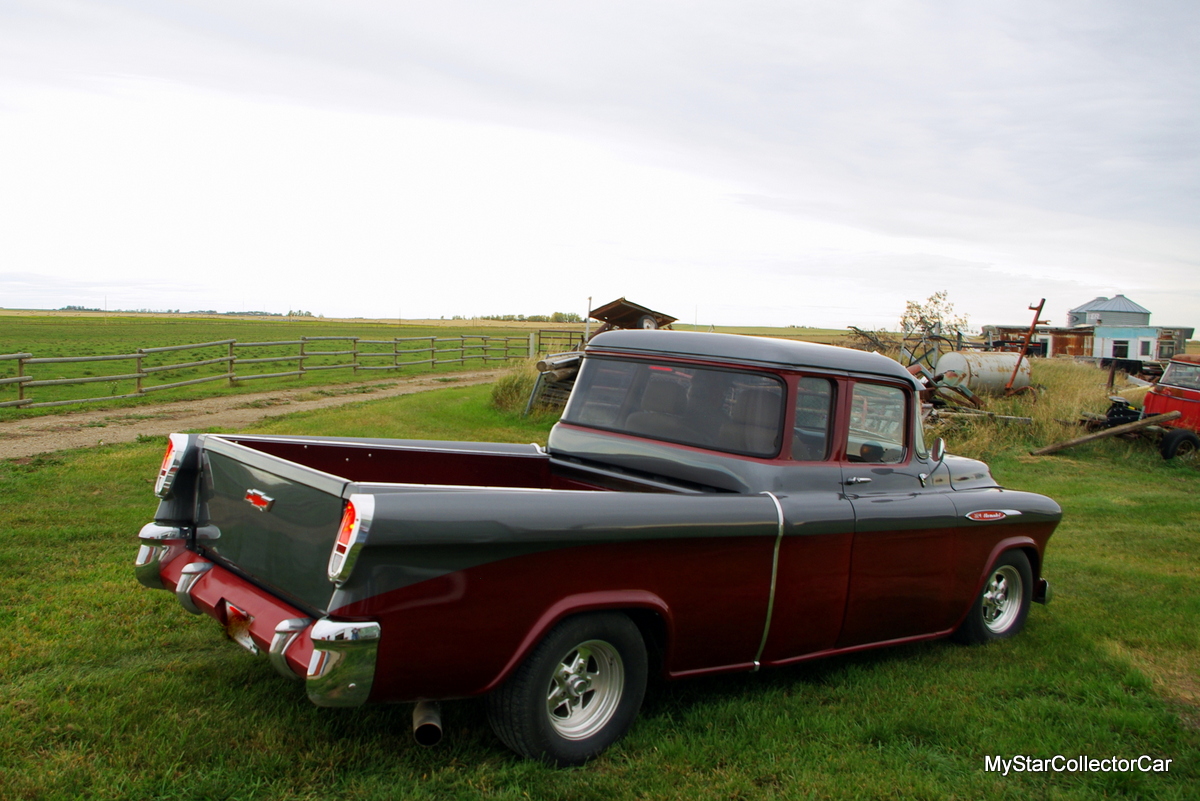
However, a handful of creative and talented car guys have custom-built these “What if?” trucks over the years, including Ray Tithecott. Ray had a mentor by the name of Ben Maerz, a legendary custom builder who was not afraid of difficult projects, including his own 1957 Chevy extended cab pickup.
Unfortunately, Ben is no longer with us, but his legacy includes car guys like Ray who also took a difficult path to build his extended cab ’55 Chevy Cameo pickup.
Ray began the process in 2005 when he purchased the Cameo truck from its former Michigan owner via a popular online buy/sell auction site. Ray bought it without a personal inspection and had the truck shipped to his home in western Canada.
The ’55 Cameo was not quite as advertised because it had major rust issues and was missing a few parts when Ray got it. He was skeptical about the previous owner’s explanation but determined to continue the project after developing a game plan for the Cameo.
Ray took a different approach from Ben’s plan regarding the extended cab process because he was unable to find the correct big window configuration donor cab to tie the cab’s front and rear components together in an easier fashion. Instead, Ray had to splice the sections together with new metal and encountered some big fabrication challenges along the way. Ray added, “Once you cut it (the cab) in two pieces, it gets complicated”.
Ray mentioned Cameo purists were not happy with his customization but noted the truck was in terrible condition when he bought it, so he essentially saved a parts truck. His custom touches were subtle, including the recessed ’48 Ford taillights and 1956 Chevy truck hood on Ray’s ‘55 Cameo.
The truck now sits on a 1987 Chevy truck that was bought new for the Tithecott family farm and used up by hard work, so its chassis was the perfect donor platform for Ray’s resto mod.
Ray bought a Chevy 383 stroker for his truck and hooked it up to a 700R-4 automatic transmission coupled to a 3:73 posi-traction rear end. The 425 horses under the Cameo’s hood required some stopping power, so Ray installed a four-wheel disc brake system because “If you got go-you gotta have whoa”, in his words.
He also installed an air ride system to add to the overall passenger comfort level, along with custom fit side glass with no vent windows that eliminate wind noise in the cab at high speed.
The most important part of Ray’s game plan was to enjoy the truck when it was ready for the road. The fact his truck loves to cruise at about 70 mph (120 km/h) makes any road trip faster and more fun for him.
Consequently, Ray has enjoyed every one of the 1050 miles he has logged behind the wheel after he completed his 3 ½ year custom Cameo project. Many more miles together are in the future for this stylish custom Cameo and its talented owner.
Jim Sutherland
BY: Jim Sutherland
Jim Sutherland is a veteran automotive writer whose work has been published by many major print and online publications. The list includes Calgary Herald, The Truth About Cars, Red Deer Advocate, RPM Magazine, Edmonton Journal, Montreal Gazette, Windsor Star, Vancouver Province, and Post Media Wheels Section.
The bold style of the 1949 Mercury was a home run with buyers when the trail-blazing car ushered in a new era of automotive design during the late innings of the Forties and early innings of the Fifties.
The sleek new look of the ’49 Merc continued for another two years until it was phased out after the 1951 production year.
Jim Sutherland
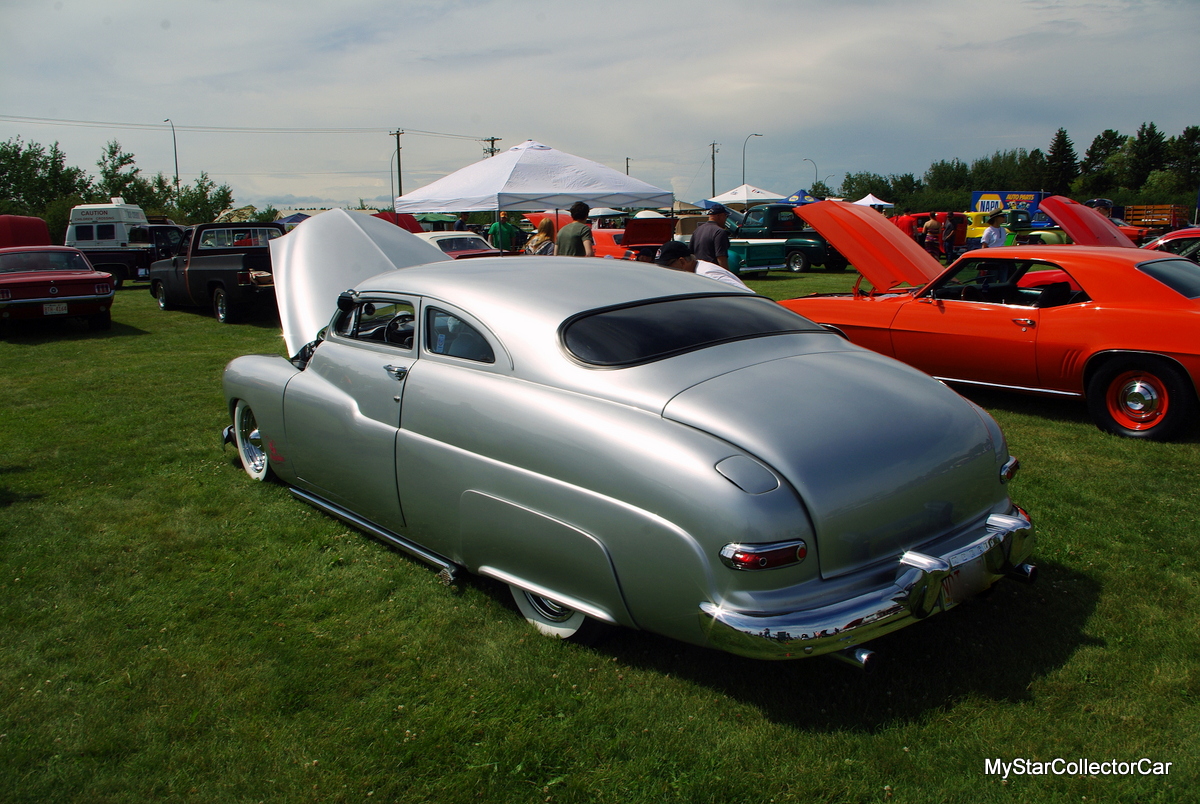
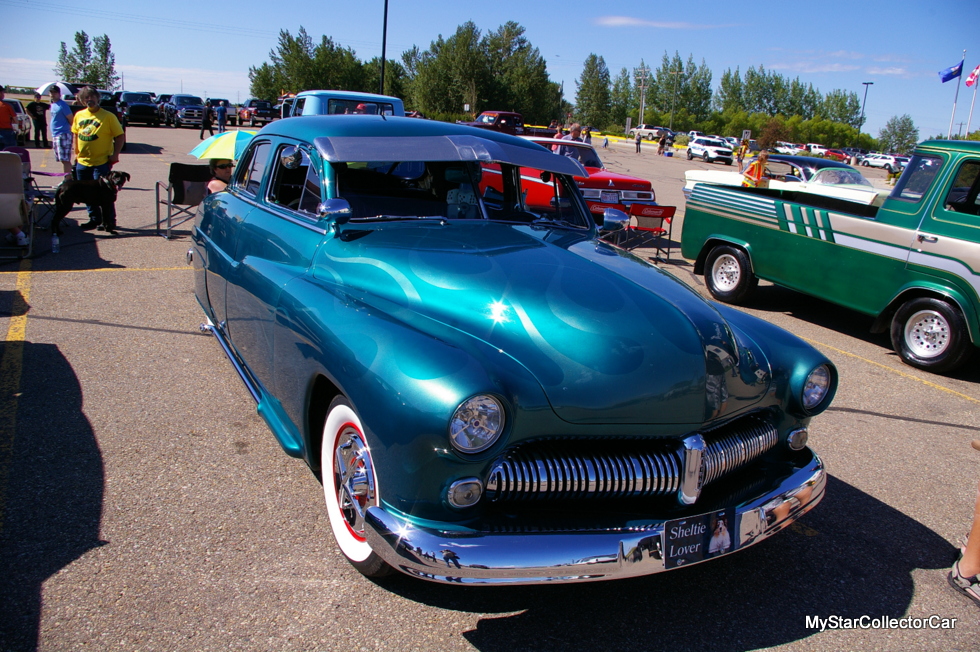
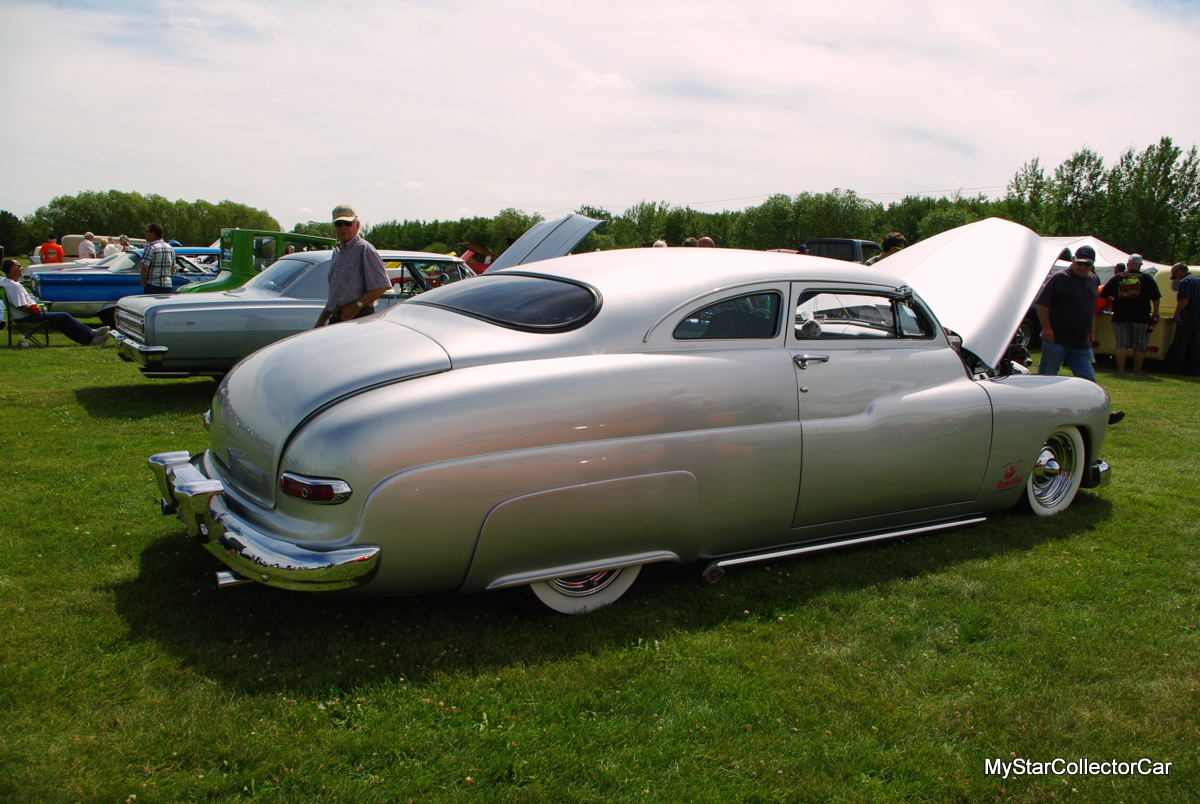
The legacy of the 1949-51 Mercury continues until this very day, mostly because the iconic Ford product has become a legend as a custom ride better known as a lead sled in the car hobby. Part 1 of MyStarCollectorCar’s series about the Merc put forth a position about why these cars should remain in factory form, but a strong case could be made for the lead sled versions.
We at MyStarCollectorCar believe there are two sides to every story, so we decided to defend the lead sled position for the 1949-51 Mercury in Part 2. We will provide five reasons why a lead sled Merc is a good game plan for their owners. Just for the record, lead sleds are aptly named vehicles because lead was a major component of the body shaping compound for a custom ride built during a bygone era. Lead was eventually replaced by Bondo, but not before it shortened the lives of many body guys from earlier generations.
Nevertheless, the first argument for Merc lead sleds is simple: George and Sam Barris were pioneers in the lead sled field when Sam bought a new ’49 Merc and put his own custom stamp on it. The Barris brothers were already famous custom builders in the So-Cal car guy world-and would become famous on a global scale in later years-mainly because they were automotive custom geniuses. In fact, George Barris became a custom builder superstar and helped create some of the biggest four-wheeled celebrities in history, including TV’s Batmobile and Munster Koach.
The influence of the Barris brothers in lead sled Merc customs was never more evident than our second point: the Hirohata Mercury. This 1951 custom Merc just sold for over 2 million dollars, mainly because it was built by the Barris brothers and became a trailblazer in the custom car movement. The Hirohata car is an amalgamation of cool components found on other car brands and inspired the creative touches used on every lead sled from that era.
The lead sled became a hot commodity in the cool custom movement and never lost its status over the ensuing decades. Our third addition to the lead sled debate is the 1949 custom Merc used by James Dean in ‘Rebel Without a Cause’, a controversial (for its time) teen conflict movie released in 1955, a month after Dean’s death in a car accident.
James Dean was only 21 when he was killed in his Porsche, but maybe he would have survived the crash in his larger-sized movie lead sled. Either way, Dean helped make the Merc lead sled even cooler than a stock version.
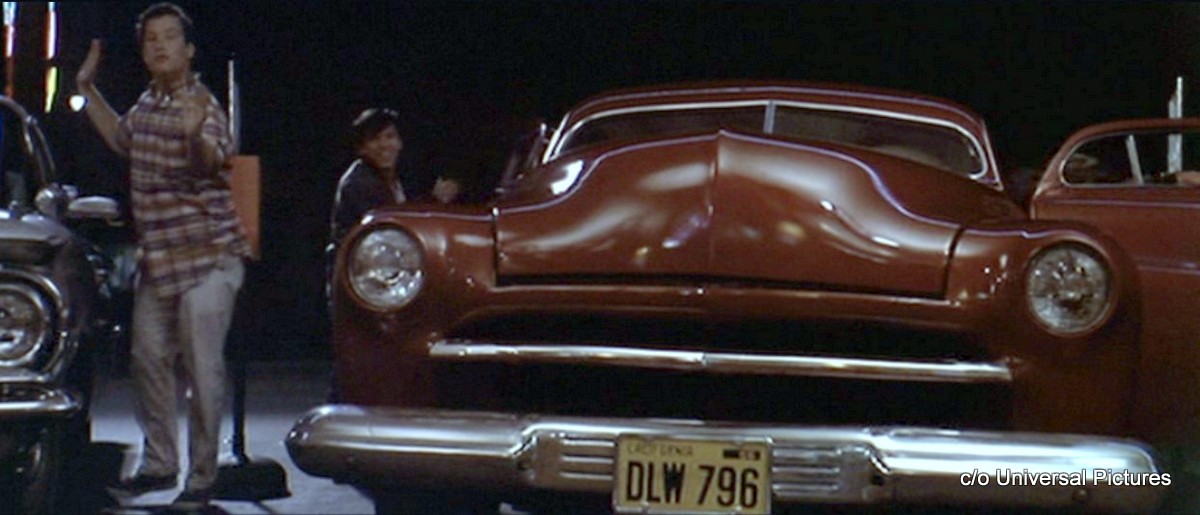
Our fourth argument in favor of a lead sled choice is also a famous movie car, namely the 1951 custom Merc in ‘American Graffiti’. This lead sled was owned by local punks in the movie and the famous flick helped propel the ’51 Merc to legendary status in car guy world. The actual car was sliced and diced for the movie in only a few weeks, so it suffered from a slapdash approach. However, the lead sled culture was still very evident in the ‘Graffiti’-specific ride, and now it is a legendary member of the custom ’49-51 Merc club.
MyStarCollectorCar’s fifth and final addition to our argument in favor of lead sleds borrows from our Part 1 opinion. Stated simply, 1949-51 Mercs were already well on their way in terms of cool overall style to become lead sleds. Their builders had a solid platform to flex their creative muscles with the ’49 to ’51 Mercs-and they ran with the idea. In fact, lead filler never had a better home than a Merc built during this time frame.
That is why custom builders helped define the term “lead sled”, and the car hobby is a better world because of it.
Jim Sutherland
BY: Jim Sutherland
Jim Sutherland is a veteran automotive writer whose work has been published by many major print and online publications. The list includes Calgary Herald, The Truth About Cars, Red Deer Advocate, RPM Magazine, Edmonton Journal, Montreal Gazette, Windsor Star, Vancouver Province, and Post Media Wheels Section.
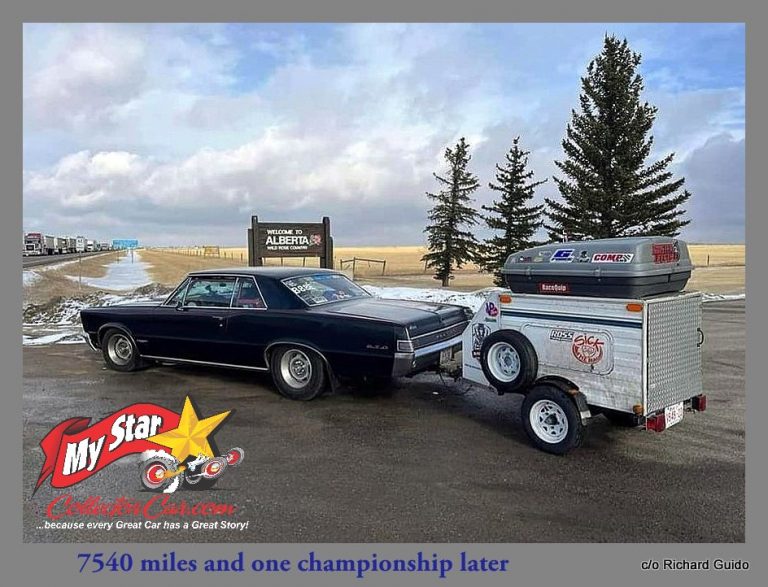
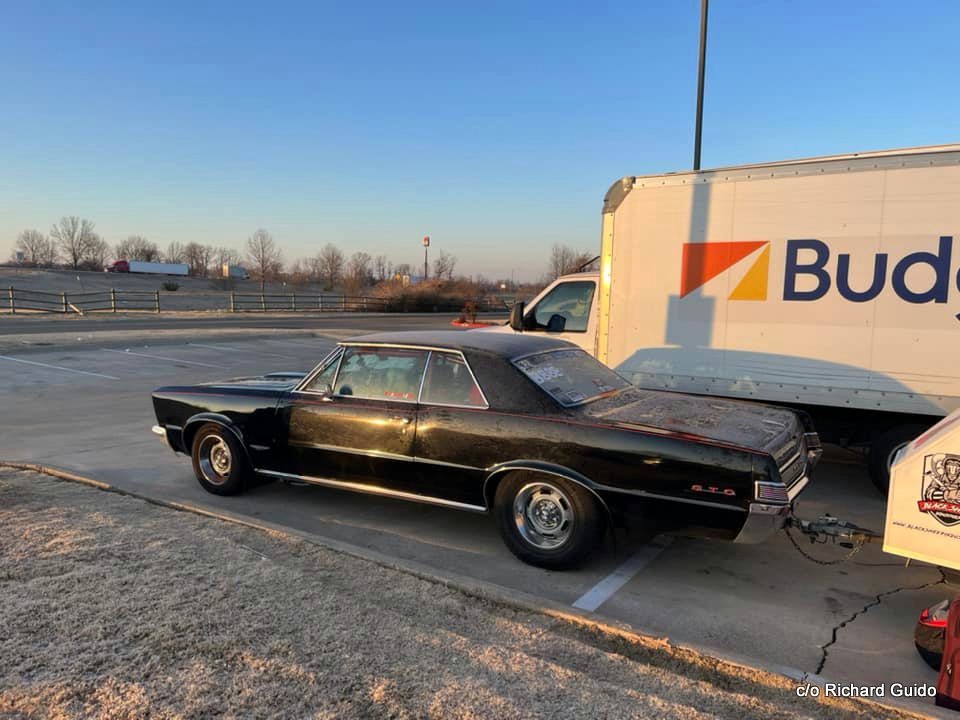
MyStarCollectorCar was blown away by the long-distance winter road trip taken by Rich Guido and his two traveling companions (his father Mike Guido and Youtube car guy personality Kyle Williams).
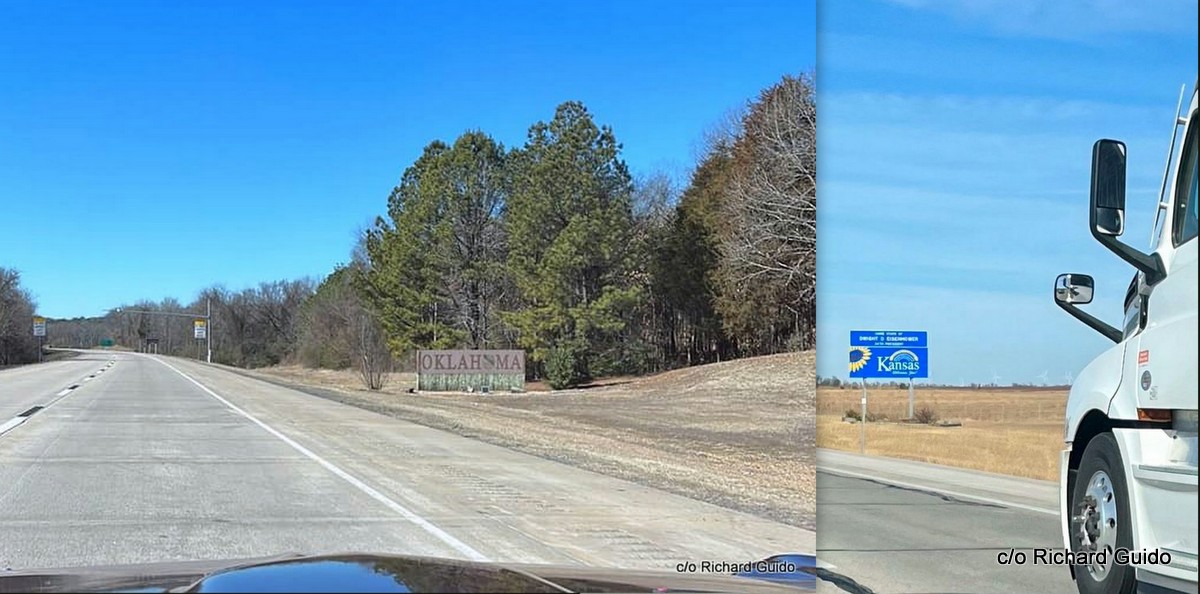
The trio drove over 7500 (round trip) miles from Alberta Canada to Florida for the inaugural Sick Week drag and drive event at multiple tracks in the southeastern U.S.
Jim Sutherland
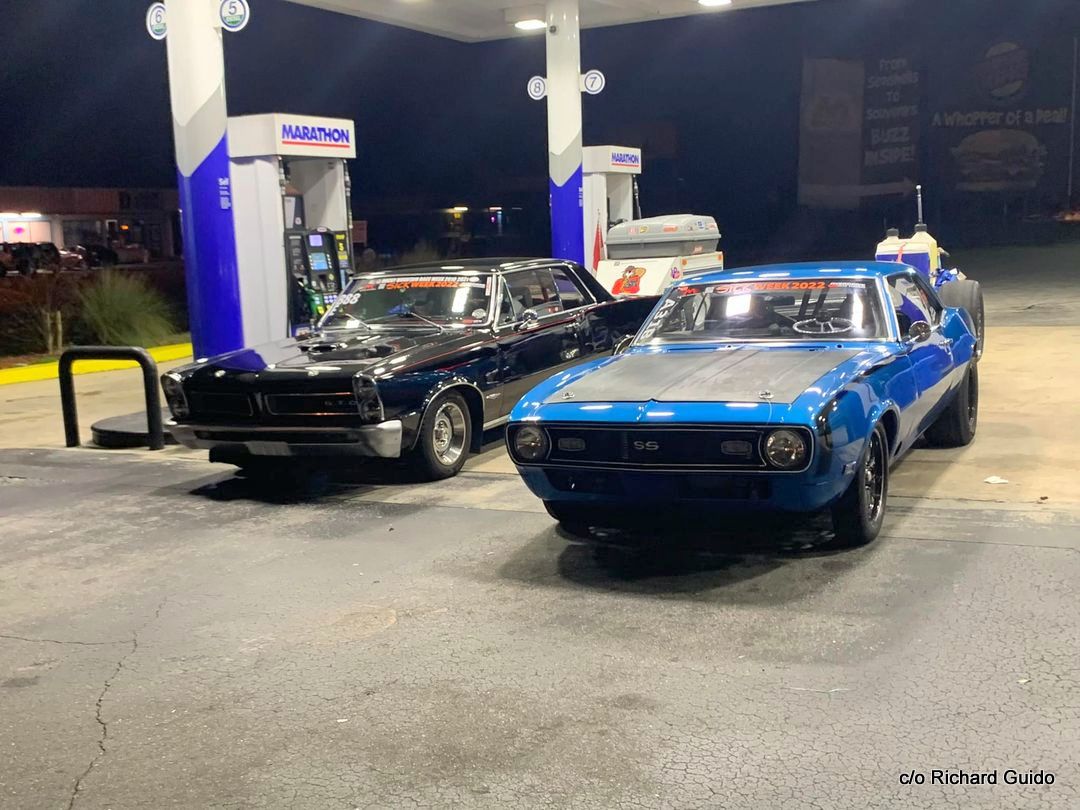
Drag and drive race events have become very popular in recent years because participants are required to drive their race vehicles from drag track to drag track in a short time frame -no trailer queens need apply. Most of the vehicles are barely street legal, but they are driven on the road for many miles to the next ¼ mile racetrack by their adventurous owners.
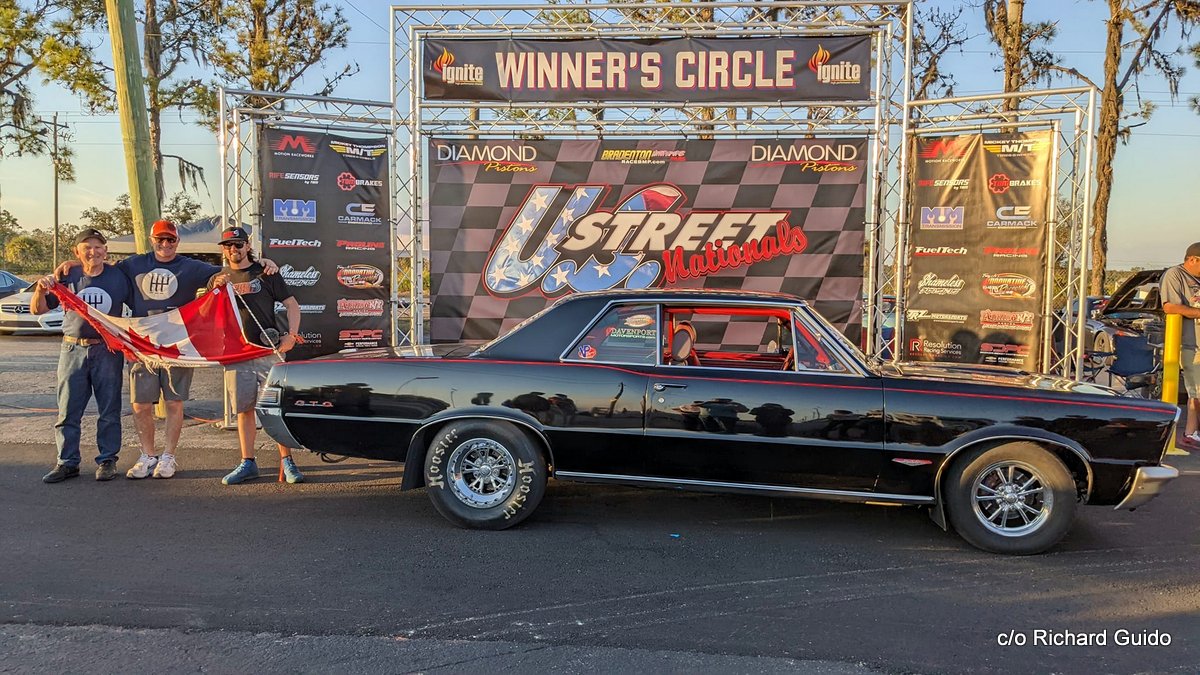
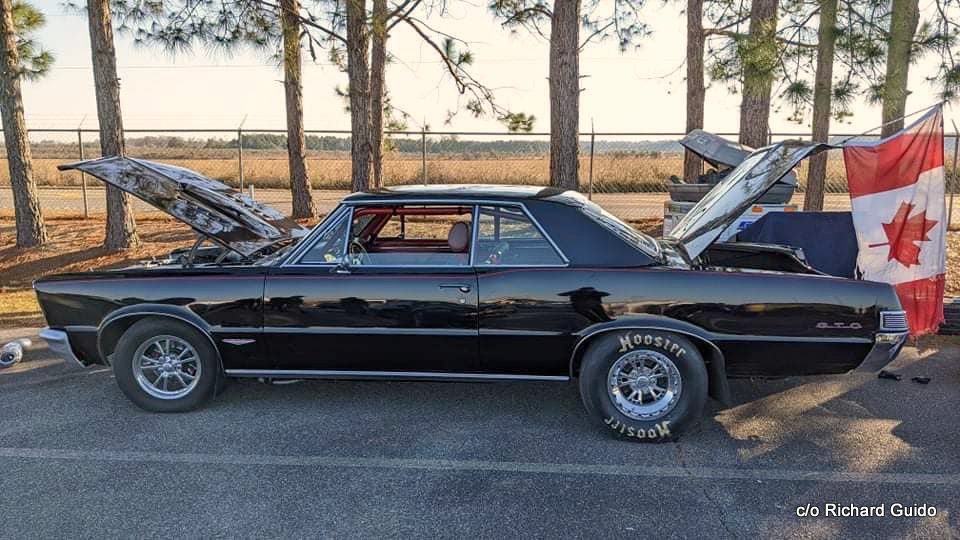
However, Rich took an incredibly long route to attend the race week in Florida when he drove his sub-9 second track car over 3000 miles just to get to Sick Week. His race-ready 1965 Pontiac GTO was also road-ready because it performed remarkably well during the long journey from his wintry Alberta home to sunny Florida.
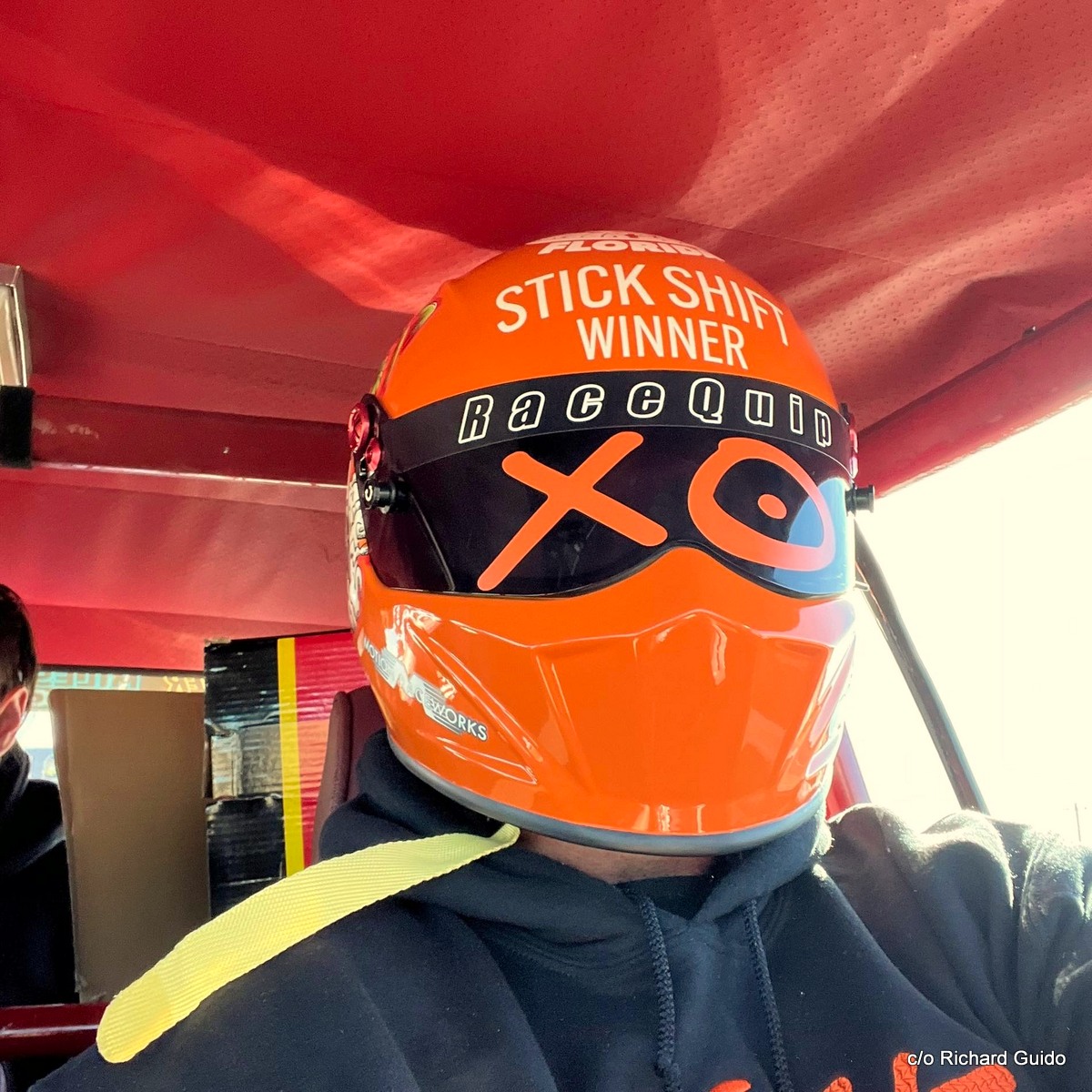
Even better, the Goat performed extremely well on the track after the long trip and earned Rich a first overall place in his Stick Shift class. Stick Shift racers use a manual transmission to launch their road rockets down the track, a difficult task in a ¼ mile car because the drivers must concentrate on perfect shifts while steering their cars in a straight line at warp drive.
Most drivers rely upon heavily dialed-in automatic transmissions because these performance gizmos provide the kind of shift efficiency that can win a quarter mile race for them. However, Rich is clearly a guy who likes to take his driving skills right to the limit, whether he is on a track or a highway.
The fact he won his manual transmission class is clear evidence Rich knows how to get through the gears in a big hurry. Rich recorded his fastest pass ever during the week-long event when he pulled off an 8.77 quarter time at 164.25 mph (264km/h). That, MyStarCollectorCar readers, is seriously fast when one considers Rich had only traveled a few city blocks (by comparison) when he hit 164 mph.
Rich is already famous in the grueling drag and drive circuit, mainly because his iron man philosophy has earned him legendary status at these events, particularly during his latest long distance drag and drive adventure down to sunny Florida from his home in frigid Alberta Canada.
Then he turned and burned his way back to Canada in mid-February on a return route that was also over 3000 miles one way. Total round trip distance, including Sick Week track to track: 7540 miles (12,134.5 kms for the metric set) for Rich, his fellow travelers, and his remarkable 1965 Pontiac GTO track star.
Poncho fans have reason to be proud of Rich’s GTO because it still has a Pontiac engine, albeit a very racy turbo-charged, fuel injected 517 cubic inch big block Poncho mill. The race (and road)-ready GTO has given Rich Guido even more reason to be proud of his Goat after his success at Sick Week.
Congratulations to you and your crew for living a car guy dream in February 2022 from us here at MyStarCollectorCar. No wonder your race buddies have nicknamed you “the Canadian Chuck Norris”.
Jim Sutherland
BY: Jim Sutherland
Jim Sutherland is a veteran automotive writer whose work has been published by many major print and online publications. The list includes Calgary Herald, The Truth About Cars, Red Deer Advocate, RPM Magazine, Edmonton Journal, Montreal Gazette, Windsor Star, Vancouver Province, and Post Media Wheels Section.
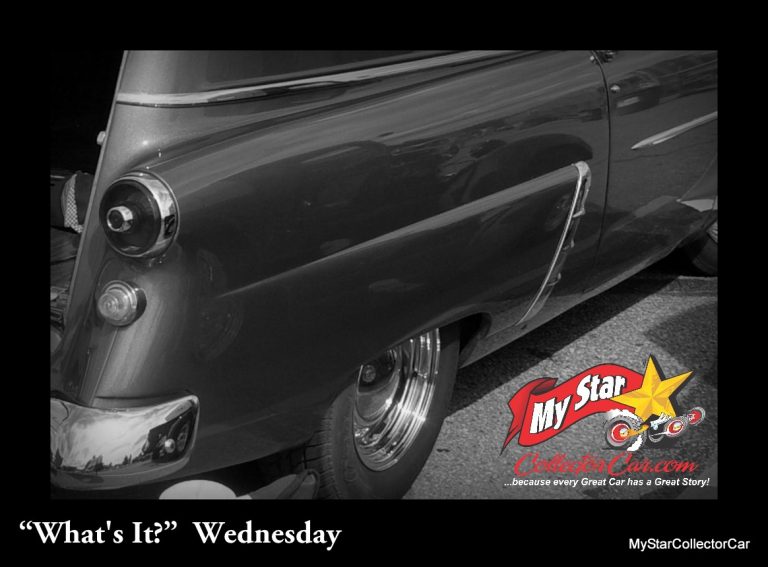
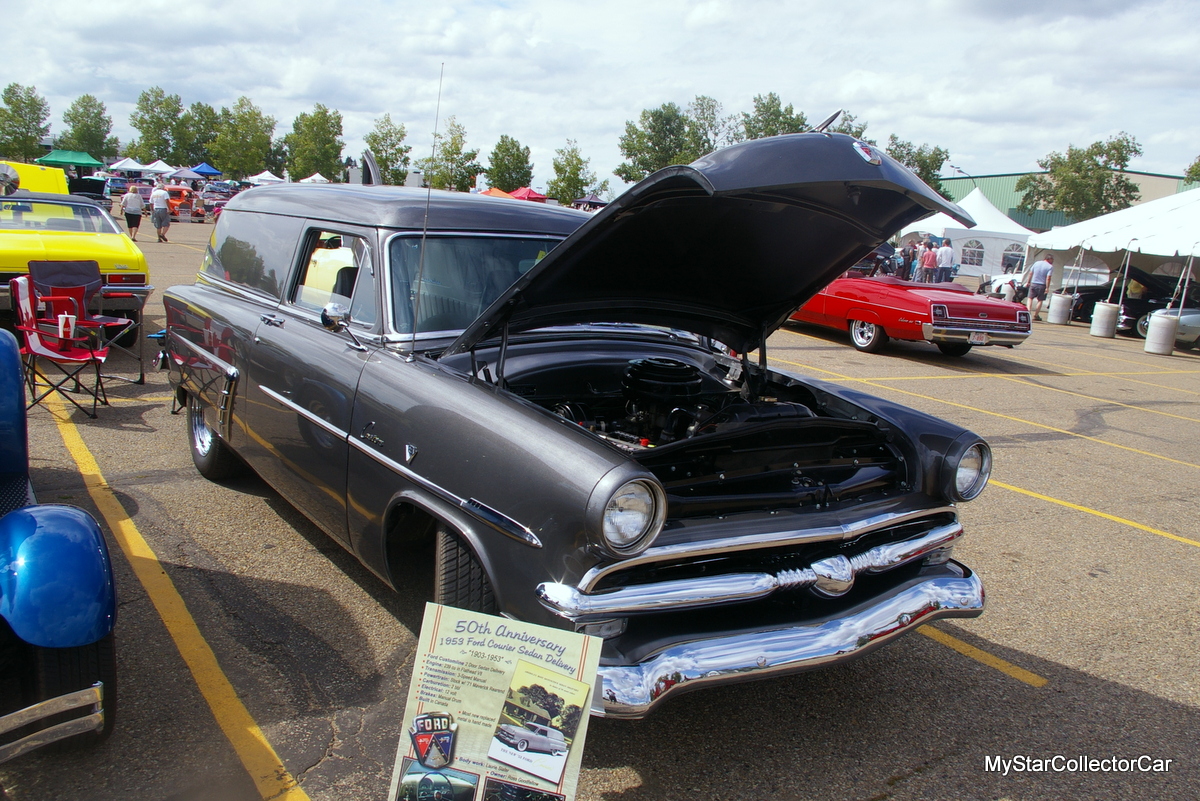
MyStar “What’s It?” Wednesday is basically a jigsaw puzzle for cars so here’s the first piece.
Here’s the second piece.
You can see the completed puzzle below on Thursday.
It’s a 1953 Ford Courier Sedan Delivery.
By: Jerry Sutherland
Jerry Sutherland is a veteran automotive writer with a primary focus on the collector car hobby. His work has been published in many outlets and publications, including the National Post, Calgary Herald, Edmonton Journal, Ottawa Citizen, Montreal Gazette, Saskatoon StarPhoenix, Regina Leader-Post, Vancouver Sun and The Truth About Cars. He is also a regular contributor to Auto Roundup Publications.
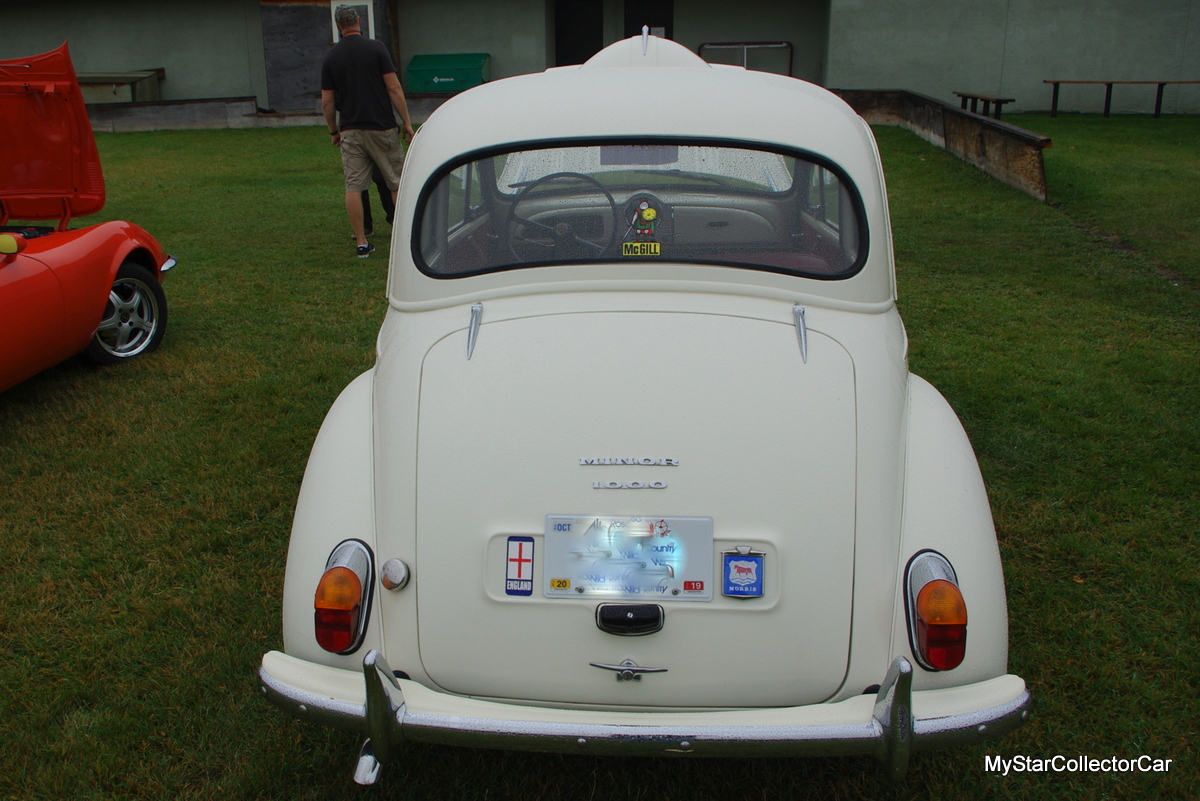
MyStarCollectorCar would like to dive right into the “Moggy” nickname controversy and attach the handle to the famous second-generation Morris Minor compact cars built in jolly old England from 1948 until 1971.
Morgan fans may dispute our decision, but we are confident the British blokes from TV’s ‘Wheeler Dealers’ car guy show would not lead us astray in this nickname matter. Just for the record, the ‘Wheeler Dealer’ gang called the Morris Minor a Moggy.
Jim Sutherland
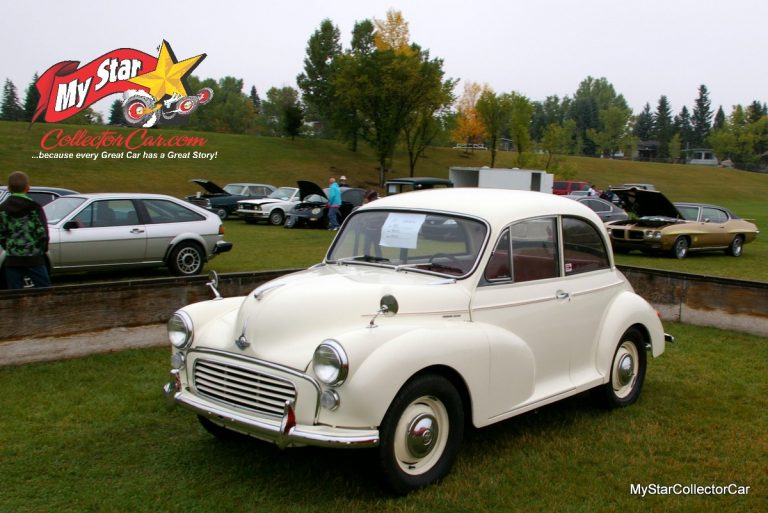
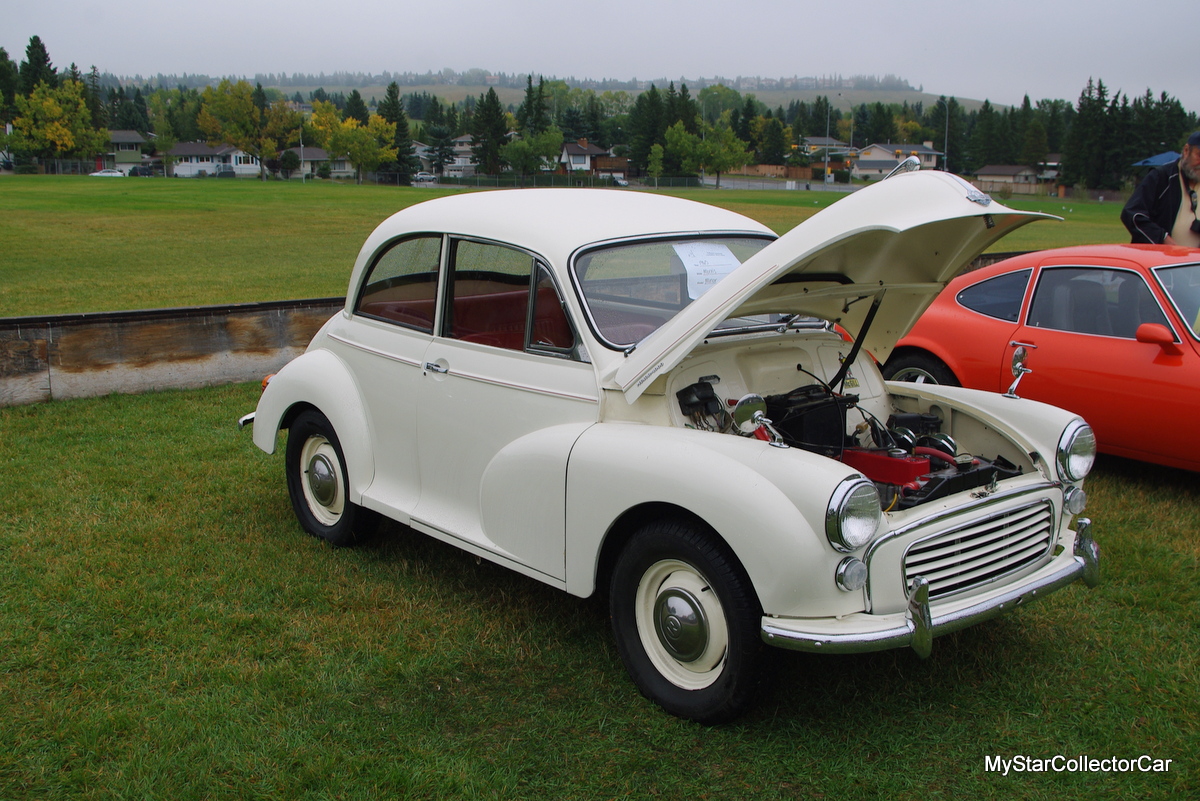
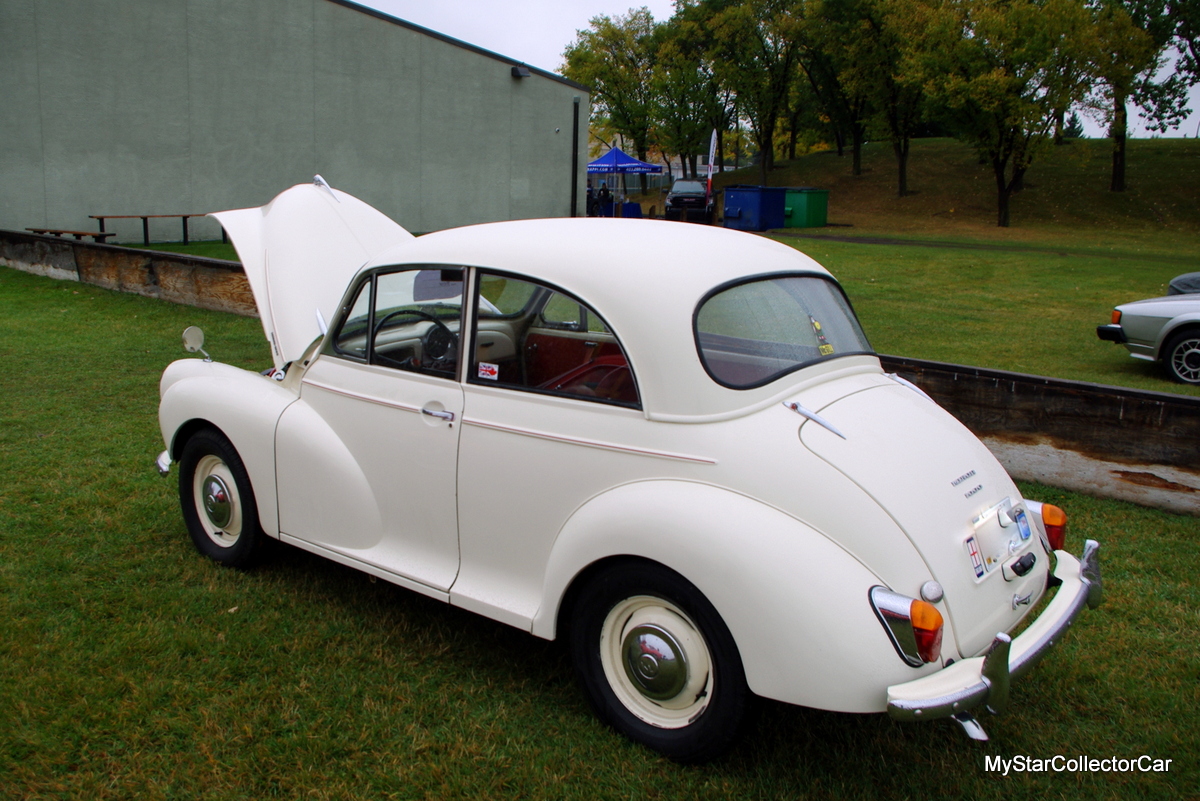
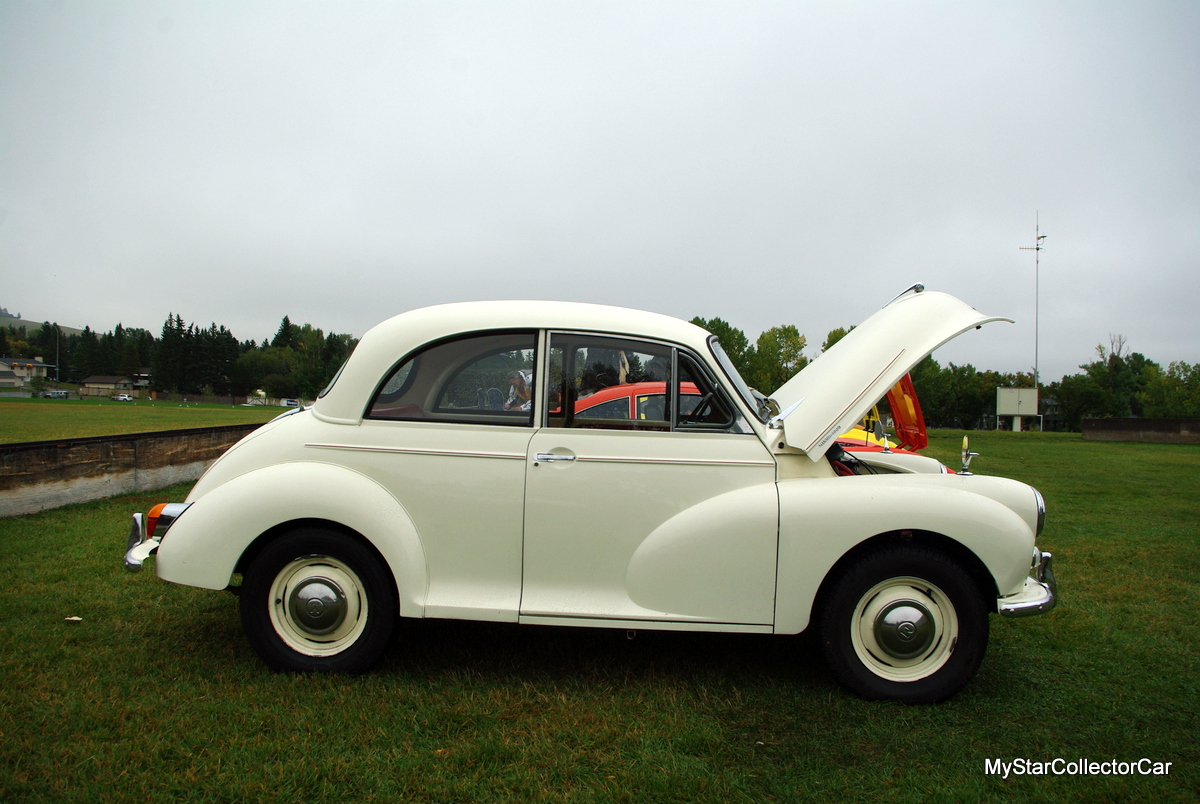
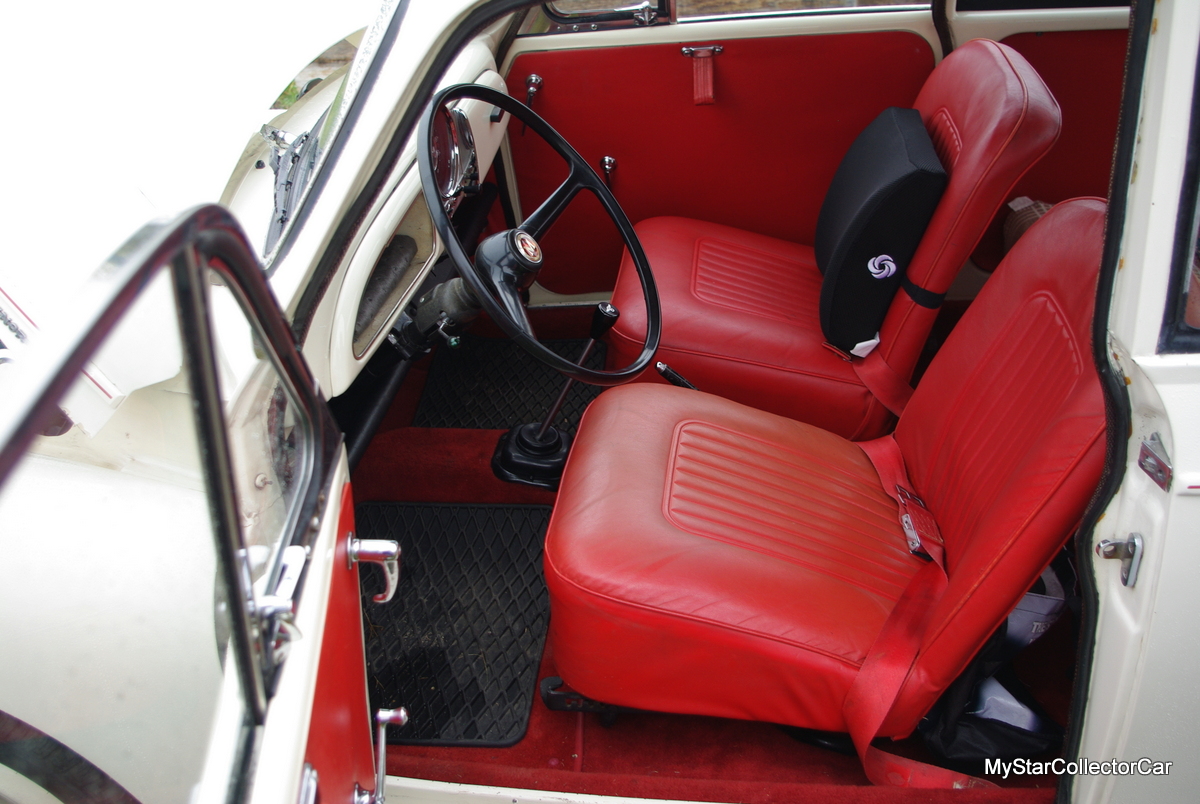
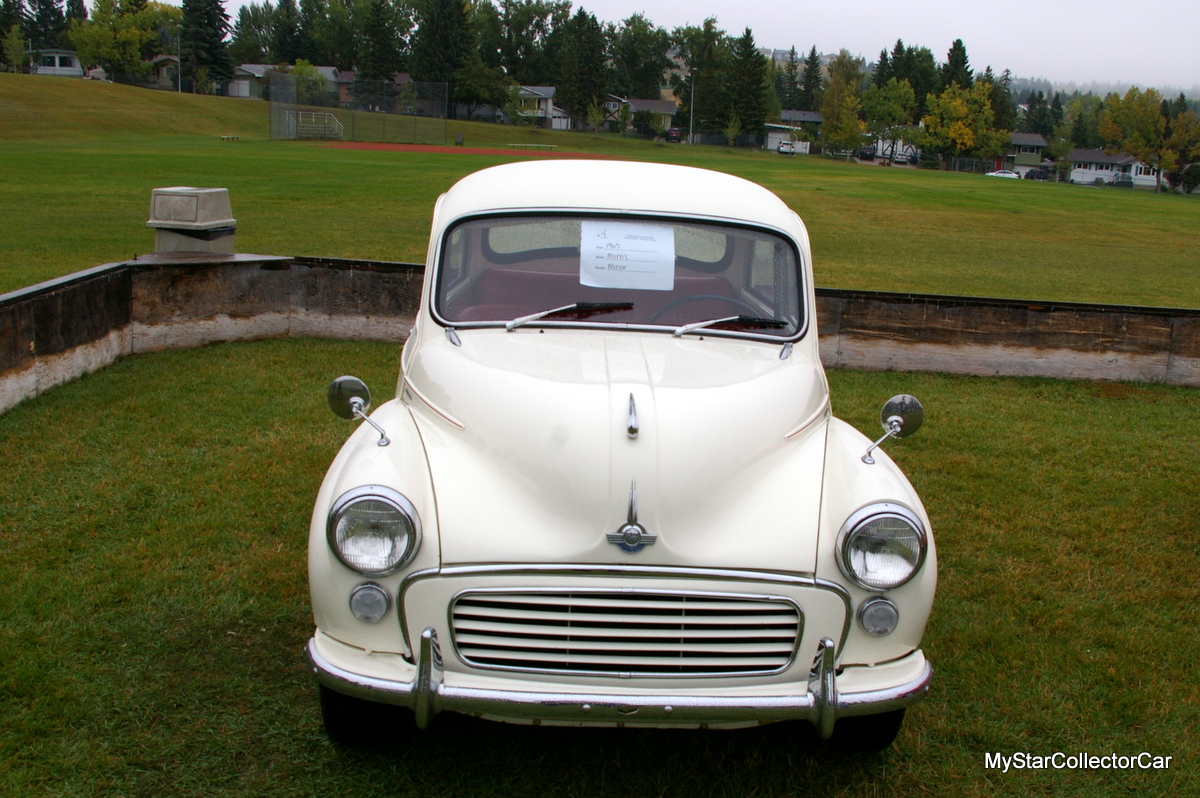
Chris Sore is the proud owner of a 1965 Morris Minor–plus he was born in England, but we did not want to subject him to the Moggy controversy and instead concentrated on his amazing little car.
Chris spotted the Morris Minor while he was on another unrelated automotive errand and exclaimed, “That is a Morris Minor!”, a reaction that got the attention of the middleman seller. The actual owner of the Morris was undergoing some serious financial issues, so he was a motivated seller. It would be accurate to say Chris was not looking for a Morris Minor, but he was an eager buyer when he got an opportunity to purchase the little British car from his homeland.
Morris Minors were built to compete directly with the VW Beetle, so they were small, under-powered and delivered excellent gas mileage during any leisurely excursion in one of these terminally cute compacts.
Chris lives in a large western Canadian city that has a freeway-like system of commuter roads where the speed limits are beyond the top speed of a factory Morris Minor, so his Moggy required a few enhancements to keep up with traffic flow.
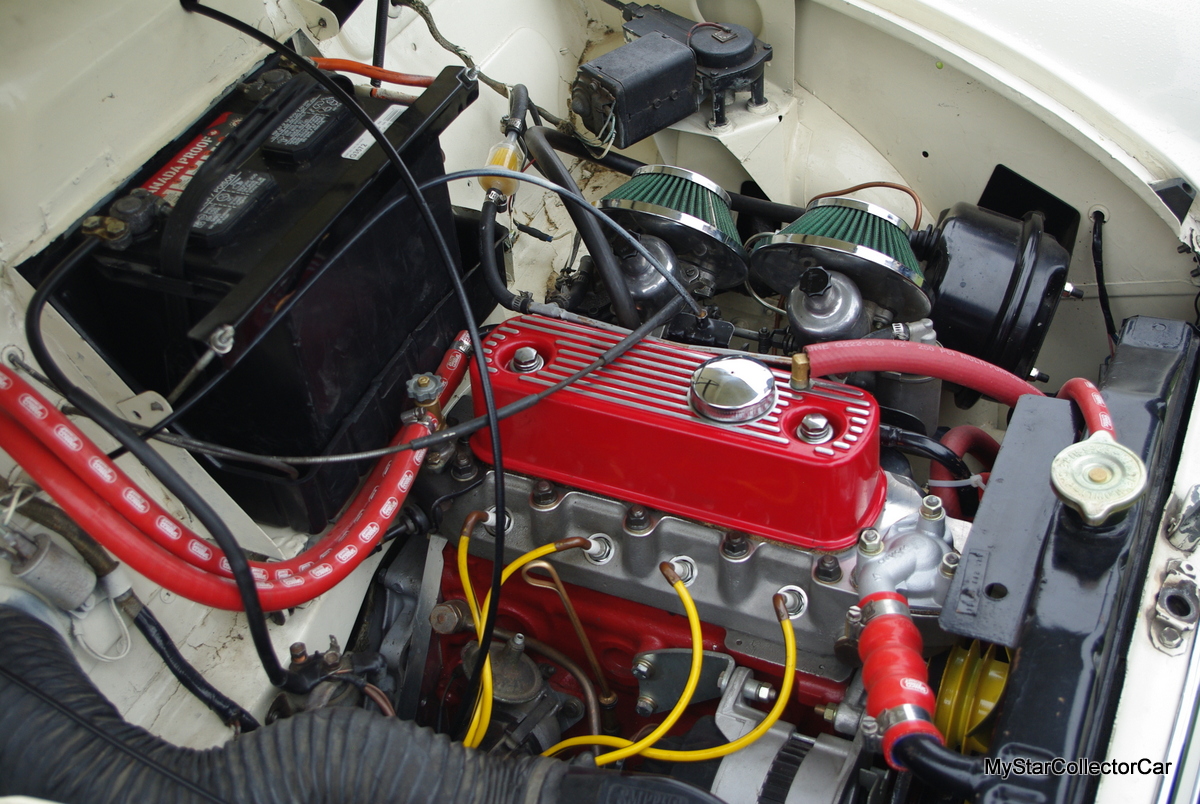
The Morris was upgraded to a 1275 cc MG Midget engine bored out to a 1340 cc mini monster for extra horsepower. Chris added a Datsun 5-speed manual transmission to drop the RPMs in the car and give it higher top speeds with less stress on the tricked-out engine.
The 5-speed tranny was only built for the 1979-81 Datsun 210 models and is a rare commodity in the car hobby because of its efficiency when couple to a small engine. Incidentally, joining a Japanese car transmission to a British sports car engine required an aftermarket adapter to complete the task, but it gave the Morris Minor more speed on the highway.
In fact, Chris chose to keep his foot out of the Moggy’s gas pedal when he hit 115 km/h (about 70 mph) with the Morris Minor’s new engine/tranny combination because he will need to upgrade the front steering and suspension so they can handle the higher speeds.
However, the car has a better front disc/rear drum brake system to slow it down faster than its stock brakes.
Chris takes every opportunity to jump behind the wheel of his ’65 Morris Minor and drive it during the moderate months of the year in his western Canadian home. He belongs to a local car group with like-minded members who take their vehicles on a scenic road trip every year and his Morris has performed flawlessly on the journey.
It may have been a chance encounter when Chris spotted his Morris Minor, but it was definitely love at first sight for him.
BY: Jim Sutherland
Jim Sutherland is a veteran automotive writer whose work has been published by many major print and online publications. The list includes Calgary Herald, The Truth About Cars, Red Deer Advocate, RPM Magazine, Edmonton Journal, Montreal Gazette, Windsor Star, Vancouver Province, and Post Media Wheels Section.
Today is Valentine’s Day so flower delivery numbers are spiking, and restaurants are packed because–let’s face it guys–you have no choice.
The question is, can you find romance in the car hobby?
That’s a loaded question because romance is such a fluid concept. You don’t get your Basset Hound flowers for Valentine’s because he’d probably eat them, but nobody can question the strong bond between dogs and humans–it’s pretty close to Valentine’s Day worthy.
The same thing applies to classic iron. Your Mustang is a bunch of parts bolted together so it shouldn’t have the same heartwarming, endorphin-producing, power found in your Basset Hound–but it does. Ask any guy who sits in his shop just staring at his Mustang in the off season. They won’t admit it, but that car gives them the same endorphin rush as their dog.
This brings us to human relationships. They are clearly more complicated than Basset Hound or Mustang relationships, but there is definitely a strong romantic thread throughout the car hobby. The best stories are the ones where a couple tracks down their honeymoon car and gets it back.
MyStar has a few of these stories in the archives and in some cases, the car was a basket case, but the couple decided to bring it back–at any cost. The odds of a wife agreeing to a six-figure restoration on a car that is worth a fraction of the cost when it’s done are a million to one. Unless it was their honeymoon car–that’s a game-changer.
There are even cases where the couple never sold their honeymoon car because they were so attached to it. For the record, this happens more often than the “finding your honeymoon car again” scenario. It speaks volumes about how important that car was to the couple’s biography. Also–for the record–this scenario is pretty rare because if the honeymoon car was a convertible, it won’t survive the first kid in 999 out of 1000 marriages.
Sometimes the story ends in a different way. There are a few stories in the MyStar archives where a beloved car outlives the marriage. The story is always the same–the car came before the marriage, so it survived a breakup. The breakup record so far is two marriages. You can’t question that kind of commitment–especially on Valentine’s Day.
Another romantic side of the car hobby is how it brings couples together. They go to car shows as a couple, and you’ll often see both names on the owner card at the show. There’s a reason for this–a car project is a major investment, so any guy who doesn’t consult his wife runs the risk of entering the aforementioned (and dreaded) multiple marriages/one car world.
Sometimes you’ll see the perfect relationship. That’s the one where the couple piles into the project as a team, so they take on every nasty job themselves. This is rare, but in my opinion, the couple who scrapes off undercoating together, stays together. The only downside to this scenario is a fistfight in court if the couple splits–don’t forget–both parties have blood in the game.
In the end, you’ll still have a happy couple–except one half of the couple will have four wheels. Happy Valentine’s Day.
Jerry Sutherland
By: Jerry Sutherland
Jerry Sutherland is a veteran automotive writer with a primary focus on the collector car hobby. His work has been published in many outlets and publications, including the National Post, Calgary Herald, Edmonton Journal, Ottawa Citizen, Montreal Gazette, Saskatoon StarPhoenix, Regina Leader-Post, Vancouver Sun and The Truth About Cars. He is also a regular contributor to Auto Roundup Publications.