



1960 marked a new decade and a new direction for the three biggest domestic car builders because they began their compact car experiment to counteract the massive popularity of the Volkswagen Beetle.
It would be fair to say fridge/automobile builder Nash-Kelvinator had already jumped into the small car game with its 1950 Rambler model, but the Big Three did not get the compact car memo until the late 1950s, long after the Beetle crossed the pond to North America in 1949.
Jim Sutherland
Nevertheless, Chrysler, GM and Ford hit the ground running in 1960 and began a smaller-is-good program that fit the budget of the cost-conscious customer because of their compacts’ price tag and fuel economy.
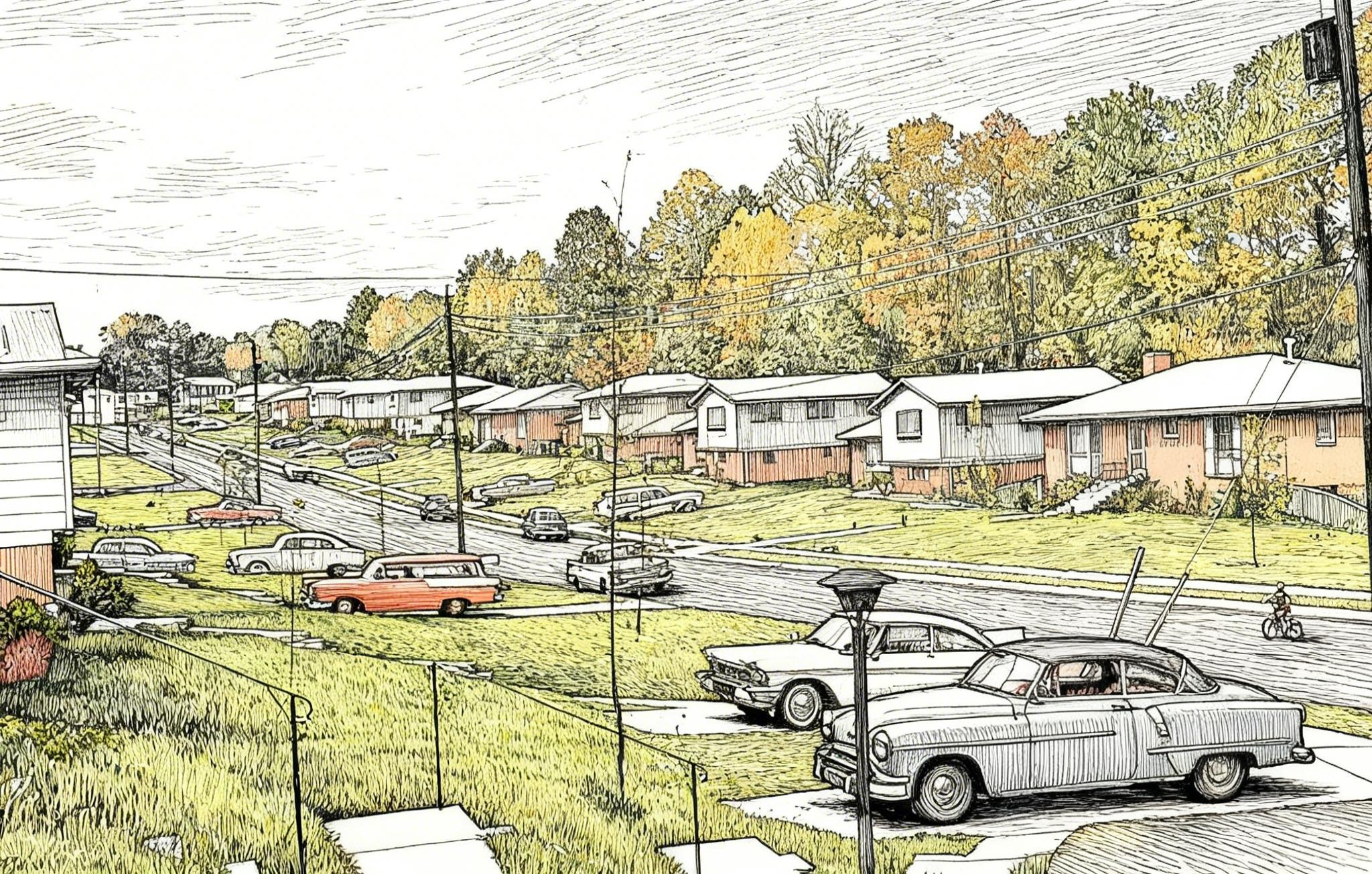
Suburbs had become a major part of the new urban plan and homeowners flocked to the new neighborhoods like migratory geese. One could consider the North American success of the Beetle was based upon its small size and large MPG numbers, two factors that made it a perfect second car during the 1950s.
Daredevils might use the Beetle as a commuter car, but its lack of power made the Bug a solid choice for the slow lane or use in the suburbs as a grocery getter. Ford decided to bridge both worlds when it introduced the 1960 Ford Falcon.
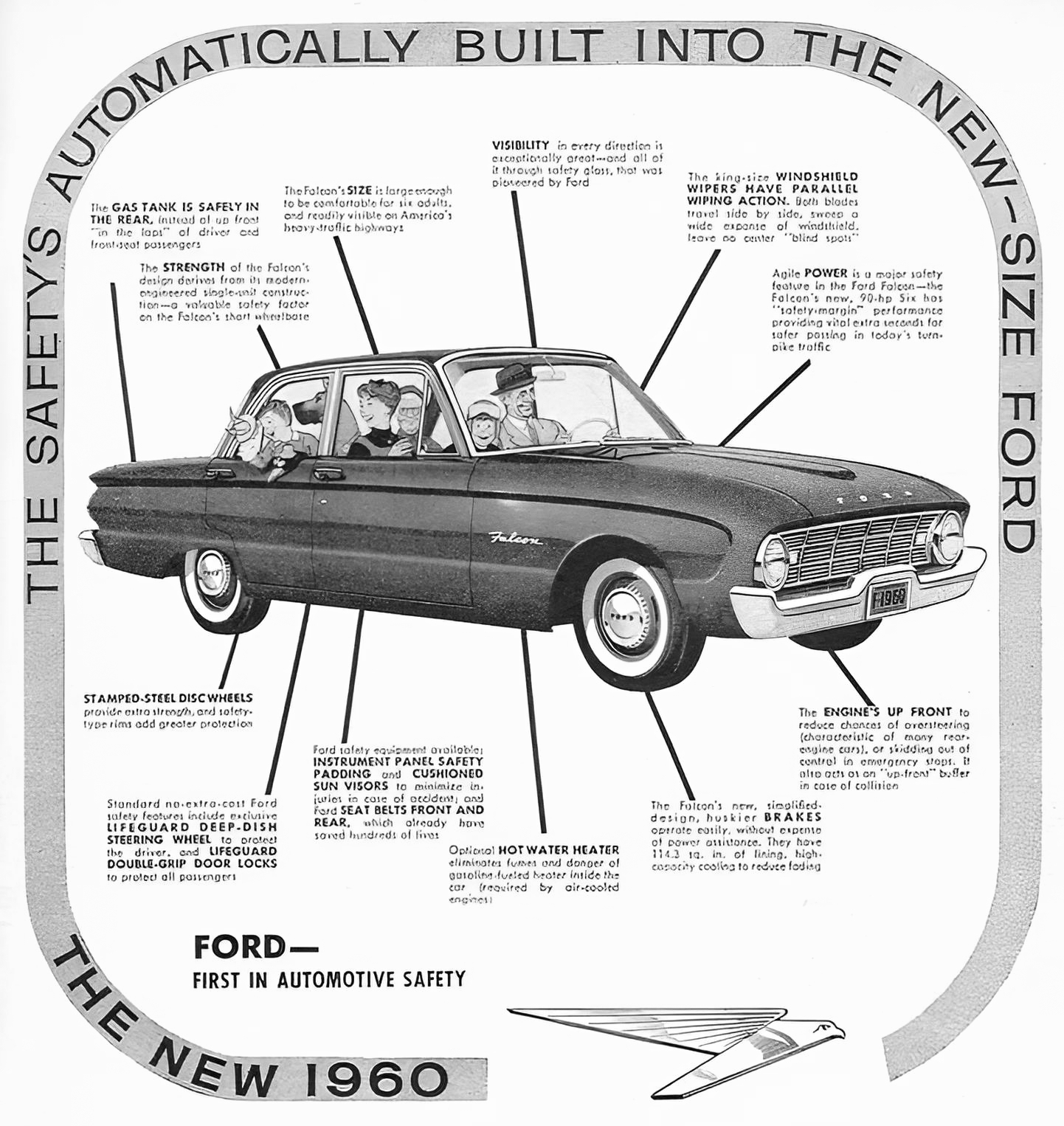
The ’60 Falcon was fitted with a 144 cubic-inch six-banger that produced 95 horsepower and 138 ft. lbs of torque. The Falcon’s engine had serious 98 lb. weakling status compared to Ford’s giant V-8s in its full-sized models, but it would easily beat up the Beetle on the street in terms of power.
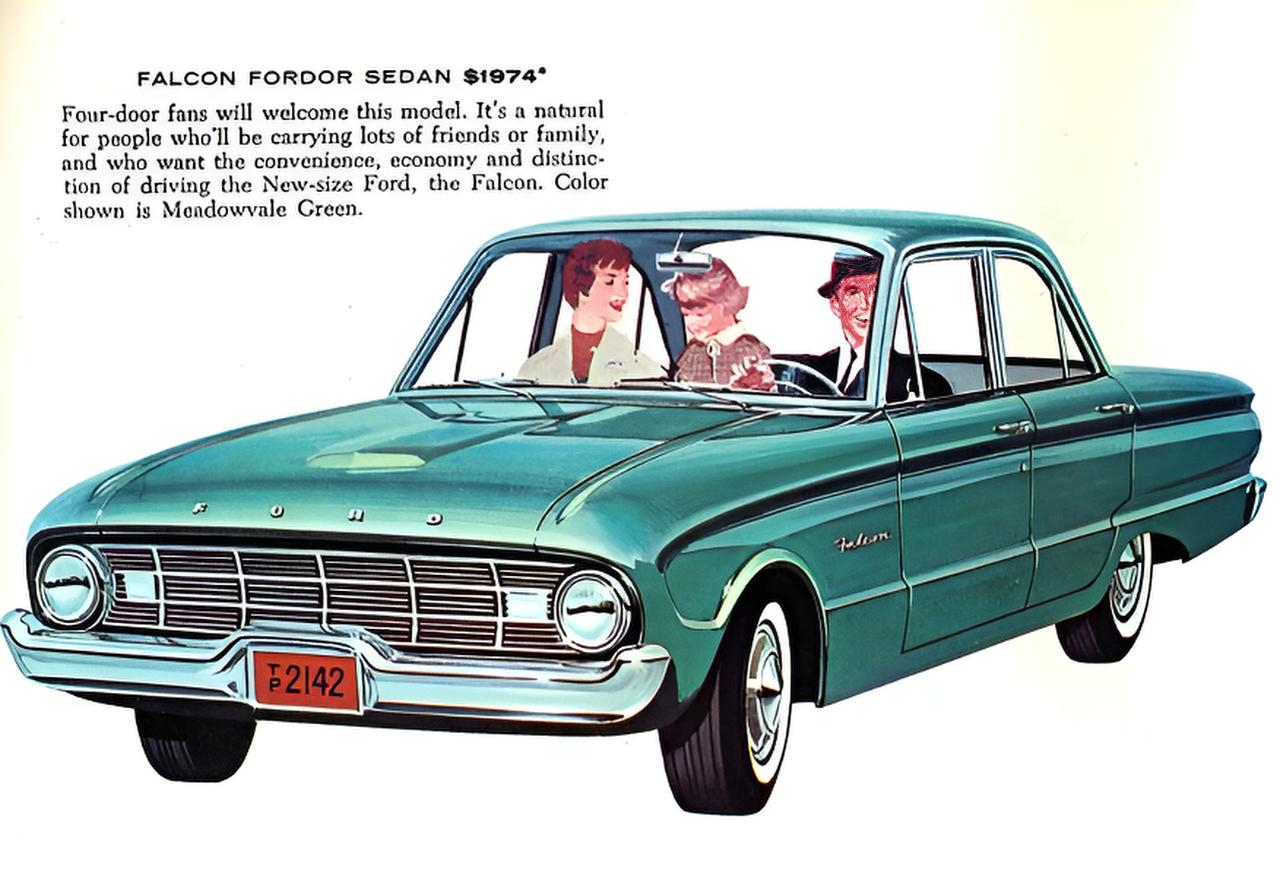
The 1960 Falcon was arguably even ready for the then-new freeways because it listed a top speed of roughly 80 mph–even though sensible owners would likely have avoided the fast lane as much as an H-bomb test area in a ’60 Falcon.

However, the first Falcon made a perfect second car if it was confined to the suburbs because it was a great kid-hauler, had a water-cooled engine with much better heat than a Beetle in cold weather, and could fit in the same tight spaces as a Bug in a parking lot.
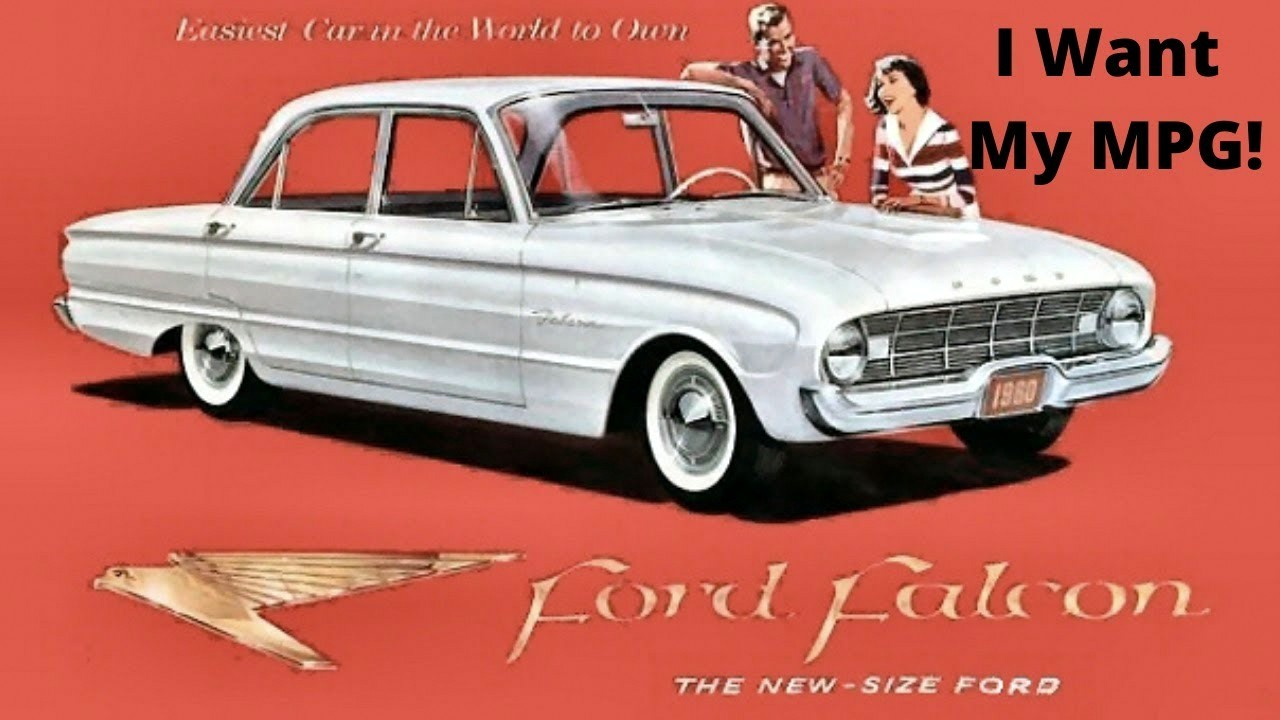
The first Falcon might even had been homelier than a Beetle, but eventually the famous Ford compact hit its high-water mark in the good looks department when the 1964 version hit the showrooms. In preparation for the new style. Ford had already made subtle style changes to the Falcon over the first three production years, along with adding with a small block V-8 option for highway use.
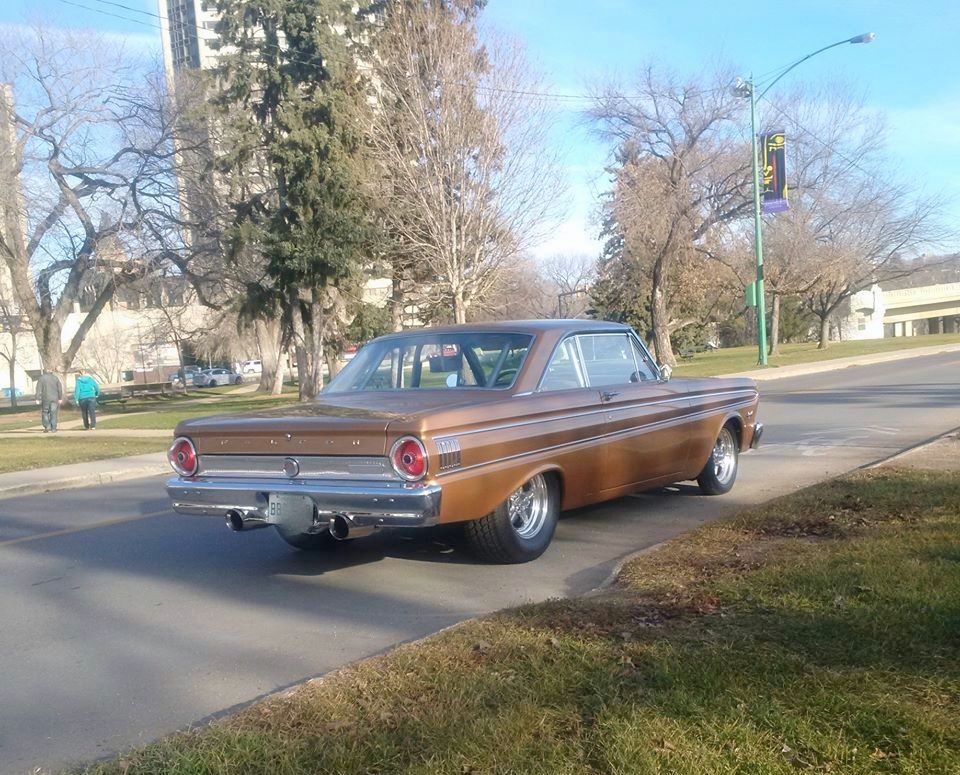
The result was an evolution to the 1964 Falcon, a sporty little compact with a new squared-off rear deck and aerodynamic front end. The 1964-65 Falcons occupy the top rung in desirability within the vintage Ford compact ranks and show no signs of relinquishing their lofty status.
The Ford Falcon got a little larger in 1966 and became a solid transportation machine for owners and their passengers. The cars offered more power and room, so any Falcon built after ’66 could be used for longer trips with the right powertrain.
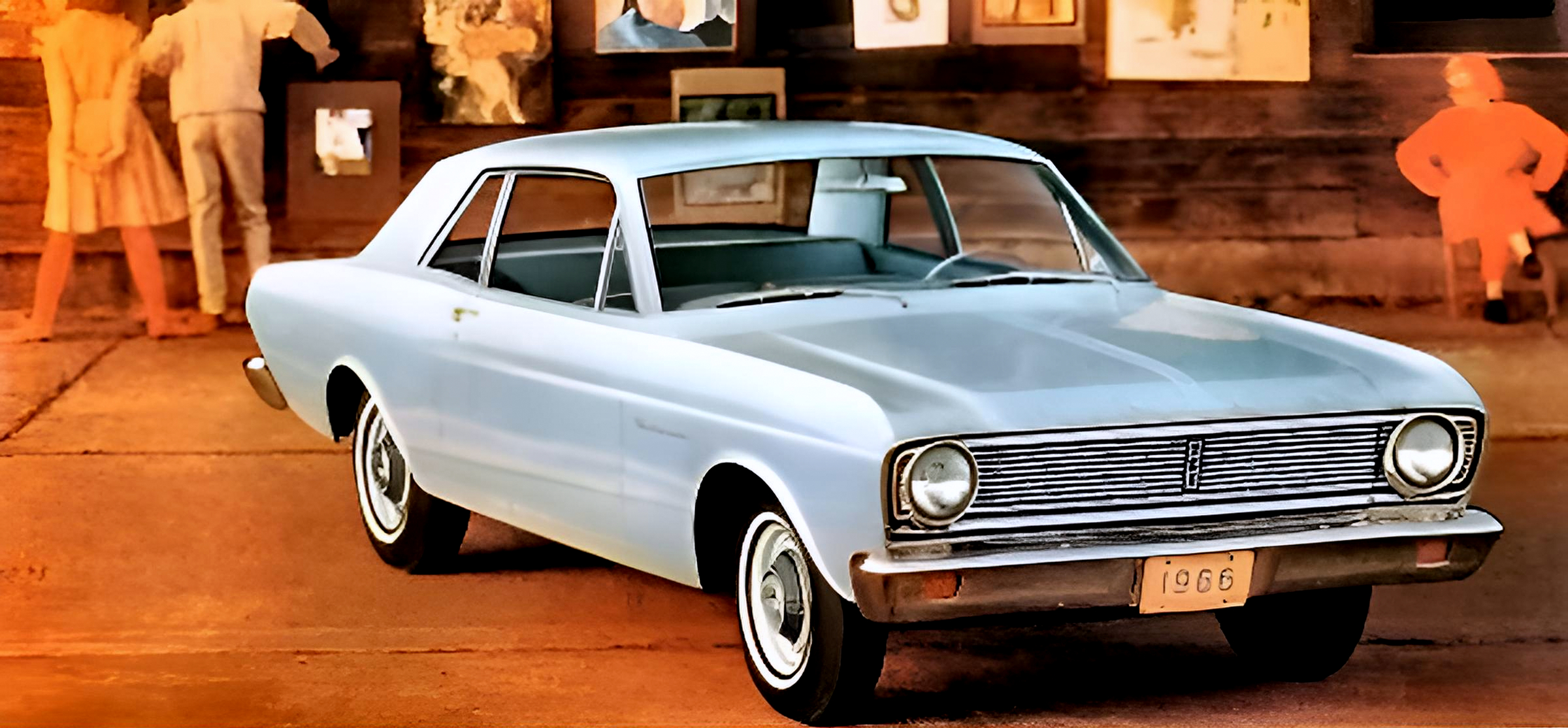
Eventually, Father Time caught up with the Falcon, and it got shown the door when Ford replaced it with the Maverick, although the two models shared Ford’s showrooms in 1970. By 1971, the Ford Falcon compact was no more and was dispatched to the dustbins of automotive history.
But the Falcon’s greatest claim to fame was its role as Ford’s first compact model, a fact not lost on its loyal legion of fans.
Jim Sutherland
BY: Jim Sutherland
Jim Sutherland is a veteran automotive writer whose work has been published by many major print and online publications. The list includes Calgary Herald, The Truth About Cars, Red Deer Advocate, RPM Magazine, Edmonton Journal, Montreal Gazette, Windsor Star, Vancouver Province, and Post Media Wheels Section.
- CLICK HERE to Sign Up for the Newsletter
- CLICK HERE to Like us on Facebook
- CLICK HERE to Follow us on Twitter
- CLICK HERE to Follow us on Pinterest